

The Classic Finger Test
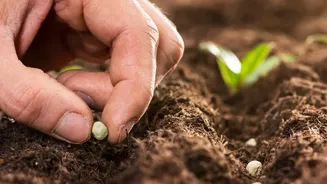
The easiest, quickest, and most reliable way to check for moisture requires no special tools. Simply insert your index finger into the soil up to your first or second knuckle, about two inches deep. If the soil feels dry at your fingertip, it's time to water.
If you feel any moisture, it's best to wait another day or two and check again. This method is perfect for most medium-to-large pots but can disturb the delicate roots in very small containers. Remember to check both near the stem and near the edge of the pot for an accurate reading.
Lift the Pot to Feel its Weight
One of the most effective methods used by experienced gardeners is simply feeling the weight of the pot. A plant with well-watered, saturated soil is significantly heavier than one with dry soil. Get into the habit of lifting your pots right after you've given them a thorough watering and again when you know they are dry. Over time, you'll develop a feel for the weight difference, allowing you to tell if a plant needs a drink with a simple lift. This technique is most practical for small to medium-sized pots that you can lift easily and safely.
Use a Wooden Skewer or Chopstick
For a less messy approach that can also reach deeper into the pot, use a plain wooden skewer or an unfinished chopstick. Think of it like testing a cake for doneness. Carefully push the skewer down into the soil, avoiding the main stem, until it nears the bottom of the pot. Leave it there for a minute, then pull it out. If the skewer comes out clean and dry, the soil is dry and needs water. If it comes out damp, with dark watermarks or soil particles clinging to it, there's still plenty of moisture in the pot, and you should wait before watering.
Read the Leaves and Stems
Your plant itself will often give you visual cues when it's thirsty. The signs of underwatering include leaves that look dull, feel brittle or crispy, or have brown edges. The entire plant might start to droop or wilt. However, wilting can be a sign of both over- and underwatering, so it's crucial to check the soil to be sure. In an underwatered plant, wilting leaves will feel dry and crispy, whereas an overwatered plant's wilting leaves often feel soft and limp. Slow or stunted growth can also be a signal that your plant isn't receiving enough water to thrive.
Watch for Signs of Overwatering
Being too generous with the watering can is a common mistake and often more dangerous than underwatering because it can lead to root rot. Telltale signs of overwatering include yellowing leaves, especially on the lower parts of the plant, that feel soft or mushy. You might also notice mold or algae growing on the surface of the soil, or a foul smell coming from the pot, which indicates rotting roots. Paradoxically, overwatered plants can also wilt, but the leaves will feel soft, not crispy, because the suffocating roots can no longer absorb water.
Consider a Moisture Meter
For those who prefer a more technological approach, a soil moisture meter offers a quick, numerical reading. This handheld device has a metal probe that you insert deep into the root zone to measure moisture levels. It takes the guesswork out of watering by giving you a reading on a scale, often from 'dry' to 'wet'. This can be particularly useful for very large pots where the finger test isn't practical, or for plants that have very specific watering needs, like needing the soil to dry out 50% or 75% between waterings. Be sure to insert the probe gently to avoid damaging the roots.