



The Overnight Charging Rut
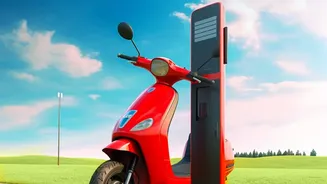
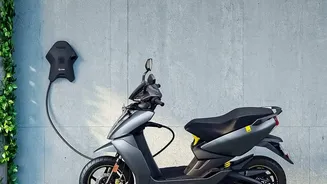
For millions of Indian electric scooter owners, the routine is familiar. You get home, you plug in your vehicle, and you leave it tethered to the wall for six, seven, or even eight hours. This long charging cycle has become the accepted trade-off for cheaper,
cleaner travel. While functional, it creates a constant, low-level anxiety. Did you remember to plug it in? Will it be fully charged for tomorrow's commute? Spontaneous trips are often off the table unless you have enough charge, and finding a public charging spot that you can occupy for hours is impractical. This reliance on slow, overnight home charging is one of the most significant barriers preventing even wider adoption of electric two-wheelers, turning the convenience of electric mobility into a nightly chore.
Enter the Solid-State Game-Changer
Imagine a battery that can go from nearly empty to 80% full in the time it takes to drink a cup of chai—around 10 to 15 minutes. This isn't a far-off dream; it's the promise of solid-state battery technology. Unlike the lithium-ion batteries in today's scooters, which use a flammable liquid electrolyte to move energy around, solid-state batteries use a solid material, like a thin piece of ceramic or polymer. This fundamental change in construction is what unlocks a cascade of benefits. By replacing the volatile liquid, these next-generation cells are not only dramatically safer but also far more efficient at accepting and storing a charge.
The Science of Speed and Safety
So, how does a solid electrolyte enable such rapid charging? It comes down to chemistry and structure. The liquid in current batteries can overheat and form tiny, needle-like structures called dendrites during fast charging, which can cause short circuits and, in rare cases, fires. This risk forces manufacturers to limit charging speeds. Solid electrolytes, however, are far more robust and can physically suppress dendrite growth. This allows them to handle a much higher and faster flow of energy without the risk of thermal runaway. Furthermore, this solid structure allows for the use of more advanced components, like lithium metal anodes, which can store significantly more energy than the graphite anodes used today, paving the way for batteries that are not just faster to charge but also lighter and more powerful.
More Than Just a Quicker Charge
While slashing charging times is the headline feature, solid-state technology offers a suite of other improvements. They boast a much higher energy density, meaning they can store more power in the same amount of space. For a scooter owner, this could mean a vehicle with a 150-kilometre range instead of 80, without a larger or heavier battery pack. These batteries are also more stable across a wider range of temperatures, performing reliably in the biting cold or sweltering heat. They also have a significantly longer lifespan, capable of enduring thousands of charge cycles with minimal degradation compared to the one or two thousand cycles of their liquid-filled counterparts.
The Road to Indian Showrooms
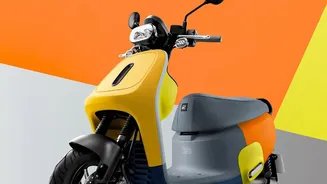
This technology is rapidly moving from the laboratory to the production line. While mass-market availability is still a few years away, the first wave of vehicles with solid-state or semi-solid-state batteries is beginning to appear in 2026. Two-wheelers are expected to be among the first beneficiaries of this tech, as their smaller battery packs are easier to produce at scale. Companies like Gogoro have already unveiled prototype solid-state batteries for scooters, and its partnership with Hero MotoCorp in India could bring this technology to the local market. Meanwhile, Indian EV major Ola Electric has also confirmed it is actively developing its own solid-state battery technology. While initial costs may be high, industry experts predict that as manufacturing scales up through the late 2020s, these advanced batteries will become the new standard.