

The Ultimate Dress Rehearsal
Before astronauts, or 'Gaganauts', can embark on their journey, every single system must be proven to be safe and reliable. This is the purpose of the uncrewed safety runs. These are not mere practice sessions; they are full-scale, high-stakes missions
designed to validate the technology that will protect human life in the harsh environment of space. ISRO is systematically testing everything from the crew module's ability to withstand re-entry into Earth's atmosphere to the precise deployment of its parachute systems for a safe splashdown. These missions are crucial for demonstrating the performance of the life support systems, navigation, and control before a human crew is on board. Every successful test builds confidence and brings India one step closer to joining the elite club of nations with independent human spaceflight capabilities.
Recent Milestones: Testing the Parachutes
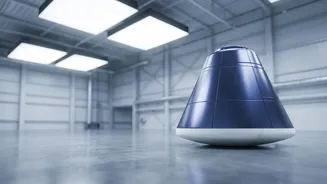
A key recent success was the Integrated Air Drop Test (IADT). In these tests, a crew module replica, weighted to match the real spacecraft, is dropped from a high altitude to simulate its return journey. During a recent test, an Indian Air Force Chinook helicopter lifted a 5.7-tonne module to an altitude of about 3 kilometres before releasing it over the Bay of Bengal. The primary objective was to test the complex sequence of parachute deployments—ten parachutes of four different types—that must work perfectly to slow the module from high velocity to a gentle splashdown speed. The successful completion of these tests validates the critical deceleration and recovery systems, which are non-negotiable for astronaut safety.
Meet Vyommitra: The Humanoid Stand-In
The first uncrewed orbital flight, designated Gaganyaan-1 (G1), will have a unique passenger: Vyommitra. Developed by ISRO, Vyommitra is a sophisticated, AI-enabled humanoid robot designed to simulate human functions during the mission. This 'half-humanoid' can mimic astronaut activity, operate the switch panel, monitor the crew module environment, and communicate with the ground control centre. By sending Vyommitra into space first, ISRO can gather invaluable data on how the flight's vibrations, radiation, and microgravity environment will affect a human body. Vyommitra will test the Environmental Control and Life Support System (ECLSS) in real-time, ensuring the cabin is perfectly safe before the first Gaganauts take their seats.
The Technology Powering the Dream
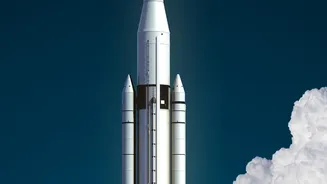
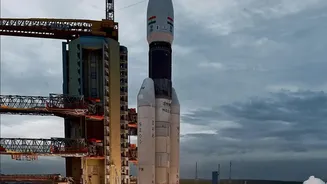
The entire Gaganyaan mission is propelled by a suite of advanced, indigenously developed technologies. The launch vehicle is the Human Rated LVM3 rocket (HLVM3), a modified version of ISRO's most powerful and reliable heavy-lift launcher. This rocket is tasked with carrying the Orbital Module, which consists of the Crew Module and the Service Module, into a low Earth orbit of about 400 kilometres. The Crew Module is where the astronauts will be housed, a double-walled capsule equipped with all necessary life support and control systems. Perhaps the most critical component is the Crew Escape System, designed to jettison the crew to safety in case of any anomaly during the launch phase. Extensive ground testing, numbering over 8,000 individual tests, has been performed on all these systems to ensure they meet the highest safety standards.
The Road Ahead to Historic Launch
With crucial tests like the IADT completed, ISRO is now integrating systems for the first major uncrewed orbital flight. The G1 mission is currently planned for the latter half of 2026. This will be followed by at least one more uncrewed test flight to finalize all procedures. While the technology is being perfected, the four astronaut-designates—all distinguished pilots from the Indian Air Force—continue their rigorous training for the mission. If all proceeds as planned, the first crewed Gaganyaan mission, which will carry Indian astronauts into orbit, is targeted for 2027. This mission will not only be a landmark achievement for ISRO but will also lay the groundwork for future ambitions, including the Bharatiya Antariksh Station (Indian Space Station), planned for 2035.