




Rowing: The Challenge of Seated Stability
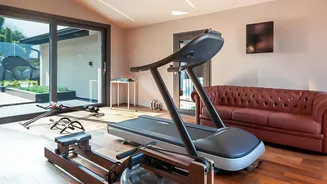
Rowing, whether on a machine or in a sleek boat on the water, presents a unique balance puzzle. Unlike most sports, a rower's base of support is a small, sliding seat. The main challenge is not about avoiding a fall, but about maintaining a rigid and
stable core to transfer power efficiently from the legs through the torso to the oar. This is a form of dynamic stability, where the goal is to keep the upper body perfectly still and aligned with the boat, acting as a mast while the powerful legs and hips do the work. Any unnecessary side-to-side rocking wastes energy and slows the boat down. Rowers must therefore develop exceptional core stability to serve as the foundation for all movement, providing a solid base from which the limbs can move with precision and control. It is a constant fight to maintain equilibrium on an unstable surface, demanding that the deep muscles of the trunk remain engaged throughout the entire stroke.
Dancing: A Constant Dialogue With Gravity
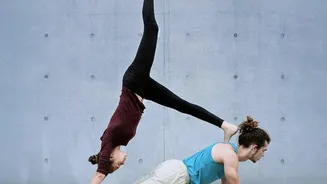
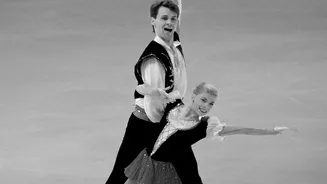
Dancing is a continuous exploration of imbalance and recovery. Unlike the rower's quest for a stable torso, a dancer's center of mass is almost always in motion, shifting over a constantly changing base of support—often just the ball of one foot. This requires an exceptional level of dynamic balance, which is the ability to maintain control while the body is in motion. From a pirouette to a leap, dancers are not just holding a position; they are managing a continuous series of corrections. This skill relies heavily on proprioception, often called the 'sixth sense', which is the body's awareness of its own position in space, fed by receptors in the muscles and joints. Studies have shown that dancers possess enhanced proprioceptive abilities, allowing them to make micro-adjustments to maintain stability, even without visual cues. Their training refines the brain's ability to process sensory information, particularly from the vestibular system in the inner ear, which governs balance and spatial orientation.
Static vs. Dynamic: Two Different Languages of Balance
To truly understand the difference, it helps to distinguish between static and dynamic balance. Static balance is the ability to hold the body in a fixed position, like standing on one leg or holding a yoga pose. While dancers certainly use static balance for holds and poses, their art form is dominated by dynamic balance—mastering stability while moving. Rowing, on the other hand, is a masterclass in what could be called 'stabilized' dynamic balance. The rower’s primary goal is to limit torso movement and maintain postural control against the force of the stroke. While the body is in motion, the core's job is to resist that motion to create a stable platform. A dancer uses their core to initiate and control movement through space, while a rower uses theirs to prevent unwanted movement. Therefore, the two activities train the body's balance systems in fundamentally different, and often complementary, ways.
The Brain's Adaptation
The long-term training for these activities physically changes how the brain processes balance. In a fascinating study comparing ballet dancers to elite rowers, researchers found significant differences in brain structure. When spun in a chair, dancers reported feeling less dizzy than the rowers. Brain scans revealed that in dancers, the brain area that processes vestibular signals from the inner ear was smaller. Researchers believe this indicates the dancers' brains had adapted to suppress these signals to avoid dizziness during turns, a process of perceptuo-reflex uncoupling. The rowers' brains did not show this adaptation. This highlights that the type of balance training matters; the brain reshapes itself specifically for the tasks it is repeatedly asked to perform. Dancers train their brains to handle rapid rotation and reorientation, while rowers train for rhythmic stability and force transfer.