




The Science of a Natural Glow
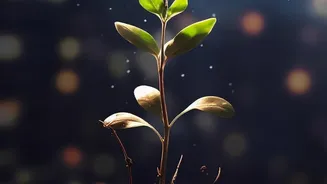
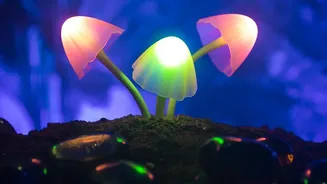
Nature has been producing its own light for millions of years. Fireflies, jellyfish, and certain types of fungi create light through a chemical process called bioluminescence. At its core, this process typically involves a light-producing molecule called a luciferin
and an enzyme called luciferase. When they react with oxygen, light is produced. Scientists have been working to transfer the genes responsible for this natural glow into plants. Early efforts involved genes from marine bacteria or fireflies. More recently, a breakthrough came from using genes from luminous mushrooms. Researchers discovered that the fungal bioluminescence pathway is surprisingly compatible with the natural metabolism of plants. This allows the genetically modified plants to produce their own light continuously, powered by their own internal energy, without needing to be 'charged'.
From Lab Bench to Living Room
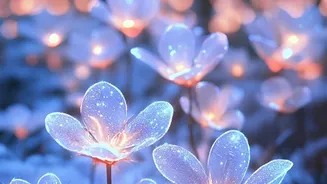
The technology has already made its way out of the lab. The US-based synthetic biology company Light Bio has successfully engineered a petunia that glows with a soft green light, which it calls the 'Firefly Petunia'. After receiving approval from the U.S. Department of Agriculture (USDA), the company began selling the plants to the public. The key innovation involves inserting genes from fungi into the petunia's DNA, which allows the plant to convert its natural energy into a visible glow. The company reports that recent advancements have made the plants up to 100 times brighter than previous versions, with the flowers and buds glowing most intensely. While currently marketed as a novel ornamental houseplant, the success of the Firefly Petunia is a major proof of concept for the technology.
The Urban Energy Challenge
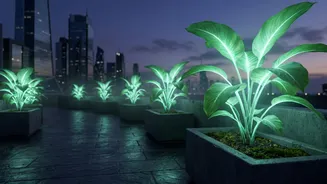
The potential application that captures the most imagination is public lighting. Streetlights are a massive operational expense for cities worldwide. Public lighting can account for up to 40% of a municipality's electricity budget. A single traditional street light can consume a significant amount of energy, and with an estimated 326 million streetlights globally, the collective power demand is enormous. Many cities are already transitioning to more efficient LED lighting to cut costs and reduce carbon emissions. However, the idea of replacing this manufactured infrastructure with self-sustaining, living light sources presents a radical alternative. Plants that require only water and fertilizer could, in theory, drastically reduce the energy consumption and maintenance costs associated with illuminating public spaces.
Hurdles on the Horizon
Despite the promise, the dream of Avatar-like glowing forests lining our city streets is still a long way off. The primary challenge is brightness. While the light from current GM plants is visible to the naked eye, it is far from matching the intensity of a modern LED streetlight. Scientists are continuously working to improve the brightness, but it remains a significant technical barrier for practical public illumination. Other challenges include durability—plants would need to be resilient enough to survive in harsh urban environments. There are also important ecological and regulatory questions to consider. Releasing genetically modified organisms into the environment on a mass scale requires careful study to ensure there are no unintended consequences for local ecosystems.
A Glimmer of the Future
Even if bio-streetlights remain a distant goal, the technology has more immediate applications. Glowing plants could be used in parks, botanical gardens, and tourist attractions to create unique, ambient lighting without the need for an electric grid. They could be integrated into architecture and landscape design for decorative effect or used as low-energy indoor lighting. Researchers are already experimenting with a wide variety of species, including roses and other popular ornamental flowers. Another approach being explored by different teams involves infusing plants with light-storing nanoparticles, creating a rechargeable 'plant lamp' that glows after being exposed to sunlight. These parallel innovations suggest a future where our relationship with light becomes more organic, sustainable, and integrated with the natural world. While we may not be reading a book under a glowing oak tree tomorrow, the seeds for a bioluminescent future have officially been planted.