


The Incredible Perseid Meteor Shower
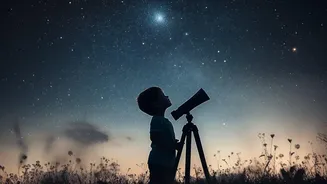
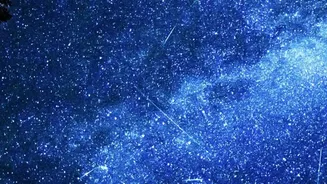
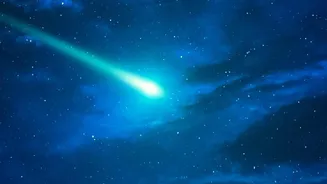
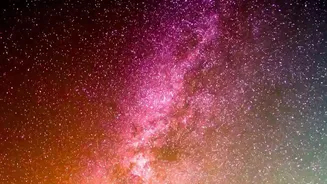
The highlight of August is undoubtedly the Perseid meteor shower, one of the most brilliant and reliable displays of the year. Active from mid-July to late August, the shower is expected to reach its peak on the night of August 12-13. This year’s viewing
conditions are absolutely perfect, as the peak coincides with a New Moon, meaning the sky will be exceptionally dark. Under clear, dark skies away from city lights, observers could see between 50 and 100 meteors per hour. These meteors are fragments of the comet Swift-Tuttle, and they burn up in our atmosphere at incredible speeds, often leaving long, glowing trails. For the best experience, find a comfortable spot after midnight, let your eyes adjust to the darkness for about 30 minutes, and simply look up. The show is best viewed in the hours before dawn.
A Total Solar Eclipse (For Some)
A spectacular total solar eclipse will occur on August 12, a rare event where the Moon completely blocks the Sun. However, this event will not be visible from India. The path of totality, where the full eclipse can be witnessed, will cross over Greenland, Iceland, Spain, and a small part of Portugal. While Indian skywatchers won't see it directly, the event is significant as it creates the New Moon phase that makes the Perseid meteor shower viewing so exceptional on the same night. Many international organisations like NASA typically provide a live stream of total solar eclipses, allowing you to witness the breathtaking moment the Sun's corona is revealed from anywhere in the world.
The 'Sturgeon Moon' and a Partial Lunar Eclipse
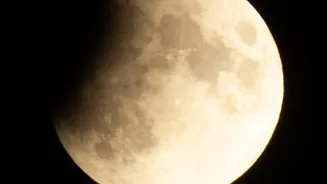
Mark your calendars for the night of August 27-28, when two exciting lunar events happen. First is the full moon, known as the Sturgeon Moon. This name comes from North American fishing tribes who knew that the sturgeon of the Great Lakes were most easily caught during this time. But this full moon is extra special. In the early hours of August 28, a deep partial lunar eclipse will be visible from India. During this event, a significant portion of the Moon will pass through the darkest part of Earth's shadow, known as the umbra. This will cause a large part of the lunar surface to darken dramatically, creating a striking visual contrast against the sliver that remains brightly lit. Unlike a solar eclipse, a lunar eclipse is perfectly safe to view with the naked eye.
Get Ready for Saturn's Big Moment
While its main event isn't until October, August is the perfect time to start observing Saturn. The ringed planet will be growing brighter and more prominent in our night sky as it heads towards opposition. Opposition, which occurs on October 4, is when Earth passes directly between the Sun and Saturn, making it appear at its largest and brightest for the year. In August, the planet will be well-placed for evening viewing, rising in the east and remaining visible for much of the night. Even a small telescope or a good pair of binoculars will reveal its famous rings. After being nearly edge-on and invisible in 2025, the rings are now tilting back towards us, offering a beautiful sight that will only improve over the next few years.
Early Morning Planetary Groupings
For the early risers, August offers some lovely planetary conjunctions. On August 7, look to the eastern sky before sunrise to see the waning crescent moon appear close to the beautiful Pleiades star cluster, also known as the Seven Sisters. Then, on August 9, the Moon will have moved to cozy up with Mars, making the Red Planet easy for beginners to locate in the pre-dawn sky. Around August 12, a broader alignment of six planets—Mercury, Jupiter, Mars, Uranus, Saturn, and Neptune—will be spread across the sky before dawn, though some will require a telescope to spot.