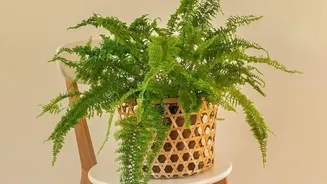






Ferns bring a lush, green vibrancy to any home, but their need for consistent moisture can be a delicate dance. Nailing the perfect watering routine is key to avoiding both dry, crispy fronds and the dreaded, fatal issue of root rot.
Understanding the Fern's Dilemma
Ferns are ancient
plants that evolved on shaded, humid forest floors. Their natural habitat provides steady moisture, high humidity, and well-draining soil rich in organic matter. This background is key to understanding their needs as houseplants. They crave consistently moist soil but are extremely susceptible to problems when their roots sit in water. The fine, delicate root systems of many fern varieties can easily suffocate and begin to decay in soggy, compacted soil, a condition known as root rot. This is the central challenge for any fern owner: providing enough water to mimic a damp forest floor without creating a swamp in the pot.
The Danger of Waterlogged Soil
Overwatering is one of the quickest ways to harm a fern. When soil is saturated, it leaves no room for the air pockets that roots need for respiration. This oxygen-deprived environment is the perfect breeding ground for fungal pathogens that attack the roots. The symptoms can be confusingly similar to underwatering—wilting, yellowing fronds—because the rotting roots can no longer absorb water and nutrients to support the plant. By the time you notice severe wilting, significant root damage may have already occurred. That’s why proactive, careful watering techniques are so much more effective than trying to rescue a waterlogged plant.
Misting: More Than Just Humidity
Misting is commonly recommended to increase the ambient humidity around ferns, mimicking their tropical origins. However, it can also serve another subtle but important purpose: lightly moistening the surface of the potting mix. This technique is not a replacement for deep watering, but a supplement. On days when a full watering isn't yet needed but the very top layer of soil is starting to feel dry, a light misting over the soil can help maintain that state of even moisture that ferns love. This is particularly useful for ferns in hanging baskets or in warmer, drier rooms where the soil surface dries out faster. It helps bridge the gap between thorough waterings, preventing the topsoil from becoming completely dry and hard.
The Right Way to Mist for Moisture
To use misting as a soil supplement, the technique matters. Use a spray bottle with a fine mist setting and preferably use room-temperature, distilled, or rainwater to avoid mineral buildup on the soil and fronds. Aim the mist at the surface of the soil around the base of the plant, rather than directly soaking the fronds. While a little moisture on the leaves is fine, constantly wet foliage can sometimes invite fungal issues. Morning is the best time to mist, as it gives any moisture on the leaves a chance to evaporate during the day. A light, even spray across the soil surface is all that’s needed. The goal is to re-dampen the top layer, not to send water running through the pot.
Know When to Water Deeply
Misting is a supplemental tool, not the main event. Ferns still need regular, thorough watering to hydrate their entire root system. The most reliable method is to check the soil with your finger; when the top inch feels dry to the touch, it’s time for a full watering. When you do water, do it deeply. Add water slowly and evenly until it runs freely from the pot’s drainage holes. This ensures the entire root ball is hydrated and helps flush out any mineral salts that may have accumulated. After about 30 minutes, be sure to discard any excess water from the saucer to ensure the plant is never left sitting in water. This deep-watering method, combined with supplemental misting as needed, creates a stable, consistently moist environment that allows a fern to truly thrive.