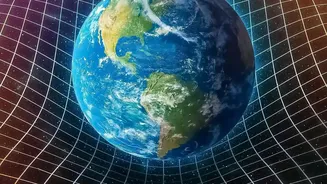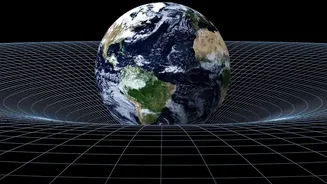


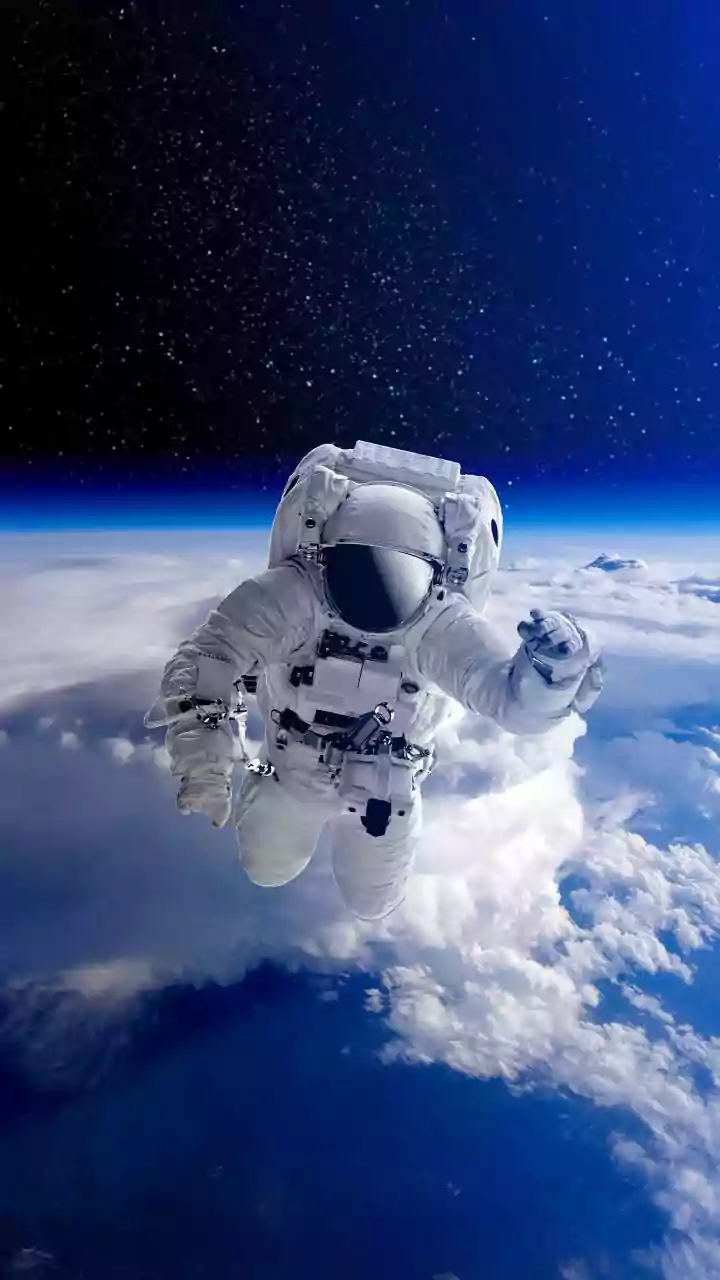




The Myth of 'Zero Gravity'
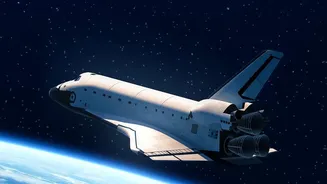
First, let's clear up the biggest misconception. The term 'zero gravity' is a popular but inaccurate way to describe what happens in orbit. Space Shuttle missions typically flew at altitudes between 190 to 330 miles. At that height, Earth's gravitational
pull is still about 90% as strong as it is on the surface. If you could build a tower that high and step off, you would fall—and fall fast. The force of gravity is by no means turned off. An astronaut who weighs 180 pounds on the launchpad would still technically weigh about 162 pounds in orbit. The reason they feel weightless has nothing to do with escaping gravity and everything to do with the nature of their movement.
The Real Answer: A Constant State of Freefall
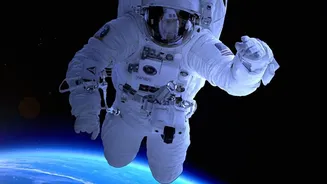
The secret to weightlessness is a concept called freefall. Imagine you're in an elevator and the cable snaps. For the few terrifying seconds before it hits the ground, both you and the elevator are falling at the same rate. If you were to drop a pen, it would float in front of you. Why? Because the pen, you, and the elevator are all accelerating downward together. You are weightless relative to your immediate surroundings. This is exactly what happens in orbit, just on a much grander and more elegant scale. The astronauts, the shuttle itself, and everything inside are all continuously falling toward Earth under the influence of gravity. Because everything is falling together, there's no force pushing back on the astronauts, and they experience the sensation of floating.
From Falling Down to Falling Around
So if the shuttle is constantly falling, why doesn't it crash into the planet? This is where speed comes in. Sir Isaac Newton explained this with a famous thought experiment involving a cannon on a very high mountain. If you fire a cannonball with a little gunpowder, it travels a short distance before gravity pulls it to the ground. If you add more gunpowder, it goes farther. But what if you could fire it at an incredibly high speed? At just the right velocity, the cannonball would still be falling, but the Earth's surface would be curving away beneath it at the exact same rate. It would perpetually fall 'around' the Earth, never getting any closer to the ground. This is what an orbit is: not an escape from gravity, but a perfect balance between forward momentum and the constant pull of gravity.
The Shuttle's 17,500 MPH Balancing Act
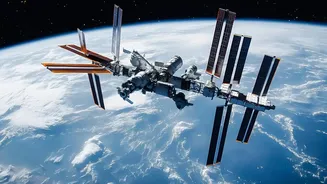
To achieve this state of continuous freefall, the Space Shuttle had to reach a blistering speed of about 17,500 miles per hour. At that velocity, as it was pulled downward by gravity, the Earth's horizon kept receding. The shuttle wasn't just going up; it was primarily moving sideways at an immense speed. This is why rocket launches curve horizontally as they ascend. They aren't just trying to get 'high enough'—they are fighting to gain the colossal forward speed needed to 'miss the ground' while falling. This constant, high-speed fall is what created the microgravity environment inside the shuttle, allowing for everything from scientific experiments with floating flames to astronauts chasing after drifting snacks.