






A top AI executive predicts that diseases like cancer could be 'relics of the past' in less than a decade, thanks to artificial intelligence. The bold claim signals a new era of optimism, but how much of it is hype versus reality?
The Source of the Bold Prediction
The forecast comes from
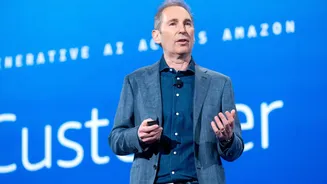
Dario Amodei, CEO of Anthropic, a major competitor to OpenAI and a leading force in the AI industry. Speaking recently, Amodei suggested that AI's ability to accelerate biological research could lead to an 'age of miracles', solving problems that have stumped scientists for generations. He's not alone; other tech leaders have echoed this sentiment, pointing to AI's potential to compress a decade of drug development into weeks. This isn't just a random expression of hope; it's a reflection of the immense computational power new AI models bring to understanding complex biological systems. Anthropic itself is already partnering with biotech firms to use its AI, Claude, to accelerate the development of treatments for cancer and other diseases.
AI's Current Role on the Front Lines
Beyond future predictions, AI is already making a tangible impact in oncology today. AI-powered systems are increasingly being used to analyze medical imaging like mammograms and CT scans, often detecting subtle signs of cancer that the human eye might miss. Studies have shown this can lead to earlier and more accurate diagnoses. AI also excels at personalizing treatment. By analyzing a patient's unique genetic data and medical history, algorithms can help predict which therapies are most likely to be effective, moving medicine away from a one-size-fits-all approach. Furthermore, these systems can sift through millions of research papers and clinical trial results in seconds, helping doctors stay current and even matching patients to experimental trials that could save their lives.
The Engine of a Revolution
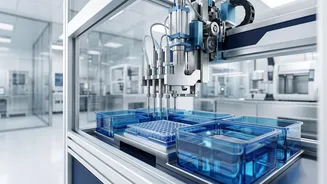
The core of this new optimism lies in AI's ability to revolutionize drug discovery, a process that traditionally takes over a decade and costs billions. AI models can analyze vast biological datasets to identify novel 'targets' on cancer cells that drugs can attack. A process that once relied on painstaking lab work can now be simulated by a computer. Inspired by breakthroughs like Google DeepMind's AlphaFold, which predicted the structure of millions of proteins, scientists are using AI to design new drug candidates from scratch. This allows researchers to create more promising molecules to test in the lab, potentially increasing the success rate of drugs that enter clinical trials and reducing costly failures.
Reality Check: The Hurdles Ahead
Despite the excitement, a complete 'cure' for cancer within a decade faces monumental obstacles. For one, cancer is not a single disease but over 200 distinct types, each with its own complexities. Medical experts and pharmaceutical leaders caution that even if AI designs a perfect drug on a computer, it must still undergo years of rigorous and expensive clinical trials to prove its safety and effectiveness in humans. There are also significant technical and ethical challenges. AI models are only as good as the data they are trained on, and biases in datasets can lead to tools that work less effectively for underrepresented populations. Furthermore, many AI systems operate as 'black boxes', making it difficult for doctors to trust their recommendations without understanding the reasoning behind them. Regulatory agencies are also still adapting to this new technology, creating another layer of uncertainty.