






From Gridlock to Green Space
The daily commute in many Indian cities has long been a draining experience, marked by endless traffic and pollution. This shared frustration is now fuelling a significant change in urban planning. Cities are increasingly recognising that designing for
cars alone is unsustainable. In response, a move towards pedestrian-first planning is gaining momentum, driven by a desire for cleaner air, better public health, and more efficient use of urban space. Government initiatives like the Smart Cities Mission and AMRUT are providing a framework and funding to help cities reclaim streets for people. The core idea is simple but transformative: when you make a city easier and safer to walk in, you improve the quality of life for everyone. This shift isn't just about building footpaths; it's about reimagining streets as public realms for community interaction, cultural expression, and economic activity.
Case Study: Delhi's Chandni Chowk
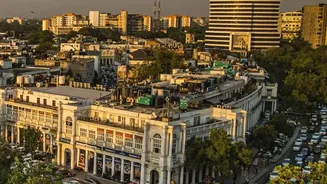
Perhaps the most high-profile example of this transformation is the redevelopment of Delhi's historic Chandni Chowk. The 1.3 km stretch, once a chaotic mix of vehicles, rickshaws, and pedestrians, was pedestrianised, banning motor vehicles for most of the day. The project, completed in 2021, involved replacing tangled overhead wires with underground cables, paving the main thoroughfare with red sandstone, and adding benches and greenery. The aim was to restore the 17th-century boulevard's heritage character while creating a decongested, pedestrian-friendly environment. The initial results have shown a boost to local businesses and an enhanced experience for tourists and shoppers who can now explore the iconic market without dodging traffic.
The Chennai Model: A Pedestrian Plaza Revolution
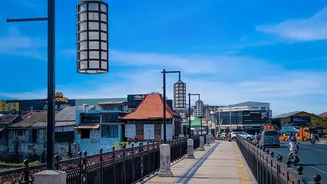
Chennai has emerged as a pioneer in this movement. In 2014, it became the first Indian city to adopt a Non-Motorised Transport (NMT) Policy, formally prioritising pedestrians and cyclists. The most celebrated outcome is the Pondy Bazaar Pedestrian Plaza in T. Nagar, a bustling shopping district. Launched in 2019, the project converted a heavily trafficked road into a wide, accessible walkway with play areas, seating, and spaces for public events. Studies showed that after the transformation, retail shop owners reported an increase in sales, and visitors felt safer. The space has hosted cultural events, from street music to dance and yoga, demonstrating how pedestrian infrastructure can also become cultural infrastructure. The success of this model has prompted plans to replicate it across the city.
The Cultural and Economic Dividend
Creating walkable streets does more than just reduce traffic; it unlocks significant economic and cultural benefits. Businesses located on improved streets often report higher sales due to increased footfall and the tendency of pedestrians to spend more time in an area. These renewed public spaces also become natural venues for culture. In cities like Mumbai, community initiatives like 'Equal Streets' and 'Raahgiri Day' temporarily close roads on weekends, turning them into carnivals of cycling, yoga, and art. These events have spread to over 30 cities, proving a widespread public appetite for car-free public spaces. By providing a stage for festivals, public art, and community gatherings, pedestrian zones help strengthen social bonds and enrich the cultural fabric of a city.
Challenges on the Path Forward
Despite the successes, the road to pedestrian-friendly cities is not without its bumps. A major challenge is enforcement and maintenance. The revamped Chandni Chowk has reportedly seen a return of illegal encroachments and traffic violations, highlighting the difficulty in sustaining these changes. Similarly, recent reports suggest Chennai's T. Nagar plaza is struggling with encroachments from vendors and illegal parking, compromising its intended use. There is also the issue of a massive existing infrastructure deficit; one report estimates that 97 percent of Indian roads lack walkable footpaths. Overcoming decades of carcentric planning requires sustained political will, robust governance, and consistent investment to ensure these projects don't remain isolated experiments.