







More Than Just Tradition
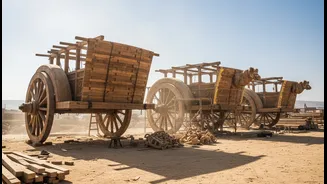
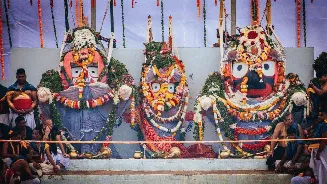
The three iconic chariots—Nandighosha for Lord Jagannath, Taladhwaja for Lord Balabhadra, and Darpadalana for Devi Subhadra—are not built from mere memory. They are staggering feats of structural engineering, constructed afresh every year following a complex
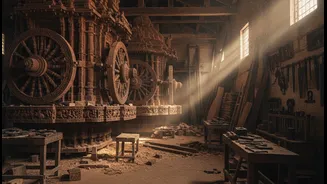
system of rules that have been passed down through generations. These are not simple carts; they are mobile temples, built without modern blueprints or power tools, yet their dimensions remain consistent century after century. This remarkable consistency is not accidental but is rooted in a deep understanding of mathematics, proportion, and physics, all guided by ancient scriptures. The entire process, from selecting the wood to the final assembly, is a ritualised application of sacred geometry.
The Blueprint in Numbers
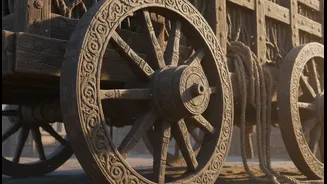
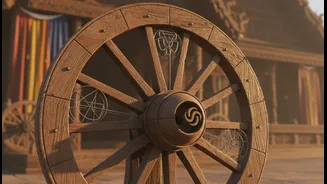
The specifications for each chariot are highly precise and symbolic. Lord Jagannath's Nandighosha stands tallest at approximately 45 feet, with 16 wheels. Lord Balabhadra’s Taladhwaja is about 44 feet high with 14 wheels. Devi Subhadra’s Darpadalana is around 43 feet with 12 wheels. Even the number of wood pieces is specific: Nandighosha uses 832 pieces, Taladhwaja uses 763, and Darpadalana uses 593. These numbers are not arbitrary. For example, the 16 wheels of Nandighosha are often interpreted in various symbolic ways within the tradition. The decreasing number of wheels (16, 14, 12) creates a visual and structural hierarchy, a deliberate design choice that blends aesthetics with engineering logic.
A Unique System of Measurement
The hereditary carpenters, known as 'Maharanas', do not use standard feet and inches. Instead, their construction relies on a traditional system of measurement that is both organic and incredibly precise. This system is often based on units like the 'angula' (the width of a finger) and the 'hasta' (the length of a forearm). The entire dimension of a chariot is a series of ratios and proportions derived from a base unit. This method, deeply embedded in ancient Indian architectural texts like the Shilpa Shastras, ensures that the structural integrity and aesthetic harmony are maintained. The dimensions are relative to each other, creating a scalable and perfectly proportioned model that can be recreated flawlessly year after year.
The Science of an Iron-Free Assembly
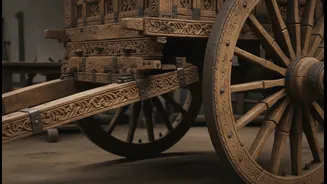
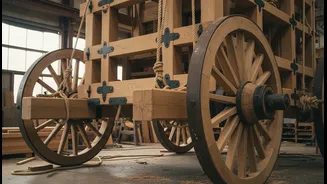
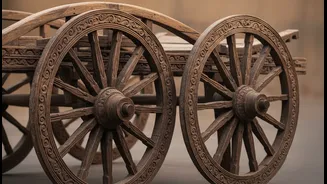
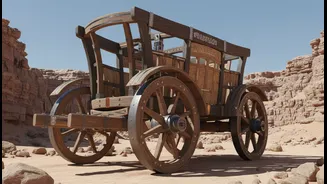
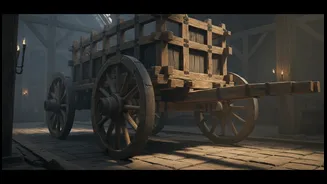
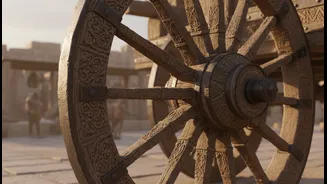
One of the most astonishing aspects of the chariots is their construction without a single iron nail in the main structure. The massive wooden components are joined using a sophisticated system of mortise and tenon joints, pegs, and brackets. This technique requires an advanced understanding of how wood behaves under immense stress and torsion. The choice of specific woods like Phassi and Dhausa is also a scientific one, selected for their strength, durability, and resilience. This method of joinery allows the massive structures, towering over 40 feet high, a degree of flexibility. This is crucial for navigating the Bada Danda, the Grand Road of Puri, absorbing the strain of being pulled by thousands of devotees and preventing the rigid structure from shattering under pressure.