

The Unseen Force of Stability
At its core, aircraft stability is the natural tendency of a plane to return to a state of steady, level flight after being disturbed by forces like turbulence or a control input. It's an invisible safety net woven into the aircraft's very design. This
is broken down into two main types. Static stability is the aircraft's initial tendency; if the nose is pushed up, a statically stable plane will want to nose back down on its own. Dynamic stability refers to what happens over time — whether the oscillations that follow a disturbance get smaller and eventually stop, or grow larger and more dangerous. Most passenger aircraft are designed with positive static and dynamic stability, meaning they want to fly straight and level, reducing pilot workload and providing a predictable ride.
The Pilot's Hand on the Controls
While stability makes a plane predictable, it doesn't mean it's easy to maneuver. This is where pilot control comes in. Control authority is the pilot's ability to make the aircraft deviate from its stable tendencies — to climb, descend, turn, and respond to commands. The pilot in command of an aircraft is legally designated as the final authority for its operation and safety. This means that while the aircraft is designed to be stable, the pilot must have the power to override those tendencies when necessary, whether for routine maneuvering or during an emergency. Finding the right balance is key; too much stability makes an aircraft sluggish and hard to handle, while too little makes it twitchy and demanding to fly.
When Automation Enters the Cockpit
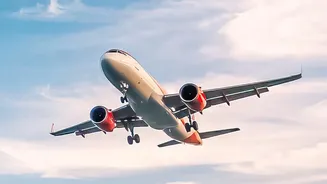
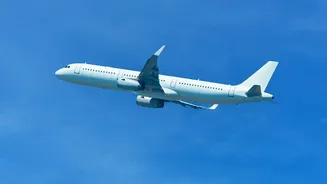
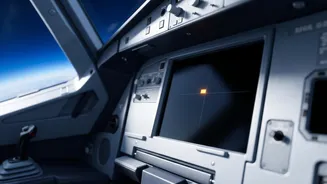
Modern airliners, like the Airbus A320, rely heavily on 'fly-by-wire' (FBW) systems. Instead of direct mechanical linkages, the pilot's inputs are sent to computers, which then command the control surfaces. These systems enhance stability and can prevent a pilot from making inputs that would put the plane outside its safe performance envelope, a feature known as flight envelope protection. However, this introduces a new layer of complexity. In some crisis situations, pilots can be surprised by the automation's behavior, leading to what is known as 'mode confusion,' where they misunderstand what the system is trying to do. This was a factor in several high-profile incidents where pilots found themselves fighting against automated systems that were receiving faulty sensor data.
The Balance During a Crisis
A cockpit crisis, such as a severe weather encounter, mechanical failure, or a stall, puts the relationship between stability and control to the ultimate test. Loss of Control In-flight (LOC-I) is a leading cause of accidents, and it often occurs even when the aircraft is technically still flyable. In these moments, a pilot must quickly diagnose the problem and decide whether to trust the plane's inherent stability, rely on automation, or take full manual control. For example, the correct recovery from an aerodynamic stall often requires the counterintuitive action of pushing the aircraft's nose down to regain airspeed, even when the ground is approaching. This requires overriding both natural human instinct and, at times, automated warnings.
Training for the Unexpected
Because the interaction between pilot and plane can become so complex, training is paramount. Pilots spend countless hours in advanced flight simulators practicing how to handle upset conditions and recover from loss of control. This Upset Prevention and Recovery Training (UPRT) is designed to build the skills and mental fortitude needed to overcome the 'startle effect' of a sudden crisis and apply the correct procedures. The goal is to ensure that even when automated systems fail or provide confusing information, the pilot has the fundamental skills to 'hand fly' the aircraft to safety. Ultimately, technology is a powerful tool, but in the most critical moments, there is no substitute for a well-trained pilot's understanding of their aircraft.