





The Sacred Artery of Faith
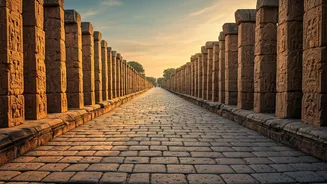
Every year, the three-kilometre stretch of the Bada Danda transforms from a bustling thoroughfare into a sacred artery, pulsing with the energy of millions. This is the path Lord Jagannath, his brother Lord Balabhadra, and their sister Devi Subhadra take
on their annual sojourn from the 12th-century Jagannath Temple to the Gundicha Temple. For the devotees who throng this road, it is not merely a physical space. It is a conduit of spiritual energy, a place where the distance between the divine and the mortal dissolves. To walk, stand, or even glimpse the deities on this road is an act of devotion in itself, a tradition that connects the modern pilgrim to countless generations who have made the same journey.
Mobile Temples in Motion
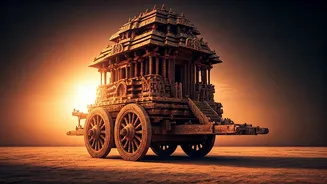
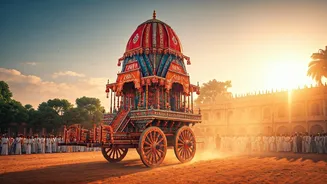
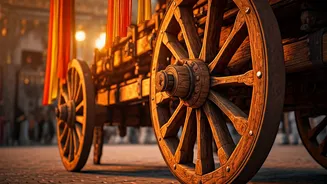
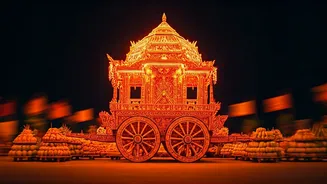
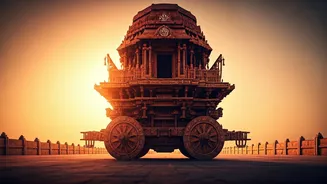
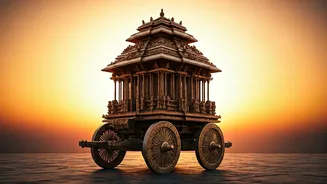
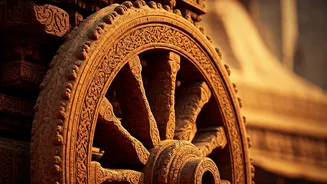
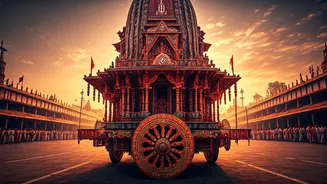
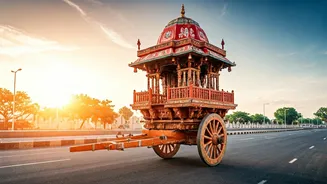
The stars of this grand procession are the three colossal chariots, meticulously reconstructed each year by designated families of artisans using ancient, prescribed methods. These are not just vehicles; they are mobile temples. Lord Jagannath’s chariot, Nandighosha, stands tall at 45 feet, draped in vibrant red and yellow cloth. Lord Balabhadra’s Taladhwaja is covered in red and green, while Devi Subhadra’s Darpadalana is adorned in red and black. The construction itself is a ritual, steeped in tradition passed down through generations. The moment these magnificent structures begin to move, pulled by thousands of hands, the Bada Danda erupts. It’s a spectacle of colour, sound, and raw spiritual power, a visual echo of descriptions found in ancient scriptures like the Skanda Purana and Brahma Purana.
A King's Humility Before God
One of the most profound and symbolic rituals that unfolds on the Grand Road is the Chhera Panhara. Before the chariots are pulled, the Gajapati Maharaja of Puri, the titular king and foremost servitor of the Lord, performs a humbling act. Dressed in simple white, he sweeps the platforms of all three chariots with a golden-handled broom and sprinkles them with fragrant sandalwood water. This ancient tradition carries a powerful message: before the divine Lord of the Universe, everyone is equal, including the king. It’s a public demonstration of humility and servitude that reinforces the core tenets of the Jagannath cult, where faith transcends social hierarchy. This act, witnessed by lakhs, is a quiet, powerful moment of continuity amidst the roaring devotion.
The Collective Pull of Devotion
The thick coir ropes, several inches in diameter, are the physical link between the deities and their devotees. To have a hand in pulling these ropes is considered an act of immense spiritual merit. It is a collective effort where millions of individual wills merge into a single purpose: to guide the Lords on their journey. The movement is not always smooth; it’s a rhythmic surge of human effort. The servitors, or Daitapatis, who are considered the Lord’s relatives, guide the procession, their calls and instructions cutting through the devotional chants. This shared physical exertion creates a powerful sense of community and shared purpose, unifying people from every corner of the country and the world in a singular act of faith. It’s a physical manifestation of the idea that devotion is an active, participatory force.
A Symphony of Sights and Sounds
The devotion on the Grand Road is not limited to the pulling of the chariots. The entire stretch becomes a stage for myriad cultural expressions. Troupes perform traditional Odissi dance, their graceful movements telling stories of the gods. Sankirtan groups, with cymbals and mridangams, fill the air with continuous, hypnotic chanting. The sounds of conch shells, bells, and gongs create a divine symphony. For the nine days of the festival, the town of Puri breathes this spirit. It is an immersive experience where ancient traditions are not just remembered but are actively lived and celebrated, ensuring their powerful echo continues to resonate through time.