




MS Dhoni: Captain Cool, The Ultimate Finisher
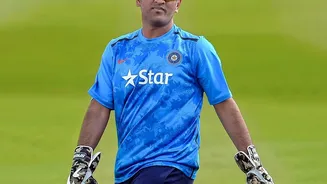
Mahendra Singh Dhoni’s name is synonymous with calmness in chaos. As a captain and a batsman, he possessed an almost supernatural ability to slow down time when the match was speeding out of control. His defining moment came in the 2011 World Cup final.
With India at a precarious 114 for 3 chasing 275, Dhoni promoted himself up the order, ahead of the in-form Yuvraj Singh. It was a bold, legacy-defining decision. He proceeded to play a masterful, unbeaten innings of 91 from 79 balls, controlling the chase with unnerving serenity. The final, unforgettable six over long-on didn't just win the World Cup after 28 years; it cemented his status as the ultimate finisher, a leader who took responsibility when it mattered most.
Virat Kohli: The Chase Master
No target is safe when Virat Kohli is at the crease in the second innings. Dubbed the 'Chase Master', Kohli has built a legendary career on methodically dismantling opposition totals with a blend of fierce intensity and calculated risk. His statistics in successful ODI chases are staggering, with more centuries than any other player in history. A quintessential example of his genius under pressure was the Hobart hurricane in 2012 against Sri Lanka. India needed to chase down 321 in under 40 overs to stay alive in the tournament. Kohli responded with a blistering 133 not out from just 86 balls, an innings of such controlled aggression that it left the opposition stunned and secured an improbable victory in just 36.4 overs. Another career-defining knock was his 183 against Pakistan in the 2012 Asia Cup, where he anchored a chase of 330 runs, showcasing his ability to handle the immense pressure of the arch-rivalry.
Gautam Gambhir: The Unsung Hero of Finals
While others might have claimed the final headlines, Gautam Gambhir was the silent guardian of India's two greatest modern triumphs. Often overlooked, his contributions in the finals of the 2007 T20 World Cup and the 2011 ODI World Cup were nothing short of monumental. In the 2007 final against Pakistan, he anchored the innings with a crucial 75 off 54 balls, providing the backbone for a total that India defended by a slim margin. Four years later, in the 2011 final, after India lost Sehwag and Tendulkar early, the Wankhede Stadium fell silent. Gambhir walked in and absorbed the immense pressure, building a gritty and determined 97. He stabilised the innings, building partnerships first with Kohli and then with Dhoni, laying the foundation upon which the victory was built. Though he missed a well-deserved century, his selfless knock was the bedrock of India's triumph.
Yuvraj Singh: The Architect of World Cup Triumphs
Yuvraj Singh was a player for the big occasion, a flamboyant all-rounder who reserved his best for the world's biggest stage. His performance in the 2011 World Cup is the stuff of legend. While battling a serious illness that would later be diagnosed as cancer, he delivered one of the greatest all-round displays in the tournament's history. He scored 362 runs and took 15 wickets, earning him the Player of the Tournament award. His crucial unbeaten 57 against defending champions Australia in the quarter-final, guiding India through a tense chase, epitomised his fighting spirit. This was four years after his heroics in the inaugural 2007 T20 World Cup, where his fastest-ever T20 fifty, featuring six sixes in an over against England, provided the explosive momentum that carried India to the title.
Anil Kumble: The Fighter with a Broken Jaw
Pressure isn't always about chasing runs; sometimes it's about pure, unadulterated courage. Anil Kumble, India's greatest match-winning bowler, was the embodiment of relentless determination. The most iconic display of his grit came during the 2002 Test match against the West Indies in Antigua. After being struck in the face by a bouncer from Mervyn Dillon, Kumble suffered a fractured jaw. With his tour over and surgery scheduled, any normal player would have been in the hospital. Kumble, however, emerged from the dressing room with his head heavily bandaged and bowled 14 consecutive overs. In a spell of incredible fortitude, he managed to dismiss the legendary Brian Lara, one of the toughest batsmen in the world. The match ended in a draw, but Kumble's act of defiance became a timeless symbol of putting the team above self, no matter the pain.