







The Slow Path of Structural Safety
Traditionally, ensuring a building’s strength was a slow, siloed process. An architect would design, then an engineer would run complex simulations to test for weaknesses under loads like wind and seismic activity. This could take weeks. If a flaw was found,
the design went back for revision, and the cycle would repeat. This back-and-forth created bottlenecks, stifled creativity, and added significant time and cost, often taming bold visions with the heavy weight of proving their safety.
AI as the Architect's Co-Pilot
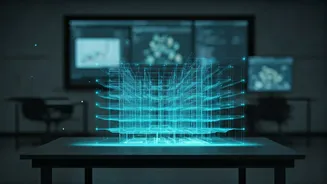
Interactive AI tools shatter this old model. Instead of a post-design check, they provide a real-time feedback loop. Think of it as an intelligent co-pilot for the architect. As the designer modifies a 3D model, the AI engine instantly re-runs thousands of structural simulations. It provides immediate visual feedback, often using colour-coded heatmaps to show areas of high and low stress. What if we use a different material? What if we alter the geometry? The answers now arrive in seconds, turning design into a dynamic conversation between human creativity and machine intelligence.
How the Magic Happens
This real-time capability is powered by a combination of cutting-edge technologies. Sophisticated physics simulation engines, often accelerated by powerful GPUs, are at the core. These are fed by vast libraries of data on material properties—the strength of steel, the compression of concrete, the flexibility of new composites. Machine learning models, trained on this data and countless past simulations, learn to predict structural behaviour with incredible speed and accuracy. Many of these tools work with “digital twins”—a detailed virtual replica of the building—allowing for endless testing before a single brick is laid.
The Benefits: Beyond Speed
The most obvious benefit is a dramatic acceleration of the design pipeline, but the implications are far deeper. By running thousands of variations, AI can uncover non-obvious design solutions that are both stronger and more efficient. This is 'generative design,' where the AI proposes viable, often organic-looking forms based on goals like "use 30% less material." This leads to lighter, more sustainable buildings. It enhances safety by allowing for more rigorous testing against extreme events. And by freeing architects from the fear of structural failure, it unlocks new creativity, enabling complex forms that were once too risky to attempt.
A Blueprint for India's Growth
For a nation like India, undergoing rapid urbanization and a massive infrastructure push, this technology is a necessity. With ambitious projects from smart cities to new highways, the need for fast, safe, and efficient construction is paramount. AI-driven structural testing can help ensure that new infrastructure is resilient to India's diverse seismic zones and extreme weather conditions. It can help optimise the use of materials, a crucial factor in managing costs and sustainability for large-scale projects. By embracing these tools, Indian firms can build faster and deliver world-class architectural solutions that are both safe and resource-conscious.
Challenges and the Human Element
Adoption is not without hurdles. The software can be expensive, and it requires a new set of skills for architects and engineers. More importantly, these tools are not a replacement for human expertise and judgment. An AI can analyse stress, but it cannot understand a building's cultural context or aesthetic purpose. The final decision and ultimate responsibility must always rest with the human professional. The future is not one of AI architects, but of AI-empowered architects who leverage these tools to make better, more informed decisions.