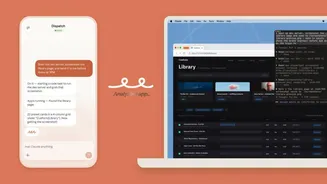









Meet Your New Digital Coworkers
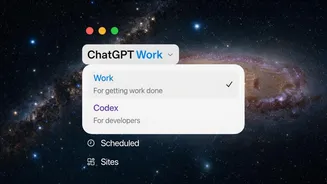
The future of office work may not be a physical robot at a desk, but invisible software working in the background. This is the world of AI agents, and a key player emerging is Anthropic's Claude. The concept, sometimes referred to as "Claude Cowork,"
involves using AI as an autonomous agent to handle complex, multi-step tasks. Unlike a simple chatbot that answers questions, an office agent can be given a goal—like organizing a team offsite or preparing a quarterly report—and it will plan the steps, access different applications, and deliver a finished product with human oversight. Anthropic has been developing products like Claude Cowork, which can work on a user's computer, manage local files, and interact with everyday applications to complete high-effort, repeatable tasks without a user needing to prompt each step. These are not just passive tools; they are active digital workers designed to automate entire workflows.
From Static Blueprints to Predictive Operations
For decades, office planning was a rigid, long-term process focused on headcount and real estate. AI agents are making it a dynamic, real-time discipline. Instead of facility managers guessing how many desks or meeting rooms are needed, AI can analyze data from calendars, project management tools, and building sensors to predict needs with remarkable accuracy. These systems can see that a project team is entering a critical phase and proactively reserve a collaboration space, or notice that office attendance is low on Fridays and adjust heating and lighting to save energy. This moves corporate real estate from a reactive cost center to a proactive, strategic asset. By analyzing usage patterns, AI can help organizations optimize their space, identifying underutilized areas and recommending layout adjustments that better fit actual employee needs.
Enhancing the Employee Experience
This shift isn't just about corporate efficiency; it's about improving daily work life. A significant amount of an employee's time is spent on administrative tasks, not strategic work. AI agents can take on this burden, handling everything from scheduling complex meetings across time zones to filing expenses and summarizing long email threads. For an employee, this means less friction and more focus. An AI agent could help a new hire by automatically scheduling introductory meetings, or help a project manager by drafting status updates. By automating routine processes, companies can free up their teams to concentrate on creativity, problem-solving, and high-value work that requires human judgment. This can lead to better work-life balance and higher job satisfaction.
Beyond Booking Meeting Rooms
The scope of office agents extends far beyond simple scheduling. These AI systems are being designed to integrate with a wide array of business tools, from financial software like QuickBooks to HR platforms. For instance, Anthropic's Claude for Small Business aims to help with tasks like planning payroll, chasing invoices, and reconciling accounts. In a corporate setting, this could mean an agent that assists HR with creating job descriptions and onboarding plans, or one that helps the legal team with document discovery. The goal is to create a seamless operational fabric where information flows intelligently between systems, managed by AI but always supervised by humans. This interconnectedness allows for smarter, data-driven decisions across the entire organization.
The Challenges on the Horizon
The vision of an AI-run office is compelling, but implementation is not a simple plug-and-play affair. One of the biggest hurdles is data security and privacy. Giving an AI agent access to sensitive company data and internal systems requires robust governance and controls to prevent misuse or breaches. There are also significant costs associated with integration, and companies must navigate the change management required to get employees to trust and collaborate with their new digital counterparts. Experts caution that organizations need to treat AI agents less like software features and more like a new form of digital labor, which requires new management skills, risk controls, and clear metrics for success. The focus must remain on AI as a tool to support humans, not replace their judgment entirely.