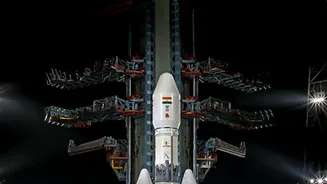








India is opening its final frontier. Recent changes to the Foreign Direct Investment (FDI) policy for the space sector are more than just regulatory tweaks; they represent a seismic shift designed to attract global capital and accelerate growth.
The Old Galaxy vs. The New Cosmos
For decades,
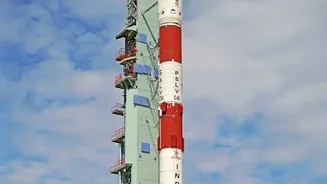
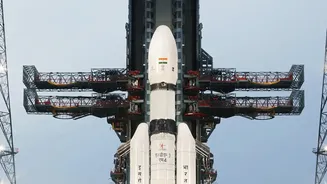
India's space programme was the near-exclusive domain of the Indian Space Research Organisation (ISRO). Private companies were mostly limited to being component suppliers rather than independent creators. Foreign investment was highly restrictive, requiring government approval for nearly any activity, a process that often discouraged large-scale international capital. The new policy, amended to align with the Indian Space Policy 2023, dismantles many of these old barriers. It creates a tiered system that significantly liberalises entry routes for foreign investors, moving away from a state-monopolised model to one that encourages private enterprise.
A Big Bang for Startups
The new rules are a significant catalyst for India's burgeoning space startup scene, which has grown from a handful of companies to over 400 in recent years. For these innovators, the key challenge has often been access to significant, long-term capital. The policy directly addresses this by allowing up to 74% FDI through the automatic route for satellite manufacturing and operations, and up to 49% for launch vehicles and the creation of spaceports. This influx of foreign capital is expected to help startups move beyond early-stage development, scale their operations, and integrate into the global space supply chain. It de-risks innovation and provides the financial fuel needed to turn ambitious designs into functioning hardware in orbit.
Fueling 'Make in India' for the Stars
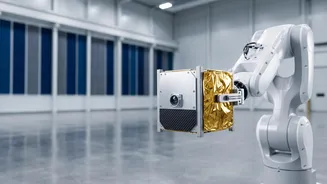
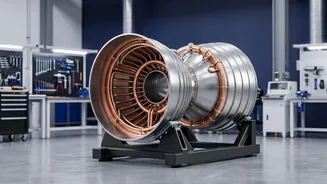
The most dramatic change is in manufacturing. The new policy allows 100% FDI via the automatic route for making components, systems, and sub-systems for satellites and ground infrastructure. This is a direct invitation to global aerospace giants to establish manufacturing facilities in India. The strategic goal is twofold: to leverage India’s cost-effective and highly skilled engineering talent pool and to boost domestic manufacturing capabilities under the 'Make in India' initiative. By attracting global players, Indian manufacturers can gain access to cutting-edge technology, upgrade their infrastructure to meet international standards, and secure contracts with major global space agencies and launch providers. This shift also allows ISRO to transition its focus from routine manufacturing to advanced R&D and deep-space exploration missions.
The Broader Economic Trajectory
The impact of these rules extends far beyond the companies directly involved in building rockets and satellites. The liberalised policy aims to grow India’s share of the global space economy from its current 2-3% to a much more significant figure. Projections estimate India's space economy could grow from around $8.4 billion to over $44 billion by 2033. This growth will generate high-skilled employment, foster spin-off technologies, and create a ripple effect across sectors like telecommunications, agriculture, disaster management, and logistics, all of which increasingly rely on satellite data and services. However, challenges remain. The industry still needs a comprehensive Space Activities Bill to provide a robust legal framework for issues like liability and insurance, which becomes more critical as private, foreign-funded launches increase.