



The Celestial Trio on Display
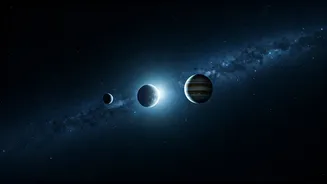
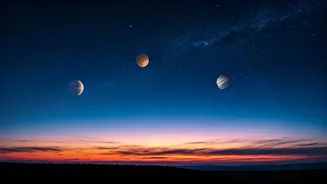
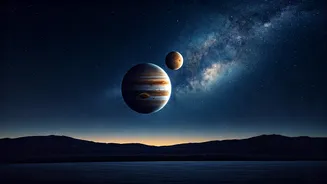
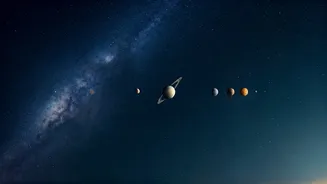
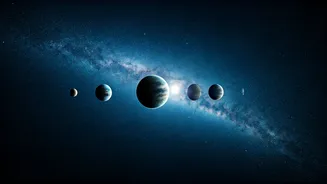
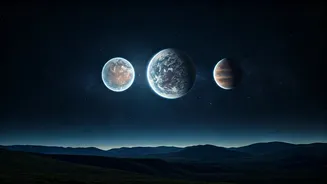
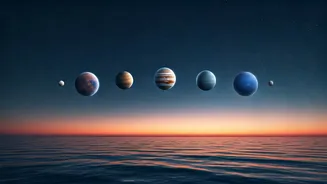
Tonight's main event features a beautiful alignment of three planets: bright Jupiter, ringed Saturn, and speedy Mercury. While they appear close together from our vantage point on Earth, they are, of course, millions of kilometres apart in space. This
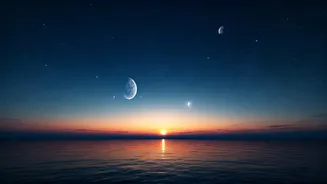
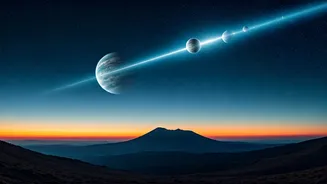
apparent lineup is a fantastic trick of perspective, occurring as the planets follow their individual orbits around the Sun. From our view, they seem to form a neat line, a temporary cosmic necklace draped across the twilight sky. Jupiter will likely be the brightest of the three, a brilliant, steady beacon. Saturn, yellowish and slightly fainter, will be nearby. Mercury is the trickiest to spot, as it never strays far from the Sun’s glare and will be lowest on the horizon.
Your Window of Opportunity: When to Look
Timing is everything when it comes to planet-gazing, especially when Mercury is involved. The best time to look is during the twilight hour, starting about 30 to 45 minutes after sunset. This brief window is the sweet spot. The sky will be dark enough for the planets to become visible, but the Sun won't be so far below the horizon that Mercury has already set. As the sky darkens further, Mercury will dip out of sight first, followed by Saturn and then Jupiter. Your viewing window will likely last for about an hour, so don't delay. Check your local sunset time and be ready to head outside shortly after.
Finding Your Bearings: Where to Look
As the headline suggests, your gaze should be directed towards the west. After the Sun sets, find a spot with an unobstructed view of the western horizon. This is crucial, as the planetary lineup will be relatively low in the sky. If you live in a city, this might mean heading to a rooftop, a park, or the side of your building that faces west without a taller structure in the way. The planets will appear in a rough diagonal line. To easily find west if you're unsure, just note the general direction where the Sun disappeared and look there. The first 'star' that appears in that area will almost certainly be the brilliant planet Jupiter, your anchor for spotting the other two.
Binoculars or Bare Eyes?
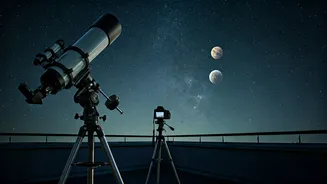
The great news is that this event is visible to the naked eye. Jupiter and Saturn are bright enough to be easily seen from most urban and suburban locations, provided the sky is clear. Mercury will be more of a challenge but is still visible without aid if you have a clear horizon and know exactly where to look. However, if you have a pair of binoculars, this is the perfect time to use them. Even a standard pair will dramatically enhance your view. Point them at Jupiter, and you might be able to spot its four largest moons—Io, Europa, Ganymede, and Callisto—appearing as tiny pinpricks of light in a straight line on either side of the planet. While you won't see Saturn's rings with most binoculars, they will make the planet appear as a distinctly non-circular, slightly elongated golden orb. Binoculars will also make spotting faint Mercury significantly easier against the fading twilight.
Tips for a Perfect Viewing Experience
To make the most of this celestial show, a little preparation goes a long way. First, try to get away from direct light. Move to the darkest part of your balcony or find a spot in a park away from streetlights. Second, give your eyes time to adjust to the dark—it takes about 15-20 minutes for them to become fully sensitive to faint light. Third, consider using a stargazing app on your phone. Apps like Stellarium, SkyView, or Star Walk can use your phone's camera and GPS to show you exactly where the planets are in the sky in real-time. Just be sure to use the app’s ‘red light mode’ to preserve your night vision. Finally, be patient. Sometimes it takes a few moments of scanning the sky before your eyes pick out what you're looking for.