


A Sweet Find in Deep Space
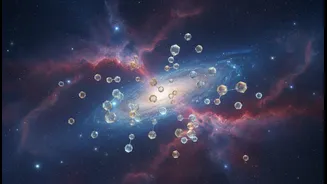
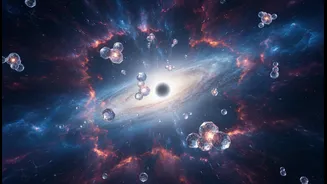
Imagine a giant cloud of gas and dust, thousands of light-years from Earth, seasoned with sugar. That’s essentially what an international team of scientists found. Using powerful radio telescopes in Spain, they identified the chemical signature of erythrulose
in a molecular cloud named G+0.693−0.027, located about 27,000 light-years away in a region rich with complex molecules. On Earth, erythrulose is a simple four-carbon sugar known for giving raspberries their sweet taste and, surprisingly, as an ingredient in sunless tanning products. But finding it in the frigid expanse of the interstellar medium is a game-changer for astrobiology.
What Makes a Molecule a 'True' Sugar?
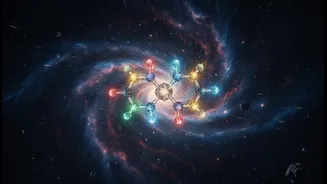
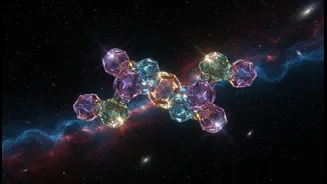
Scientists have found other sugar-like molecules in space before, most notably glycolaldehyde in 2000. However, chemists generally define a “true” sugar as a carbohydrate with at least three carbon atoms. Glycolaldehyde has only two. Erythrulose, with its four-carbon structure, is the first true sugar ever to be directly detected in the space between stars. This discovery is significant because it proves that molecules of this complexity can form naturally in the harsh conditions of deep space, long before planets even begin to coalesce.
The Pathway to Life's Genetic Code
The discovery of erythrulose is more than just a cosmic curiosity; it's a vital clue in the puzzle of life's origins. Sugars are fundamental to biology, forming the structural backbone of RNA and DNA, the molecules that carry genetic instructions. While erythrulose is not the exact sugar found in our genetic material (that would be ribose for RNA and deoxyribose for DNA), it is a close chemical relative. Scientists believe it could be a key precursor, a stepping stone in the chemical reactions that might eventually lead to the formation of ribose. This finding strongly supports the theory that life's essential ingredients were not created on Earth but were instead delivered to our young planet by comets and asteroids that had collected them from these interstellar molecular clouds.
Challenging Old Theories of Formation
One of the most surprising aspects of the discovery is how much erythrulose was found. The team, led by Izaskun Jiménez-Serra of Spain's Center for Astrobiology, found the four-carbon sugar to be significantly more abundant than any simpler three-carbon sugars in the same region. This challenges the long-held belief in astrochemistry that complex molecules form incrementally, by adding one carbon atom at a time. Instead, the evidence suggests a different, more efficient pathway may be at play, where erythrulose is formed by combining two smaller, two-carbon molecules on the icy surfaces of cosmic dust grains. This could mean that the universe is far more efficient at creating complex organic molecules than we previously imagined.
A Universe Full of Ingredients
This discovery does not mean we’ve found alien life. What it does confirm is that the raw materials needed for life as we know it can and do exist throughout the galaxy. The detection was made by meticulously matching 12 distinct spectral signals from the gas cloud to the known chemical fingerprint of erythrulose measured in a lab. The ultimate goal for many astrobiologists is to find ribose, the five-carbon sugar that is the backbone of RNA, floating freely in space. Finding its four-carbon cousin is a massive leap in that direction. It suggests that the chemical conditions necessary for life’s emergence might be common across the cosmos, waiting in stellar nurseries for new planets to form.