


Why Precision Is Your Friend
Cooking can often be forgiving, allowing for a pinch of this and a splash of that. Baking, however, is much more of a science. It relies on precise chemical reactions between ingredients to achieve the right texture, structure, and flavour. Too much flour
can lead to a dry, dense cake, while too little baking powder can leave it flat. Even a small deviation can turn a potential triumph into a disappointing failure. This is why accurate measurements are non-negotiable for consistent, successful results, whether you're baking a cake or making a complex gravy.
The Problem with 'Eyeballing' It
When a recipe calls for one teaspoon, it refers to a standard unit of volume (approximately 5 millilitres). The spoons in your cutlery drawer, however, are not standardized. A dinner spoon can vary wildly from one set to another. 'Eyeballing' ingredients with a random spoon introduces a significant variable. One person's 'heaping spoon' is another's level measure. This inconsistency is why a dish might turn out perfectly one day and fail the next, even when following the same recipe. Without a consistent measure, you can't guarantee a consistent outcome.
How to Create a Reliable Stand-In
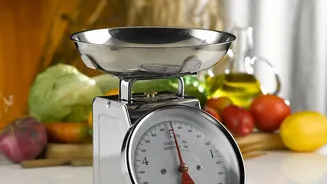
If you find yourself without a measuring spoon, don't despair. You can calibrate a household spoon to use as a consistent, if not perfectly standard, measure. First, you need a known quantity. If you have a larger measuring cup or even a kitchen scale, you can work backwards. For example, there are 16 tablespoons in a cup. You can pour a cup of a dry ingredient like rice or sugar and divide it into 16 equal piles to approximate a tablespoon. A more reliable method involves a kitchen scale. A standard teaspoon of table salt should weigh about 6 to 7 grams. By weighing an ingredient, you can find which of your everyday spoons comes closest to the mark.
The Golden Rule: Mark Your Tool
Once you've identified a spoon or small container to be your temporary measure, the most crucial step is to mark it clearly. Use a permanent marker or a small scratch to indicate the fill line. This act transforms a random object into a reliable tool. The goal isn't necessarily to have a perfect, lab-certified teaspoon; the goal is to have a tool that measures the same amount every single time you use it. This ensures your measurements are precise and repeatable for your own recipes. So, if your designated 'teaspoon' is actually 1.2 teaspoons, it doesn't matter, as long as you use that same measure every time and mark it to prevent mixing it up with other spoons.
The Ultimate Solution: Measure by Weight
While homemade measures are a great fix, professional bakers and chefs know that the most accurate way to measure ingredients is by weight, not volume. A cup of flour can weigh anywhere from 120 to 150 grams depending on how tightly it's packed, a variance of up to 30% that can dramatically alter a recipe. A gram, on the other hand, is always a gram. Investing in a simple digital kitchen scale eliminates all the guesswork related to packing flour, the difference between fluid and dry ounces, and the inaccuracies of volume cups. For consistent and professional-level results, nothing beats weighing your ingredients.