


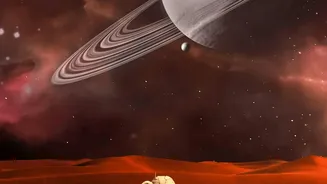
The Ringed Jewel Begins Its Ascent
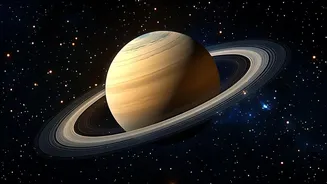
Throughout August 2026, Saturn will be the undisputed star of the late-night and early-morning sky. While many celestial events require perfect conditions or powerful equipment, the beauty of Saturn's appearance this month is its accessibility. As Earth
moves along its orbital path, we are catching up to Saturn, making the gas giant appear progressively brighter and larger with each passing week. This celestial dance means that from late August onwards, we enter the prime window for observing the planet, a period that will last for several months. It’s an ideal time for both seasoned astronomers and curious families to turn their eyes to the heavens and spot this distant world.
Why This Period Is Special: A Celestial Alignment
The reason for this spectacular show is a phenomenon called 'opposition'. While the peak of this event, when Earth passes directly between the Sun and Saturn, will occur on October 4, 2026, the build-up throughout August and September is just as exciting. Think of it like this: Earth is on the inside lane of a racetrack, and we are about to overtake Saturn, which is on an outer lane. During this pass, the distance between our two planets shrinks considerably. As a result, Saturn will be at its closest to Earth, receiving the full glare of the Sun from our perspective, making it shine at its brightest in our sky. It also means the planet will be visible for the entire night, rising in the east around sunset and setting in the west around sunrise.
When and Where to Look from India
For observers in India, Saturn will become a prominent feature of the eastern sky in the late evening. At the beginning of August, you can expect to see it rise around 10:30 PM local time. As the month progresses, it will rise earlier each night. To locate it, look towards the east for a bright, steady, yellowish point of light that doesn’t twinkle like a star. Saturn will be situated in the constellation Pisces. If you’re not familiar with constellations, don’t worry. A simple sky-gazing app on your smartphone can point you in the right direction. For an extra-easy guide, look for the Moon on the nights of August 30th and 31st; Saturn will be its nearby celestial companion.
From Naked Eye to a Small Telescope
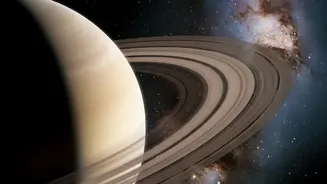
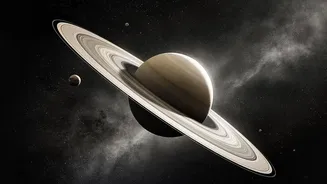
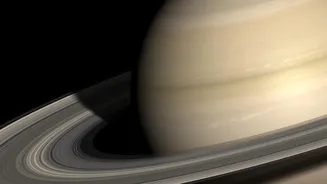
One of the best things about this event is that you don’t need expensive gear to enjoy it. With just your naked eyes, Saturn is easily visible as one of the brightest objects in the night sky, appearing like a golden-hued star. If you have a pair of binoculars, you’ll get an even better view. The binoculars will enhance its distinct colour and, if held steady, might even give you a hint of its famous rings, which can make the planet look slightly oblong or like it has 'ears'. But if you have access to even a basic telescope, you are in for a breathtaking sight. A small telescope with a magnification of 25x or more will clearly reveal the planet’s iconic rings, a sight that has captivated astronomers for centuries. You may also be able to spot its largest moon, Titan, as a tiny pinpoint of light nearby.
Tips for Viewing from a City
Living in a bright, bustling Indian city doesn't have to disqualify you from this cosmic event. While light pollution makes stargazing a challenge, Saturn is bright enough to punch through the urban glow. To get the best possible view, try to find a location with a clear view of the eastern horizon, away from the direct glare of streetlights or buildings. A local park, a high rooftop, or even a quiet balcony can work well. Give your eyes at least 15 minutes to adjust to the darkness; this will significantly improve your ability to spot dimmer objects. While the city lights may wash out fainter stars, Saturn's steady, bright presence should still be discernible, offering a moment of cosmic wonder amidst the urban landscape.