




The Allure of an Icy Moon
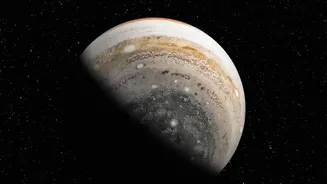
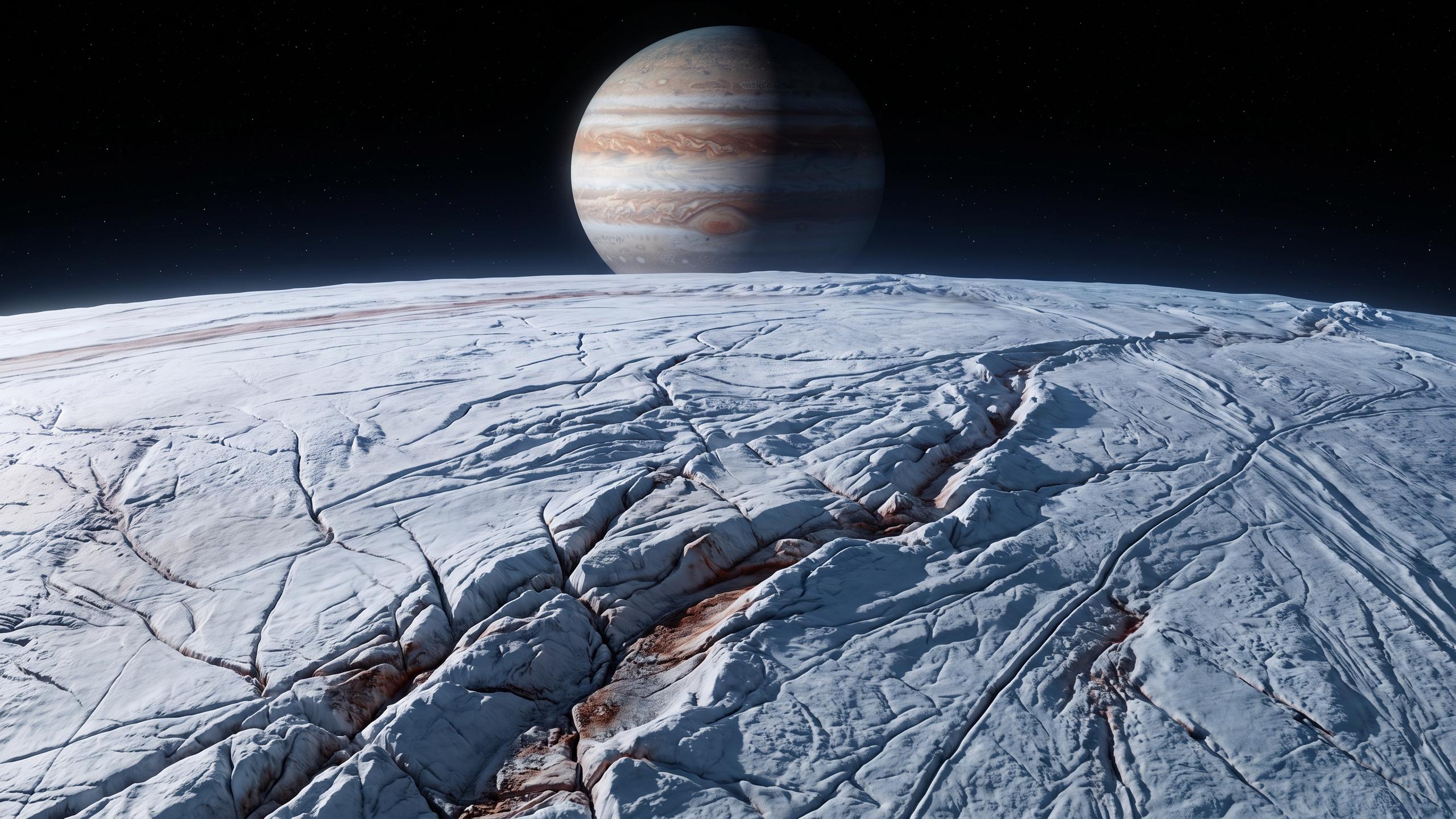
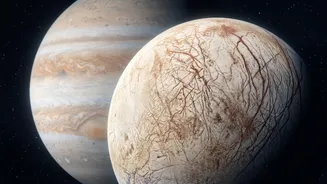
For decades, Jupiter's moon Europa has captivated scientists. Slightly smaller than Earth's moon, it is one of the smoothest objects in the solar system, encased in a shell of water ice. But the real excitement lies beneath this frozen crust. Strong evidence
suggests the existence of a global, saltwater ocean, potentially 60 to 150 kilometres deep. This ocean could contain more than twice the amount of water found in all of Earth's oceans combined. What makes Europa a prime candidate in the search for life are three key ingredients it might possess: liquid water, essential chemical elements, and a source of energy from the immense gravitational pull of Jupiter, which flexes and heats the moon's interior.
A Long and Clever Journey
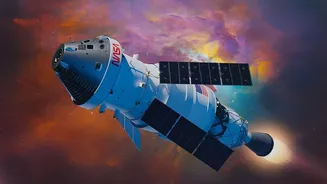
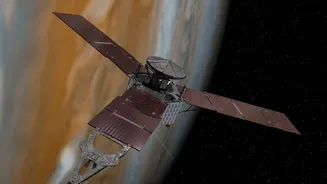
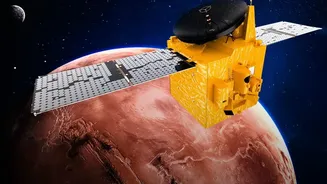
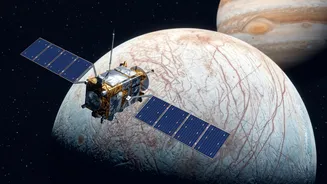
Launched in October 2024, the Europa Clipper spacecraft is currently on a 2.9-billion-kilometre voyage. As of September 2026, the probe is on its way back toward our home planet. To reach the outer solar system without carrying an impossibly large amount of fuel, Clipper is using a technique called gravity assist. It already completed a flyby of Mars in March 2025. In December 2026, it will swing by Earth to get a final gravitational slingshot, propelling it toward its 2030 arrival at Jupiter. Once there, it won't orbit Europa directly, as Jupiter's intense radiation field would damage the spacecraft's electronics. Instead, it will enter a long, looping orbit around Jupiter and perform nearly 50 close flybys of Europa, some as low as 25 kilometres above the surface.
A Toolkit for Astrobiology
To peer beneath the ice and understand this distant world, Europa Clipper carries a sophisticated suite of nine scientific instruments. An ice-penetrating radar, called REASON, is designed to measure the thickness of the ice shell and search for pockets of water or even the ocean itself. Spectrometers will analyse the chemical composition of the moon's surface and tenuous atmosphere by studying the light reflected from them. A magnetometer will measure the strength and direction of the magnetic field around Europa, which can confirm the existence of a global ocean and even estimate its depth and saltiness. Cameras will capture high-resolution images, mapping the surface geology and looking for recent activity. These tools work together to paint a comprehensive picture of Europa's environment.
Searching for Habitability, Not Aliens
It's important to understand what scientists mean by 'searching for signs of life.' The Europa Clipper is not a life-detection mission; it won't be looking for Europan fish or microbes. Its main goal is to determine if the moon has conditions suitable for life, a quality known as habitability. The mission will characterise the ocean, determine what chemicals are available, and search for evidence of geologic activity, such as water plumes that may erupt from the surface. If such plumes are found, instruments like the SUrface Dust Analyzer (SUDA) and a mass spectrometer (MASPEX) could directly sample material from the subsurface ocean, offering an incredible glimpse into its composition without having to drill through the ice. Finding the right ingredients for life would be a monumental breakthrough in itself, paving the way for future missions that might one day search for life directly.