
The Sun’s Invisible Fury
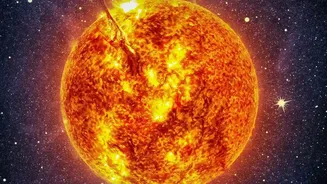
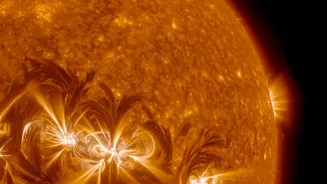
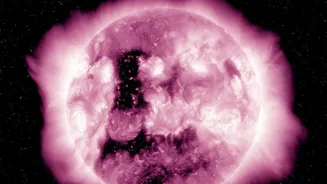
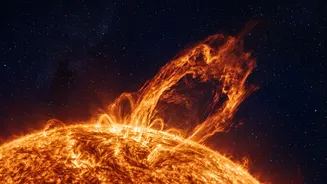
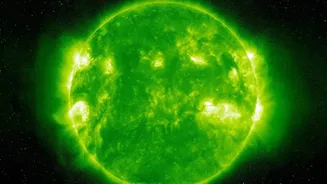
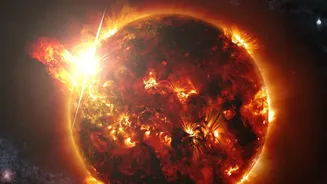
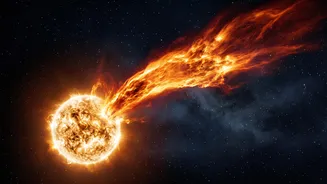
Our sun is not always the benign star we see in the sky. It occasionally unleashes colossal blasts of plasma and magnetic fields known as Coronal Mass Ejections (CMEs). When a CME barrels towards Earth, it can trigger a geomagnetic storm — a major disturbance
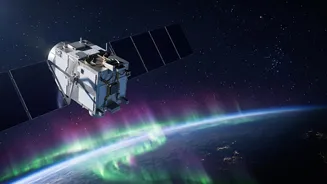
of our planet's magnetic field. While Earth's atmosphere protects humans on the surface, our technology is highly vulnerable. A powerful storm, like the historic Carrington Event of 1859, could knock out power grids, disable satellites, disrupt GPS and communication systems, and cost the global economy trillions. In 1989, a less severe storm caused a nine-hour blackout across Quebec, Canada, demonstrating the very real risks. With our increasing reliance on technology, from financial transactions to navigation, the stakes have never been higher.
Racing Against a Solar Clock
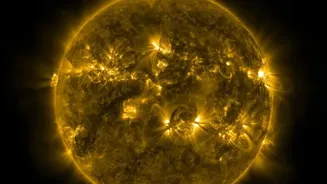
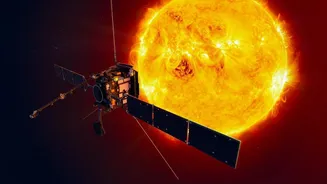
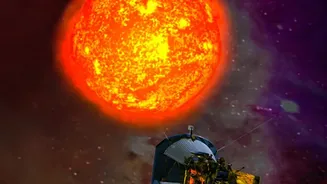
For years, predicting the impact of a solar storm has been a frantic race against time. Scientists use satellites like NASA's Solar Dynamics Observatory (SDO) to watch the sun for eruptions. Once a CME is spotted, spacecraft positioned between the sun and Earth can 'taste' the solar wind to analyse its properties. However, this gives forecasters very little time — sometimes less than an hour — to issue warnings before the storm hits Earth. This short lead time makes it incredibly difficult to take meaningful protective measures, such as temporarily taking sensitive power grid components offline or moving satellites into safer orbits. The challenge lies in knowing not just that a storm is coming, but precisely where and how severely it will strike.
A New AI-Powered Forecaster
This is where artificial intelligence is changing the game. Researchers have developed a new computer model called DAGGER (Deep Learning Geomagnetic Perturbation). Developed by an international team at the Frontier Development Lab, a partnership including NASA, this AI model has been trained on vast amounts of data from past solar events. By analysing years of satellite measurements of solar wind and the resulting geomagnetic disturbances on Earth, the AI learns to spot complex patterns that are invisible to human analysts. It essentially connects the dots between the characteristics of a solar eruption and its eventual impact, providing a much more detailed and rapid forecast.
The 30-Minute Warning Revolution
The key advantage of DAGGER is its speed and precision. The model can predict the specific locations on Earth that will be affected by a solar storm just 30 minutes after it erupts from the sun. This provides a crucial early warning long before the storm actually reaches us. Unlike previous models that were either slow or lacked global precision, DAGGER offers fast, accurate, and worldwide predictions that are updated every minute. This 30-minute forecast could be the critical window needed for power companies, satellite operators, and airlines to take protective measures, potentially preventing catastrophic failures and widespread disruption. According to Vishal Upendran of India's Inter-University Centre for Astronomy and Astrophysics, this AI makes it possible to prevent devastation to modern society.
Safeguarding India’s Digital Future
For a nation like India, with a rapidly expanding digital economy and space programme, this technological leap is profoundly important. An accurate space weather forecast can help protect critical infrastructure, including the country's power grids, communication networks, and its own growing fleet of satellites like the NavIC navigation system. As India prepares for ambitious missions like Gaganyaan, ensuring astronaut safety from radiation events caused by solar storms is paramount. The open-source nature of the DAGGER code means that Indian agencies and companies could adopt and adapt the technology to protect national assets. It offers a powerful new tool to build resilience against a powerful, natural threat.