




The Global Rulebook on Subsidies
At the heart of this issue is the World Trade Organization's Agreement on Subsidies and Countervailing Measures (ASCM). Think of it as the rulebook governing financial fairness in global trade. The agreement defines a subsidy as a financial contribution
by a government that gives a company or industry an advantage. While many subsidies are allowed, one category is strictly forbidden for most nations: export subsidies. These are benefits given to companies on the condition that they export their goods. The WTO prohibits them because they can artificially lower the price of exports, creating an uneven playing field and harming producers in the importing country.
A Classic Point of Contention
The US has repeatedly challenged several of India's export incentive programs at the WTO. A landmark dispute targeted schemes like the Merchandise Exports from India Scheme (MEIS), Special Economic Zones (SEZ), and the Export Promotion Capital Goods (EPCG) scheme. The US argued these programs constituted prohibited export subsidies worth billions of dollars annually, giving Indian companies an unfair advantage in sectors like steel, pharmaceuticals, and textiles. While a special provision allows less developed countries to use export subsidies until they reach a certain economic benchmark (a per capita Gross National Product of $1,000), a WTO panel ruled that India had surpassed this benchmark in 2015 and was no longer exempt.
From WTO Ruling to Bilateral Leverage
When a WTO dispute panel rules against a country's measures, it doesn't just issue a recommendation; it sets a clock. The losing country is expected to withdraw the prohibited scheme. If it doesn't, the winning country is authorized by the WTO to take countermeasures. This usually means imposing retaliatory tariffs on goods from the offending country to 'rebalance' the trade harm. This threat of authorized retaliation is the critical 'spillover' effect. A legal defeat in the global forum of the WTO in Geneva suddenly creates very real economic leverage that can be used in direct, country-to-country negotiations.
The Bilateral Bargaining Table
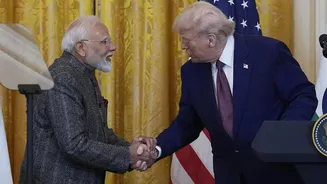
This is where the dispute shifts from a legal problem to a political and economic one. Facing the prospect of painful retaliatory tariffs on its exports, the country that lost the WTO case has a strong incentive to negotiate. For India and the US, this dynamic has played out clearly. In June 2023, the two nations announced an agreement to terminate six outstanding WTO disputes, including the one on Indian export-related measures. As part of this broader resolution, India agreed to phase out the challenged schemes and remove retaliatory tariffs it had placed on certain US products, such as apples, walnuts, and almonds. The WTO dispute became a crucial bargaining chip that was cashed in during high-level bilateral talks to achieve a broader trade truce.
Shaping India's Future Trade Strategy
This cycle of dispute, ruling, and bilateral resolution has had a lasting impact on India's domestic policy. The constant pressure at the WTO has pushed the government to rethink its export promotion strategy. Instead of relying on direct subsidies that are vulnerable to legal challenges, India is progressively shifting towards WTO-compliant support mechanisms. This includes developing new schemes focused on infrastructure development, research and development, and the remission of domestic duties and taxes that are not considered prohibited subsidies. This strategic pivot is a direct consequence of understanding that what happens in global trade forums has a direct and unavoidable impact on bilateral relationships and domestic economic planning.