





The Daily Congestion on Mumbai's Lifeline
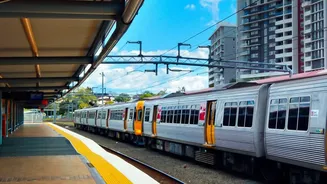
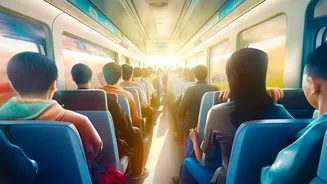
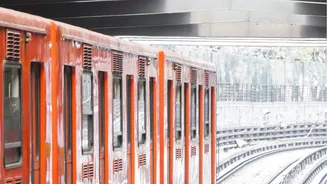
Mumbai's suburban railway is often called its lifeline, but for daily commuters, it can feel more like a battleground. With over 3,200 services running daily, the network is one of the most intensely utilized in the world. This density leads to the infamous
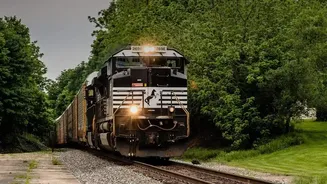
overcrowding and frequent delays that define the city's commute. A major, though less visible, reason for this congestion is the mixed use of tracks. Alongside the millions of passengers, these same lines have historically been used to run long-distance passenger trains and, crucially, slower-moving goods and freight trains. This mix forces local services to compete for space, creating bottlenecks and a ripple effect of delays across the entire system, making it incredibly difficult to add more local services where they are desperately needed.
A Corridor of Hope for Freight
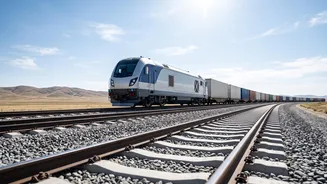
Enter the Dedicated Freight Corridor (DFC), one of India's most significant modern infrastructure projects. The plan was to build a separate, high-speed railway network exclusively for transporting goods. The project has two main arms: the Eastern DFC and the Western DFC (WDFC). For Mumbai, the WDFC is the game-changer. This 1,506-kilometer corridor connects the Jawaharlal Nehru Port Terminal (JNPT) in Mumbai with Dadri in Uttar Pradesh, passing through major industrial zones. After nearly two decades, this Western corridor has become fully operational as of September 2026. Its completion means that the vast majority of goods trains that once clogged up Mumbai's passenger lines now have their own dedicated superhighway.
How Freight's Exit Unlocks Passenger Freedom
The connection is simple yet profound: moving freight trains off the suburban network is like removing a slow-moving truck from a highway's fast lane. It frees up an immense amount of capacity on the existing railway lines. With goods trains now running on the WDFC, the tracks they once occupied on the Central and Western lines are available for Indian Railways to use exclusively for passenger services. This decongestion is the single most important enabler for the next phase of Mumbai's suburban evolution. It provides the physical space needed to run more local train services, reduce the time gap between them, improve punctuality, and perform essential maintenance without causing widespread disruption. This newly available capacity is the foundation upon which the ₹18,000 crore upgrade is being built.
Decoding the ₹18,000 Crore Makeover
So, what will this massive investment deliver? The funds are part of the ongoing Mumbai Urban Transport Project (MUTP), primarily phases 3 and 3A, which focus on large-scale capacity enhancement. A key component is the procurement of 238 new air-conditioned local trains to provide a more comfortable journey. Beyond new rakes, the projects involve adding new railway lines, such as the 5th and 6th lines between Borivali and Virar and a 4th line between Kalyan and Asangaon. Platforms are being systematically extended to accommodate longer 15-coach trains instead of 12-coach ones, further increasing carrying capacity per trip. Additionally, a significant portion of the investment is going towards upgrading the outdated signaling system to a more modern, communication-based system that allows trains to run closer together safely, further boosting service frequency.
Patience, Progress, and the Path Ahead
While the completion of the DFC provides an immediate boost, Mumbaikars will need to be patient to see the full benefits of the ₹18,000 crore plan. Introducing new train services, laying new tracks, and overhauling signaling systems are complex, time-bound projects. Railway officials aim to increase the number of daily services from around 3,200 to 3,500 by 2030. The first of the new generation AC trains, with features like automatic doors, are expected to enter production next year. The path forward involves a systematic rollout of these upgrades. The crucial takeaway is that the biggest hurdle—track congestion from freight traffic—has been decisively cleared. The focus can now shift entirely to expanding and modernizing the passenger network for a faster, safer, and less crowded future.