






The Grand Opening of Saturn Season
While Saturn will officially be at its biggest and brightest on October 4, a moment astronomers call 'opposition', August marks the start of its prime viewing season for 2026. Throughout the month, the planet will rise earlier and earlier, climbing higher
into the sky and offering a stunning spectacle for sky-watchers across India. Think of it as the opening act for an even grander show to come. As Earth moves closer to Saturn in our orbital dance, the planet will grow progressively brighter each night. This makes August the perfect time to get acquainted with the solar system’s most iconic jewel, which will remain a brilliant evening object for the rest of the year.
Your Guide to Spotting the Ringed Planet
Finding Saturn is easier than you might think. At the beginning of August, look towards the eastern horizon from about 10:30 PM onwards. By the end of the month, it will be rising a full two hours earlier, making it a convenient post-dinner sight. The planet will be travelling through the faint constellation of Pisces, the Fish. Since the stars in Pisces aren't very bright, Saturn will stand out clearly as a steady, yellowish point of light that doesn’t twinkle like a distant star. For an extra-easy guide, mark your calendar for the nights of August 30 and 31. On these dates, the Moon will be positioned close to Saturn, creating a beautiful pairing and pointing the way directly to the planet.
Naked Eye, Binoculars, or Telescope?
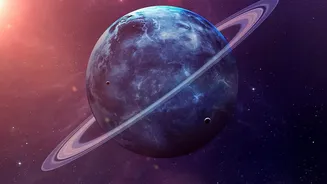
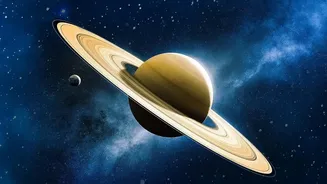
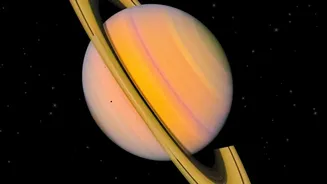
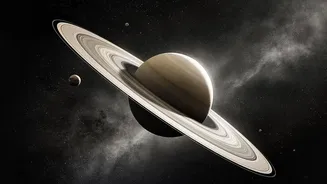
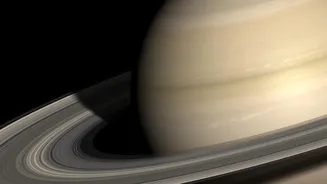
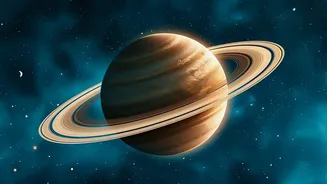
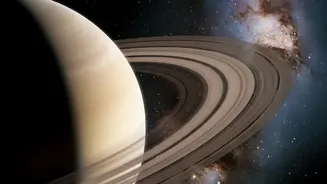
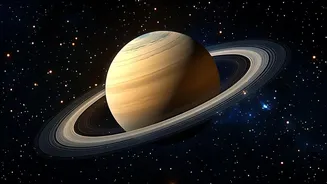
Saturn’s beauty is accessible to everyone, regardless of equipment. To the naked eye, it will appear as one of the brightest objects in its patch of sky, a constant beacon among the stars. If you have a pair of binoculars, they will help steady the view and reveal that Saturn is not just a point of light, but a tiny, slightly elongated orb. However, the real magic happens with a telescope. Even a modest beginner’s telescope with 50x magnification can reveal Saturn’s most famous feature: its incredible rings. In 2026, the rings are tilted about 7 to 9 degrees towards us. This means they won't look as wide as they do in some photographs, but they will be clearly visible as a distinct structure separate from the planet, an unforgettable sight. With a small scope, you can also spot Saturn's largest moon, Titan, as a small star-like companion.
Pro Tips for Viewing from Indian Cities
Viewing celestial objects from bustling cities can be a challenge due to light pollution, but don't be discouraged. The key is to find the darkest possible location. A park, a high rooftop, or a balcony that faces away from major streetlights can make a huge difference. Give your eyes at least 15-20 minutes to adjust to the darkness; this will significantly improve your ability to see fainter objects and details. If you're new to stargazing, consider using a mobile app. Many free applications can use your phone's GPS to show you exactly where to look for Saturn in the sky from your specific location in real-time. This eliminates any guesswork and lets you get straight to the wonder of viewing the planet itself.
A Month of Celestial Wonders
Saturn isn't the only attraction this August. The month is packed with astronomical events. Around August 12, a remarkable alignment of six planets—Mercury, Mars, Jupiter, Saturn, Uranus, and Neptune—will be visible in the pre-dawn sky. While seeing all of them requires different timings and equipment, Saturn will be one of the easiest and most prominent members of this planetary parade. This broader celestial context makes looking for Saturn even more rewarding, connecting you to the grand movements of our solar system. The close approach of the Moon at the end of the month provides another fantastic photo opportunity and an easy landmark for beginners.