





A Symphony of Ten Parachutes
At the heart of the latest update is the successful qualification of the crew module’s complex deceleration system. ISRO recently completed the Integrated Main Parachute Airdrop Test (IMAT), a critical simulation designed to validate the parachute system that
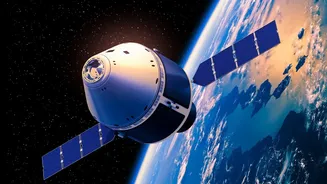
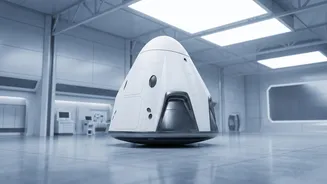
will ensure a safe return for the astronauts. During these tests, a replica of the crew module was dropped from an Indian Air Force transport aircraft at high altitude to mimic the conditions of atmospheric re-entry. The Gaganyaan crew module is equipped with a sophisticated system of ten parachutes in total, featuring four different types that must deploy in a perfect sequence to bring the capsule and its crew home safely. These tests are not just a simple check; they are designed to push the system to its limits, ensuring it can handle the maximum expected loads during an actual mission.
From Supersonic Speeds to a Gentle Splashdown
Bringing a space capsule back to Earth is one of the most challenging phases of any human spaceflight mission. The module re-enters the atmosphere at tremendous speeds, generating intense heat and stress. The parachute system is the final, vital link in ensuring astronaut safety. The sequence begins with the deployment of two apex cover separation parachutes, which clear the way for the rest of the system. Next, two drogue parachutes are released to stabilize the rapidly falling capsule and significantly reduce its velocity. Once the module is stable and slow enough, three pilot parachutes extract the three large main parachutes. These main parachutes are responsible for the final stage of braking, slowing the capsule to a gentle speed for a safe splashdown in the ocean. Every part of this automated sequence must work flawlessly to protect the crew.
An Ecosystem of Safety
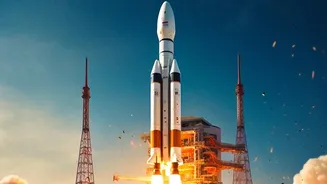
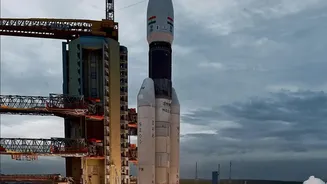
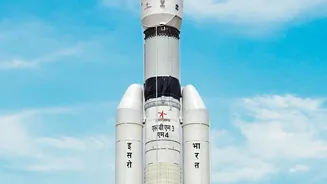
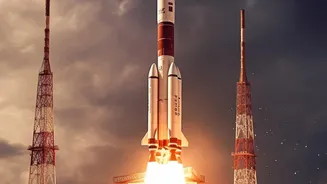
While the parachute tests are a major milestone, they are part of a much larger, multi-layered safety strategy for the Gaganyaan mission. ISRO’s philosophy is to test for failure to guarantee success. Another critical component is the Crew Escape System (CES), a powerful set of motors designed to pull the crew module and its astronauts away from the rocket in case of an emergency during launch. This system has already undergone successful static tests on the ground. Furthermore, the entire launch vehicle, the powerful LVM3 rocket, has been modified and re-certified to meet the stringent safety and reliability standards required for human spaceflight, earning it the designation of 'Human-Rated LVM3'. These efforts, combined with thousands of ground tests, underscore ISRO's unwavering commitment to astronaut safety above all else.
The Path to Orbit: What Happens Next?
With these successful simulations, ISRO is clearing the path for the next major phase of the mission. The immediate goal is the launch of the first uncrewed test flight, designated 'G1', which is slated for later in 2026. This mission will be a full dress rehearsal, testing the performance of the human-rated LVM3 rocket, the orbital module, the re-entry and deceleration systems, and recovery operations in a real space environment. Aboard the G1 mission will be Vyommitra, a sophisticated humanoid robot developed by ISRO, who will simulate human functions and monitor the spacecraft's performance. Following at least two successful uncrewed flights to validate every system, ISRO is targeting 2027 for India's first crewed spaceflight, which will carry three astronauts into a 400 km orbit for a three-day mission.