




Identify Your Ideal Nook
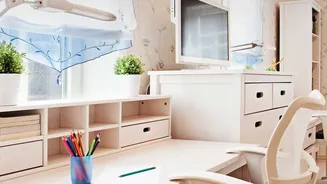
The first step is choosing the right location. Don't just settle for leftover space. An ideal work corner has a few key traits. Prioritise a spot with ample natural light, preferably with a window to your side, to reduce screen glare and eye strain. Avoid
high-traffic areas and the space directly in front of the television, which is a major source of distraction. Look for underutilised spaces like a wide hallway, a gap beside a wardrobe, or a quiet corner in the living room or bedroom. The goal is to find a spot that can be psychologically separated from the rest of your home life.
Choose a Desk That Barely Exists
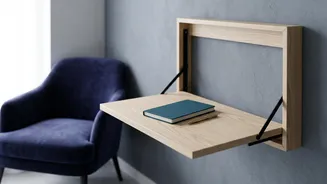
In a small flat, your desk shouldn't dominate the room. The best options are those that are either multifunctional or visually lightweight. A wall-mounted, fold-down desk is a game-changer, providing a sturdy surface when you need it and folding away to nothing when you don't. Another excellent choice is a slim console-style desk, which is shallow enough to fit against any wall without obstructing movement. For ultimate flexibility, a lift-top coffee table can transform your living area into a workspace in seconds, with the added benefit of hidden storage. Whatever you choose, ensure it's large enough for your essentials—your laptop, a notebook, and a mouse.
Invest in a Proper Chair
It's tempting to use a dining chair or a stool, but this is one area where you shouldn't compromise. An ergonomic chair is the single most important investment for your work corner. It prevents back pain and boosts productivity. For Indian climatic conditions, a chair with a breathable mesh back is ideal to keep you cool. Look for features like adjustable lumbar support and a slim frame that can tuck neatly under your desk when the workday is over. Your feet should be flat on the floor with your hips at a 90-degree angle; a footrest can be a simple, effective fix if needed.
Think Vertically for Storage
When floor space is limited, the walls are your best asset. Instead of bulky cabinets, use vertical space to keep your desk clutter-free. Floating shelves installed above your desk are perfect for storing files, books, and supplies without taking up surface area. A pegboard is another stylish and flexible solution, allowing you to hang stationery, cables, and small tools. For items you don't use daily, consider drawer units on castors that can be rolled under the desk or discreet storage ottomans that double as extra seating.
Visually Define Your Zone
To help your brain switch between 'work' and 'home' mode, it's crucial to create a visual boundary. This doesn't require building a wall. A simple area rug placed under your desk and chair can effectively anchor the workspace. Another clever trick is to use an open-backed bookshelf as a semi-transparent divider, which sections off your nook without blocking light. You could even paint the wall in your corner a different colour to create a distinct zone. These small cues help create the psychological separation needed for a healthy work-life balance.
Get the Lighting and Accessories Right
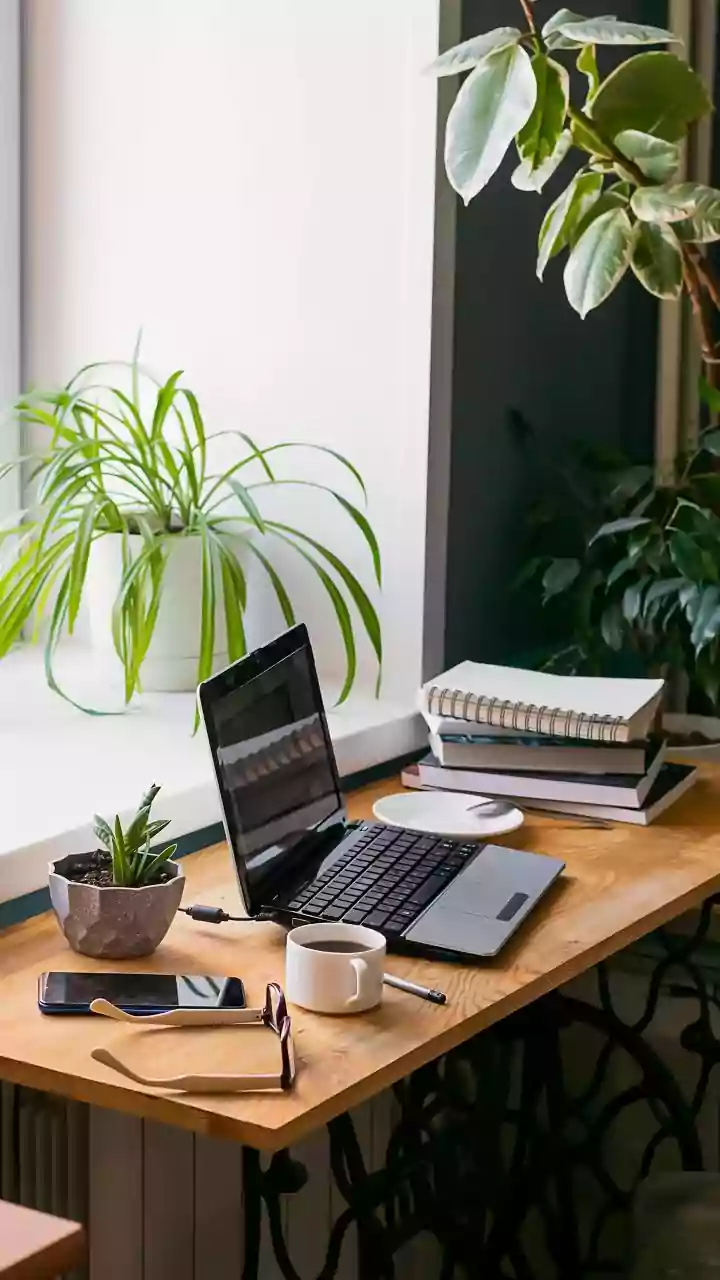
Good lighting is non-negotiable. While natural light is best, supplement it with a good desk lamp to avoid eye strain, especially during late hours. When it comes to accessories, less is more. Focus on essentials that improve your workflow, like a laptop stand to bring the screen to eye level and an external keyboard and mouse for better posture. Use cable management trays or clips to keep wires tidy and out of sight. Finally, add a small plant or a framed photo to make the space feel personal and inviting.