






Are UPI Payments Still Free for You?
For the average user, the short answer is yes. The National Payments Corporation of India (NPCI) has been clear that customers will not face charges for making UPI payments. Sending money to friends or family—known as person-to-person (P2P) transactions—remains
completely free, regardless of the amount. Similarly, when you pay a merchant, no fee will be added to your bill. The government has explicitly advised banks to ensure that merchants do not pass on any transaction costs to consumers. So, whether you are splitting a dinner bill with a friend or buying groceries at the local shop, your UPI experience remains unchanged and free.
What is Merchant Discount Rate (MDR)?
Merchant Discount Rate (MDR) is a fee that businesses pay to their bank or payment service provider for processing digital payments. It's not a tax collected by the government. Instead, the revenue is distributed among the players in the payment ecosystem—like the customer's bank, the merchant's bank, the payment app (like Google Pay or PhonePe), and NPCI—to cover the costs of maintaining the vast UPI infrastructure, ensuring cybersecurity, and driving innovation. This fee has long been standard for credit and debit card transactions but is now being introduced to the UPI system for specific merchant payments to ensure its long-term financial sustainability.
Which Merchant Transactions Face a Fee?
The new MDR framework, effective from October 15, 2026, applies only to person-to-merchant (P2M) transactions above a certain value. Any UPI payment to a merchant of ₹2,000 or less remains free of MDR. For payments above this threshold, a standard MDR of 0.4% will be levied on the merchant. To put that in perspective, a ₹3,000 payment would cost the merchant ₹12. For high-value transactions of ₹75,000 or more, the MDR is capped at a flat rate of ₹300, making UPI significantly cheaper for merchants than cards, which can have fees ranging from 0.9% to 2.5%.
Are All Merchants Affected?
No, the new rules are designed to protect small businesses. Small merchants, such as street vendors and neighbourhood shops, who receive up to ₹1 lakh per month via UPI QR codes will be exempt from MDR. These merchants are classified under a special Person-to-Person-Merchant (P2PM) category, and this exemption applies even if they receive a single payment greater than ₹2,000. A merchant is only moved to the regular P2M category, where MDR applies, if their UPI income exceeds ₹1 lakh per month for three consecutive months.
What About Special Cases and Bills?
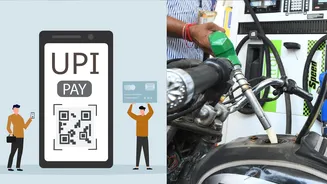
Certain sectors have different rules. For essential services like railways, telecommunications, insurance, fuel, and utility bill payments, a flat MDR of ₹5 per transaction is charged for payments above ₹2,000, instead of the 0.4% rate. Payments related to capital markets, such as for mutual funds or stockbrokers, will attract a much lower MDR of 0.02%, also capped at ₹300. Furthermore, recurring payments set up through UPI AutoPay, like for OTT subscriptions or SIPs, will not face any MDR charges at all.