





The Paralysis of Fear
Headlines about 'climate doom' and 'environmental collapse' are now common. While they reflect the genuine urgency of the crisis, their psychological impact can be debilitating. The American Psychological Association defines 'eco-anxiety' as a "chronic
fear of environmental doom." This isn't just a fleeting worry; for many, it's a persistent stress that affects daily life. Studies show that when people are overwhelmed by fear and feel they have no control, they are more likely to shut down, disengage, or fall into denial rather than take action. Constant exposure to catastrophic messaging, without clear pathways for action, can lead to a sense of helplessness. This emotional exhaustion is a significant barrier to the sustained public engagement needed to address climate change effectively. If the primary emotion associated with the climate crisis is a paralyzing dread, our ability to solve it is fundamentally compromised.
The Power of Hope and Agency
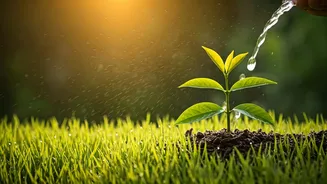
The alternative to fear isn't ignorance or false optimism; it's a combination of clarity and hope. Recent research, including a study from the University of Nottingham, suggests that hope is a more powerful motivator for creative problem-solving than fear or guilt. When communication shifts from anxiety to agency, it empowers people. Messages that highlight actionable solutions, progress, and the co-benefits of climate action—such as cleaner air, better health, and stronger communities—resonate more deeply. Hopeful framing doesn't mean downplaying the risks. Instead, it involves showing that a better future is possible and that individual and collective actions have meaning. Studies from the Yale Program on Climate Change Communication have found that hopeful people are more likely to act and to persuade others to do the same. This creates a positive feedback loop, where action reinforces hope, leading to further engagement.
What Clear Communication Looks Like
So, what does a clear, non-scary climate explainer look like? First, it avoids overwhelming jargon. Terms like 'decarbonisation' or 'anthropogenic' can be replaced with simpler language like 'reducing pollution' or 'caused by human activities'. Second, it makes the issue local and personal. Global statistics can feel abstract, but stories about how climate change affects local weather, health, or community life are more relatable. Third, and most importantly, it focuses on solutions. This is the core of 'constructive journalism', an approach that pairs problems with a critical look at potential responses. Instead of just reporting on the problem of plastic waste, a constructive piece would also explore innovations in recycling, community cleanup efforts, or policies that have successfully reduced plastic use elsewhere. This provides context and shows that challenges are being met with ingenuity and effort.
Shifting the Narrative Together
Changing the way we talk about climate change is a collective responsibility. It falls on journalists, scientists, educators, and policymakers to move beyond simply sounding the alarm. Media outlets can consciously choose to balance problem-focused reporting with stories of innovation and progress. Scientists can work on making their findings accessible and linking them to tangible actions people can understand and support. Educators can teach students about climate change in a way that fosters resilience and a sense of efficacy, rather than despair. A 2025 study found that hope-based messages in a classroom setting strengthened students' sense of collective efficacy by framing individual actions as part of a larger movement for systemic change. This shift isn't about hiding the truth; it's about presenting the full picture, which includes not only the challenges but also the human capacity to meet them.