





Why We Talk About Fibre
Before we pit these two orange-hued powerhouses against each other, it's worth remembering why dietary fibre is so important. Fibre is a type of carbohydrate the body can't digest. It plays a crucial role in maintaining a healthy digestive system, preventing
constipation, and can help with weight management by making you feel fuller for longer. Furthermore, a high-fibre diet is linked to lower cholesterol levels, better blood sugar control, and a reduced risk of chronic conditions like heart disease and type 2 diabetes. There are two main types: soluble fibre, which dissolves in water to form a gel-like substance, and insoluble fibre, which adds bulk to stool.
The Fibre Face-Off
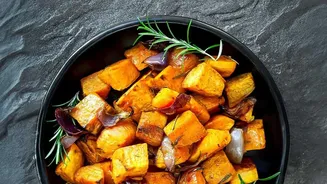
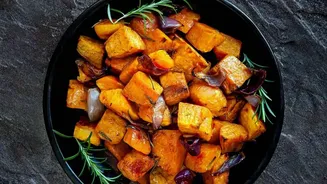
So, who wins the fibre contest? The answer is surprisingly close. Per 100 grams, cooked sweet potato contains about 3.3 to 4 grams of dietary fibre, depending on preparation. In comparison, cooked butternut squash offers around 2 to 3.2 grams of fibre for the same serving size. Some data for a cooked cup shows the amounts can be nearly identical at around 6.6 grams each, though a cup of sweet potato is heavier. While sweet potato often has a slight edge, the difference is not dramatic. Both are excellent sources of fibre, and including either in your diet is a win for your digestive health. The key takeaway is that both contribute significantly to your daily fibre needs.
Beyond Fibre: A Nutritional Snapshot
Health isn't just about one nutrient. When we look at the bigger picture, more differences emerge. Butternut squash is the clear winner on calories, with roughly 40-45 calories per 100g compared to sweet potato's 76-90 calories. It also contains fewer carbohydrates and sugars. However, sweet potato fights back with more protein and is an absolute champion when it comes to Vitamin A, providing a staggering amount of beta-carotene, which the body converts to this essential vitamin. While butternut squash is also rich in Vitamin A, sweet potato's concentration is typically higher. Both vegetables provide a good amount of Vitamin C and potassium.
The Glycemic Index Question
For those managing blood sugar levels, the glycemic index (GI) is a critical factor. The GI ranks foods on how they affect blood sugar. Here, butternut squash has a more consistent, moderate GI of around 51. Sweet potatoes are more variable; boiling them results in a low GI of about 46, but baking or roasting can cause the GI to shoot up to 70 or higher. This is because the cooking process changes the starch structure. If blood sugar stability is your primary concern, boiled sweet potato or butternut squash cooked any way are your most reliable options.
On the Indian Dinner Plate
Both vegetables are wonderfully versatile and can be easily incorporated into Indian cooking. Sweet potato, or 'shakarkandi', is famously roasted by street vendors and enjoyed as a chaat. It can also be added to sabzis, curries, and even used to make healthier versions of desserts like halwa. Butternut squash, while less traditional, is a fantastic addition to soups, sambar, and lentil dishes, where its sweet, nutty flavour complements Indian spices beautifully. It can be cubed and roasted with masalas for a simple side dish or mashed into a bharta. Both absorb flavours well, making them a great base for a variety of healthy and delicious meals.