


From Exploration to Sample Return
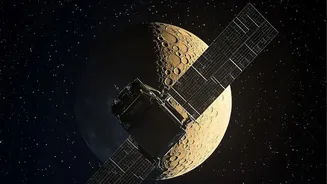
Chandrayaan-3 was a masterclass in in-situ science, analysing lunar soil where it lay. Chandrayaan-4, however, represents a monumental leap in ambition. Its primary goal is to collect soil and rock samples from the Moon's surface and return them to Earth
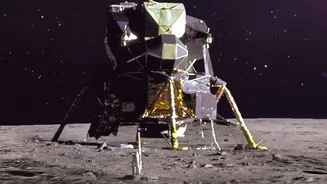
for detailed study. This makes India only the fourth nation to attempt such a feat, placing it in an elite club with the United States, the former Soviet Union, and China. The mission is a crucial stepping stone in India's long-term lunar exploration plans, which include sending an Indian astronaut to the Moon by 2040. Retrieving a sample is the first step in proving the full cycle of technology needed for human round trips.
The Scientific Treasure of the South Pole
The focus on the south pole is deliberate and strategic. This region is believed to harbour a resource of immense value: water ice. Concealed within permanently shadowed craters, where temperatures plummet to extreme lows, this ice has likely remained frozen for billions of years. If found in sufficient quantities, this water could be a game-changer for future space exploration. It could be mined for drinking water and life support, or broken down into hydrogen and oxygen to produce breathable air and rocket fuel. This would reduce the enormous cost of hauling these resources from Earth, making a sustained lunar presence or even a future Mars mission more feasible.
Unlocking Secrets of the Early Solar System
Beyond its practical use as a resource, the soil and ice from the south pole are a scientific time capsule. Because these materials have been preserved in a deep freeze, shielded from the Sun's radiation, they could offer a pristine record of the early solar system. Studying these samples in advanced labs on Earth could provide clues about the origin of Earth's oceans and the delivery of water and other compounds by comets and asteroids. The geology of these polar regions, which remain largely unexplored, is a high priority for the global scientific community.
A Complex and Audacious Technical Feat
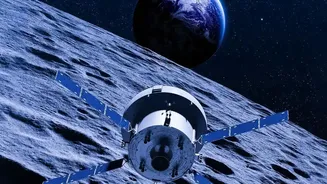
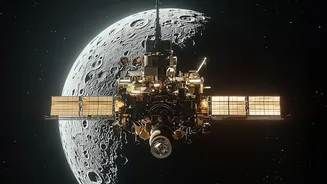
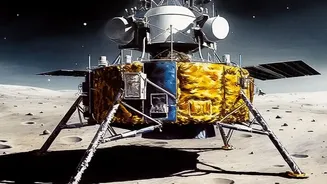
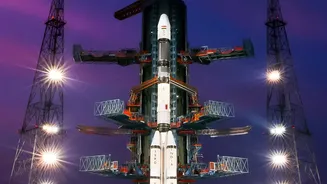
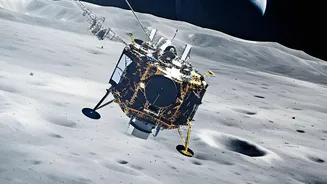
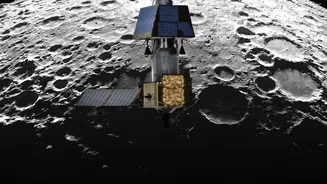
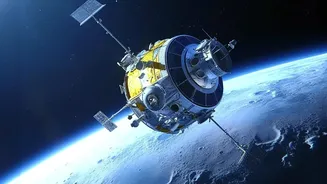
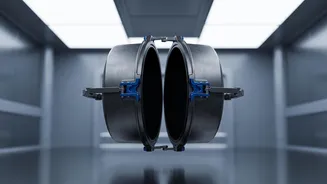
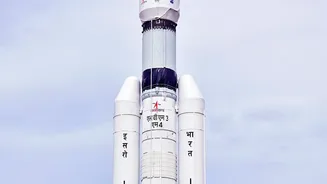
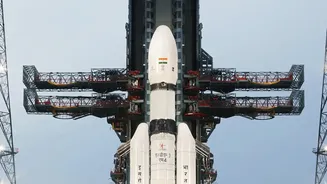
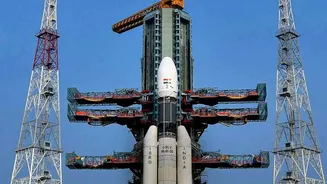
Bringing a piece of the Moon back is exponentially more complex than just landing on it. ISRO Chairman S. Somanath has described the mission as "extremely challenging." The mission architecture for Chandrayaan-4 involves five separate spacecraft modules, requiring two launches using India's most powerful rocket, the LVM3. The plan includes a lander to touch down on the surface, a robotic arm and drill to collect samples, and an ascender module to launch those samples back into lunar orbit. There, it must perform a sophisticated autonomous docking manoeuvre with a transfer module, which will then transport the samples in a re-entry capsule back to Earth. This requires mastering technologies like orbital rendezvous and deep-space docking, capabilities that are critical for future human spaceflight and space stations.
India's Stake in the Future of Space
With a targeted launch around 2028, Chandrayaan-4 is positioned at the heart of a renewed global interest in the Moon. Successfully returning the world's first samples from the lunar south polar region would be a significant scientific and strategic victory. As nations like the United States and China advance their own lunar programs, demonstrating this end-to-end capability secures India's position as a major spacefaring power. By proving it can not only explore but also utilise lunar resources, India gains a crucial seat at the table in shaping the future of space exploration and the emerging lunar economy.