





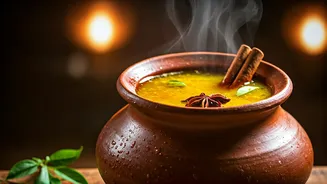



1. The Immunity Imperative
The monsoon is synonymous with a spike in viral infections, colds, and the flu. Our immune systems are often working overtime. While sugary drinks can contain empty calories and high fructose corn syrup, which some studies suggest can impair immune function,
herbal teas are packed with nature's best defenders. Ingredients like Tulsi (Holy Basil) are revered for their immunomodulatory properties. Ginger is a powerhouse of gingerol, a compound with potent anti-inflammatory and antioxidant effects. A warm cup of ginger-tulsi tea isn't just comforting; it's like a gentle, daily shield for your body.
2. Soothing Monsoon Tummy Troubles
Changes in humidity and a higher risk of water-borne contaminants can wreak havoc on our digestive systems during the rainy season. Many people experience indigestion, bloating, and general discomfort. This is where herbal teas shine. A simple brew of mint (pudina) can soothe an upset stomach and ease bloating. Fennel (saunf) tea is another excellent digestive aid, often consumed after meals for this very reason. These natural remedies are gentle, effective, and a far cry from the carbonated, acidic nature of many soft drinks that can exacerbate digestive issues.
3. The Battle Against 'Empty' Calories
Let’s be honest: the gloomy weather and reduced outdoor activity during monsoon can lead to a more sedentary lifestyle. This is when we need to be mindful of our calorie intake. A single can of a popular cola can contain over 140 calories and nearly 40 grams of sugar, offering no nutritional value. In contrast, a cup of unsweetened herbal tea has virtually zero calories. It hydrates, warms you up, and delivers health benefits without contributing to the dreaded 'monsoon weight gain'. It’s a simple swap that can have a significant impact on your overall health and wellness.
4. The Hydration Myth and Truth
There's a common misconception that tea, being a diuretic, dehydrates you. However, multiple studies have shown that when consumed in moderate amounts (up to 6 cups a day), tea is just as hydrating as water. During the monsoon, we might not feel as thirsty due to the cooler temperatures, but staying hydrated is crucial for flushing out toxins and maintaining energy levels. Herbal teas provide a flavourful, enjoyable way to meet your daily fluid intake, making hydration less of a chore and more of a comforting ritual.
5. The Psychological Comfort Factor
Beyond the physical benefits, there is a deep psychological comfort associated with a warm cup of chai or herbal brew. The ritual of boiling water, adding fresh herbs and spices, and inhaling the fragrant steam is a grounding experience. It's a moment of mindfulness in a busy day. On a grey, rainy afternoon, the warmth of the mug in your hands and the aromatic spices create a feeling of coziness and well-being—a feeling that a cold, fizzy drink simply cannot replicate. This emotional connection is a powerful driver behind the switch.
6. Easy, Affordable, and All-Natural
Perhaps the most significant advantage of herbal teas is their accessibility. You don't need fancy, expensive ingredients. Most of the powerhouse herbs are already in your kitchen masala dabba or garden. A knob of ginger, a few tulsi leaves, a stick of cinnamon, or a pinch of turmeric is all it takes to create a healthy, delicious brew. This return to simple, home-based wellness is a powerful trend, moving away from processed, packaged goods towards natural, wholesome alternatives that our grandparents would recognise and approve of.