


The Science of Shrinking Your Luggage
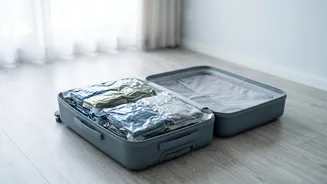
Vacuum compression bags are essentially heavy-duty plastic bags with a one-way valve. By placing soft items like clothes inside and removing the air—either with a vacuum cleaner, a small portable pump, or by rolling—you can reduce their volume significantly.
This process works by eliminating the trapped air between fabric fibres, which is especially effective for bulky items like sweaters, jackets, and towels. The result is a compact, dense brick of clothing that takes up a fraction of its original space, potentially freeing up 50% or more of your luggage capacity.
Master the Fold and Roll Technique
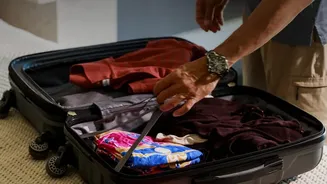
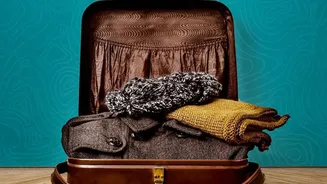
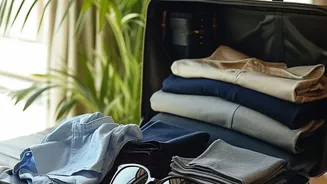
How you place clothes in the bag matters. While simply stuffing them in works, it’s a recipe for deep wrinkles. The best method is to neatly fold or roll each item first. Rolling is often preferred by travel experts as it helps minimise creasing. Once rolled, stack your items inside the bag. Be careful not to overfill it; leaving a little space below the seal line ensures the zipper can close properly and maintain its airtight seal. An overstuffed bag is the primary reason for seal failure and the bag slowly re-inflating during your journey.
The Weight vs. Volume Dilemma
Here is the most critical rule of using compression bags: they reduce volume, not weight. While your suitcase may look half-empty, it can easily exceed airline weight limits if you’re not careful. This hack is about fitting more into a smaller space—like a carry-on—not about cheating the scale. Before heading to the airport, always weigh your packed bag. The goal is to avoid checked bag fees by fitting everything into your cabin allowance, but a surprisingly heavy carry-on can cause issues at the gate.
Strategic Packing for Easy Unpacking
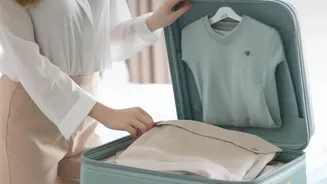
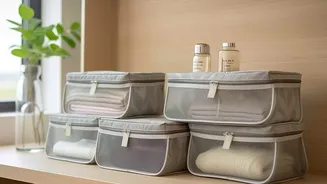
Don’t just compress everything into one giant bag. A smarter approach is to use multiple, smaller bags and group items by category. For a seven-day trip, consider a system: one bag for tops, one for bottoms, and another for underwear and sleepwear. This not only keeps your suitcase incredibly organised but also makes finding what you need at your destination much easier. You can just pull out the specific bag you need without disturbing everything else. It's also wise to dedicate one empty bag for dirty laundry to keep it separate from your clean clothes.
Minimising Wrinkles and Navigating Security
Wrinkles are a common concern, but they are often caused by poor packing habits rather than the bags themselves. Neatly folding or rolling clothes is the first line of defence. Upon arrival, hang your clothes up immediately; a steamy shower can help release any minor creases. As for airport security, vacuum-sealed bags are generally allowed in both carry-on and checked luggage. However, the Transportation Security Administration (TSA) notes that if an agent can't clearly identify the contents on a scanner, they may need to open the bag for inspection. This is uncommon, but it's a possibility to be aware of.
Repacking for the Journey Home
Getting your clothes to your destination is only half the battle. How do you re-compress everything for the return trip without a vacuum cleaner? This is where your choice of bag becomes important. Many travel-specific sets come with small, manual hand pumps or even portable, battery-powered pumps that you can pack with you. Another option is to buy bags that don't require a vacuum at all; these are designed to have the air rolled out manually. If you find yourself in a pinch, you can try pressing the air out with your body weight or even using a straw to suck the air out of a small opening before sealing it.