


Moving Beyond an Earth-Centric View
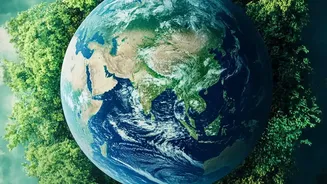
For as long as we have searched the stars, the goal has been to find a planet like our own. The concept of the 'habitable zone'—often called the 'Goldilocks zone'—is built around this idea: a region around a star where it is not too hot and not too cold
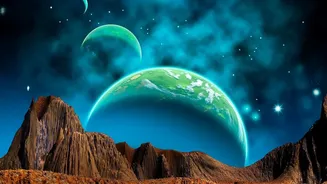
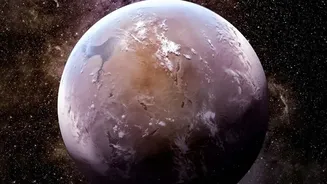
for liquid water to exist on a planet's surface. This has led us to hunt for Earth-sized planets orbiting Sun-like stars. But in 2014, astrobiologists René Heller and John Armstrong introduced a new, provocative idea. They argued that this Earth-centric approach might be too narrow. What if, they asked, some planets are even better for life than Earth? They coined the term 'superhabitable' to describe these worlds, which could potentially support more biomass and greater biodiversity than our home planet.
The Blueprint for a Better Planet
So, what makes a planet 'superhabitable'? It is not about finding a paradise for humans, but rather identifying the conditions that would be most conducive to the flourishing of life in general. Scientists have developed a checklist of key attributes. These worlds would likely be slightly older, a little larger and more massive, and a bit warmer and wetter than Earth. The idea is to find a world with a more stable and nurturing environment over cosmic timescales, giving complex life an even better chance to emerge and thrive than it had here. It's about shifting focus from finding a mirror image of Earth to identifying planets with the most promising conditions for complex life to exist.
The Right Kind of Star
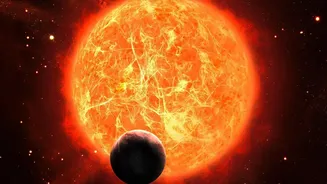
A planet is only as good as its star, and our Sun, a G-type star, might not be the ideal host. It has a relatively short lifespan of about 10 billion years, and it took nearly 4 billion years for complex life to appear on Earth. Stars similar to our Sun might run out of fuel before complex life has a chance to evolve. K-type dwarf stars, also known as orange dwarfs, are considered better candidates. They are cooler, less massive, and much longer-lived than our sun, with lifespans ranging from 20 to 70 billion years. This provides a much longer, more stable period for life to originate and diversify. A planet orbiting a K-type star would receive a steady stream of energy for a much longer time, avoiding the dramatic changes our Sun will undergo.
Bigger, Wetter, and Warmer
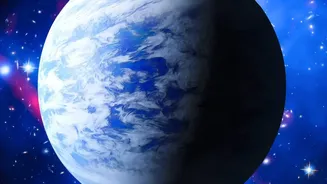
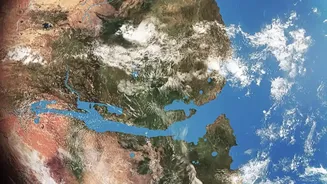
When it comes to habitability, size matters. A planet that is about 1.5 times Earth’s mass and 1.2 to 1.3 times its radius could be superior. Such a planet would have stronger gravity, allowing it to retain a thicker atmosphere. A denser atmosphere could provide better shielding from harmful cosmic radiation and help moderate the climate, reducing temperature swings between the poles and the equator. More mass also means more retained internal heat, driving robust geological activity like plate tectonics, which is crucial for recycling nutrients and creating a stable climate. The ideal superhabitable world would also be slightly warmer than Earth, with an average surface temperature around 25°C (77°F). This warmth, combined with abundant shallow oceans distributed across the surface rather than one massive landmass, could create a world rich with biodiversity, similar to Earth’s tropical rainforests.
Are There Any Candidates?
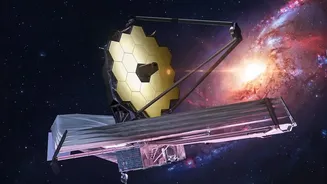
This isn't just a theoretical exercise. In 2020, a study led by geobiologist Dirk Schulze-Makuch identified 24 exoplanet candidates that could be superhabitable. These worlds, all more than 100 light-years away, meet some of the key criteria, such as orbiting within the habitable zone of a K-type star. One of the most promising candidates mentioned in ongoing discussions is KOI-5715.01, a planet estimated to be about 5.5 billion years old and orbiting an orange dwarf. It's important to remember that these are just candidates. 'Habitability' simply means the conditions are right for life, not that life definitely exists there. But these findings give astronomers exciting targets for future observation with powerful instruments like the James Webb Space Telescope, helping them focus the search for life beyond Earth.