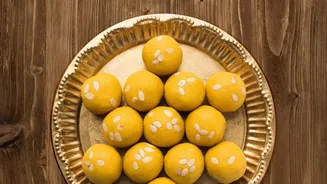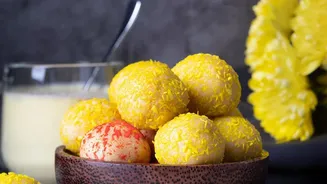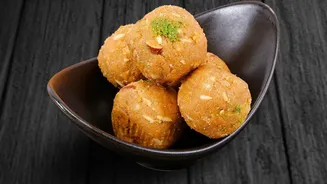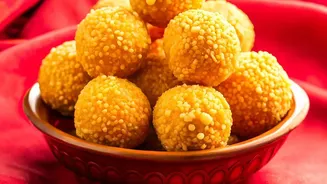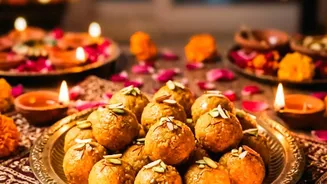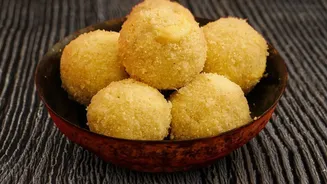




Besan ladoo is a timeless Indian sweet, evoking nostalgia with its nutty aroma. But achieving that perfect, melt-in-your-mouth texture can be tricky. Many home cooks face the frustration of ladoos turning out dry, hard, or dense.
The Art of Roasting Besan
The single most critical
step in making besan ladoo is roasting the gram flour (besan). This process, which can take 15 to 30 minutes, is where flavour and texture are born. Rushing this stage on high heat is a common mistake that leads to a raw, bitter taste, even if the colour looks right. The key is to roast on a low, steady flame, stirring constantly. Initially, the besan and ghee mixture will be thick and pasty. As you continue to stir, it will loosen, become more fluid, and eventually release a wonderfully nutty aroma, changing to a deep golden-brown hue. This slow roast cooks the flour thoroughly, eliminating the raw taste that can make ladoos stick to the roof of your mouth.
Getting the Ghee Ratio Right
Ghee is what binds the ladoo and gives it a rich, decadent feel. However, the balance is delicate. Too little ghee results in a dry, crumbly mixture that simply won't hold its shape. If you find your mixture is too difficult to bind, the most common fix is to add a tablespoon or two of warm, melted ghee until it comes together. On the other hand, too much ghee can make the mixture greasy and too soft to form into balls. If your mixture seems too loose, you can try refrigerating it for 10 to 15 minutes to help the ghee solidify. If it's still too soft, roasting a few extra tablespoons of besan separately and mixing it in can help absorb the excess fat.
The Sweet Spot for Sugar
When you add the sugar is just as important as how much you add. A frequent error is mixing sugar into the besan while it's still hot. This causes the sugar to melt, creating a sticky, loose consistency that makes shaping the ladoos nearly impossible. The roasted besan mixture must be allowed to cool until it's just lukewarm—warm enough to handle but not hot. For the best texture, use powdered sugar (boora or tagar is traditional) rather than granulated sugar, which can create a gritty feel. If you only have granulated sugar, grinding it into a fine powder before use is highly recommended.
Flour Texture and Binding Issues
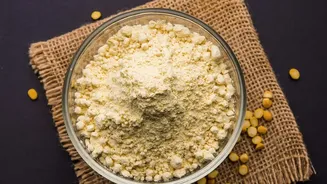
The type of besan used can also influence the final texture. Ladoo besan, which is coarser, is often preferred for a grainier texture. If you're using fine besan and find your ladoos are too smooth or dense, you can add a tablespoon or two of semolina (rava/sooji) during the roasting process to introduce a light, grainy quality. Another trick used by halwais is to sprinkle a tablespoon of water or milk into the besan at the very end of roasting; it will sizzle and help create a 'danedaar' or granular texture. If the mixture is too dry to shape, add a little warm ghee. If it's too crumbly even after cooling, it might be because the mixture has become too cold and the ghee has solidified; gently warming it can help.
Shaping and Finishing Touches
Once your mixture is cooled and sweetened, it's time to shape the ladoos. The ideal temperature is comfortably warm to the touch. If the mixture is too hot, it will be greasy; if too cold, it will be crumbly. Take a small portion and press it firmly between your palms, rolling it into a smooth, round ball. The heat from your hands will help in binding. If you're struggling, placing the entire mixture in the refrigerator for about 20 minutes can firm it up enough to make shaping easier. Don't be discouraged if the first few aren't perfect. With the right technique and a little patience, you can achieve that classic, delicious besan ladoo every time.