







End of an Iconic Era
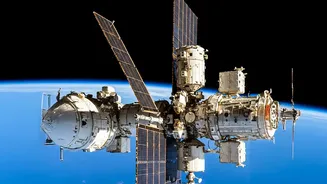
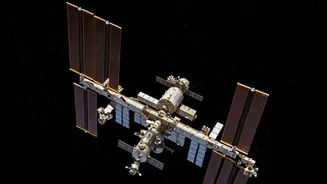
The International Space Station stands as one of humanity's greatest engineering and diplomatic achievements. Since continuous occupation began in 2000, it has hosted over 250 astronauts and served as a crucial laboratory for scientific discovery. However,
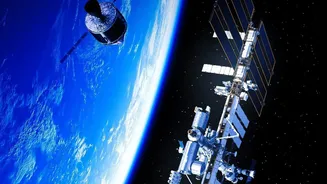
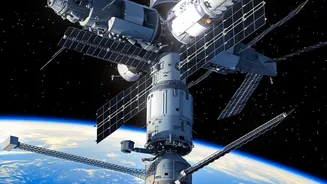
after more than 25 years of service, the station is showing its age. NASA and its international partners have committed to operating the ISS through 2030, but the increasing costs of maintenance and the risks of structural fatigue have made its retirement a necessity. The plan involves a controlled deorbit, guiding the 450,000 kg structure to a remote area of the Pacific Ocean known as Point Nemo. This carefully managed conclusion to the ISS's story is not an end for human presence in low Earth orbit, but a deliberate transition.
NASA's New Role: From Landlord to Tenant
Instead of building a successor, NASA is shifting its strategy. The agency aims to transition from being an owner and operator of orbital infrastructure to becoming just one of many customers in a bustling commercial marketplace. This move is modeled on the success of its commercial cargo and crew programs, which saw companies like SpaceX and Boeing take over the job of transporting supplies and astronauts to the ISS. Through its Commercial Low-Earth Orbit Destinations (CLD) program, NASA is investing hundreds of millions of dollars to seed the development of privately owned and operated space stations. The goal is to ensure there is no gap in American access to LEO for research and astronaut training after the ISS is gone, while freeing up NASA's resources to focus on deep space exploration, like the Artemis missions to the Moon and Mars.
The Commercial Contenders
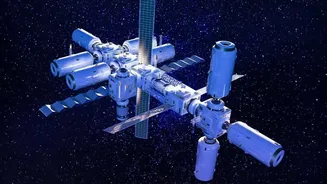
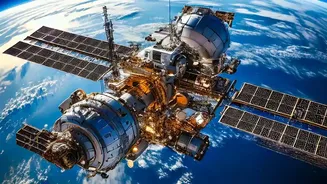
Several companies are racing to build the orbital habitats of tomorrow. Axiom Space has a unique approach, planning to launch its first module in 2026 or 2027 and attach it directly to the ISS. Over the following years, more Axiom modules will be added, eventually detaching to become a free-flying independent station before the ISS retires. Another major player is Starlab, a joint venture between US-based Voyager Space and European aerospace giant Airbus. They envision a large, single-module station focused on science and research, set to launch no earlier than 2029. A third consortium, led by Blue Origin and Sierra Space, is developing Orbital Reef, marketed as a 'mixed-use business park' in space. This modular station aims to serve a wide range of clients, from national space agencies to industrial researchers and space tourists, with a goal to be operational in the late 2020s.
Building a Marketplace in the Sky
These new stations are not just labs; they are the foundation of a new orbital economy. The vision is to create platforms that can support a variety of commercial activities. This includes in-space manufacturing, where the unique microgravity environment can be used to produce everything from superior fiber optics to flawless crystals for semiconductors. Pharmaceutical research is another key area, as microgravity offers new insights into disease and drug development. Beyond industry, space tourism is a significant potential market, with companies planning to offer private citizens the chance to live and work in orbit. By providing the infrastructure, companies like Axiom, Starlab, and Blue Origin hope to lower the cost and expand access, creating a self-sustaining ecosystem of commerce 250 miles above the Earth.
Challenges on the Final Frontier
The path to a commercialized LEO is not without obstacles. The financial and technical challenges of building and launching a space station are immense. These projects require billions in capital and rely on the availability and reliability of heavy-lift rockets, some of which are still in development themselves. There is also the critical challenge of timing. To avoid a gap in US orbital presence, at least one of these commercial stations must be fully operational and certified to host NASA astronauts before the ISS is deorbited around 2030. After some debate within NASA in early 2026 about the commercial viability, the agency recommitted to its original strategy of supporting free-flying private stations, reassuring industry partners. The race is on to ensure a seamless handover and prevent a scenario where China's Tiangong space station is the only active outpost in LEO.