

Not Your Average Household Dust
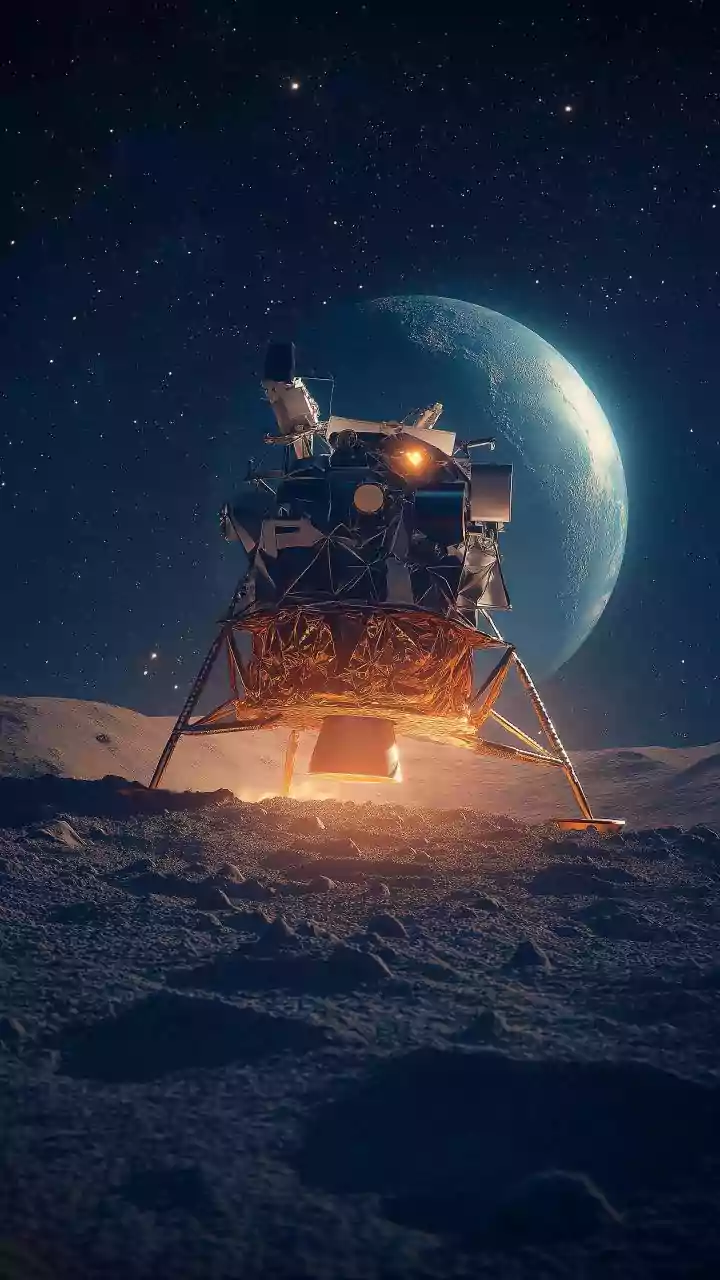
On Earth, dust particles are mostly smooth and rounded. Years of wind and water erosion wear down their sharp edges, making them relatively harmless. The Moon, however, has no atmosphere, no wind, and no water. For billions of years, its surface has been
pulverised by a constant barrage of micrometeorite impacts. This process shatters rock and glass into tiny, jagged fragments without anything to smooth them over. The result is a layer of material called regolith, and its finest component, lunar dust, is made of microscopic particles as sharp as broken glass. Unlike terrestrial dust, which is a mix of organic and inorganic matter, moon dust is purely pulverised rock.
Abrasive, Sticky, and Everywhere
What makes lunar dust particularly troublesome is its combination of physical properties. Besides being incredibly sharp, the dust is electrostatically charged by constant solar radiation. This charge makes it extremely sticky, causing it to cling to everything it touches, from spacesuits and camera lenses to scientific instruments. During the Apollo missions, astronauts found it nearly impossible to brush off. Apollo 17's Eugene Cernan noted how the abrasive powder wore through layers of his spacesuit and ground its way into seals. Inside the lunar module, the fine particles would become airborne in the zero-gravity environment, smelling like spent gunpowder and causing significant irritation.
Lessons From the Apollo Era
The Apollo astronauts were the first to encounter the lunar dust problem firsthand, and their experiences are a crucial guide for NASA today. All 12 astronauts who walked on the moon reported issues. Many experienced what was dubbed "lunar hay fever," suffering from sneezing, watery eyes, and sore throats after inhaling dust that was tracked into the capsule. The dust interfered with instruments, caused equipment to overheat, and degraded the seals on containers meant to bring back lunar samples. The crew of Apollo 12 returned so covered in the grime that the command module pilot insisted they strip down before being allowed back into his clean spacecraft. These incidents highlighted that dust wasn't just a nuisance; it was a serious operational and health hazard.
The Artemis Challenge
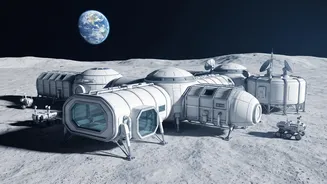
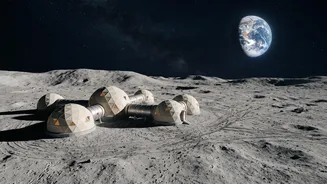
As NASA plans to establish a long-term human presence on the Moon with its Artemis program, the dust problem becomes even more critical. Short Apollo-style missions revealed the dangers; missions lasting weeks or months will amplify them significantly. The abrasive nature of the dust could lead to catastrophic failure of seals, joints, and other moving parts on landers, habitats, and rovers. Long-term exposure poses unknown but serious health risks. The particles are so small they can penetrate deep into the lungs, and the silicate content raises concerns about chronic respiratory diseases similar to silicosis seen in miners on Earth. For a sustainable lunar base to be viable, NASA must first figure out how to defeat the dust.
Fighting Back with Science
To prepare for Artemis, NASA is aggressively studying lunar dust and developing mitigation strategies. This involves creating high-fidelity simulated moon dust on Earth for testing. At facilities like the Lunar Development and Test Facility at Johnson Space Center, engineers are subjecting new spacesuit materials, hardware, and tools to punishing, dusty conditions in vacuum chambers. One of the most promising technologies is the Electrodynamic Dust Shield (EDS). This system uses an electric field to actively repel dust particles from surfaces. It can be embedded as a transparent layer on solar panels and camera lenses, or even woven into the fabric of spacesuits, effectively creating a force field against the clinging particles. Other solutions being tested include specialised brushes, vacuum systems, and even materials that mimic the dust-shedding properties of a gecko's skin.