






The Sunshine Bottleneck
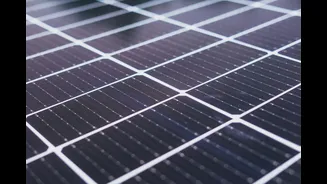
Traditional solar panels, typically made from silicon, are masters of direct sunlight. Their efficiency is measured under ideal, lab-like conditions, equivalent to a bright, clear summer day. On such a day, they are fantastic. However, the real world
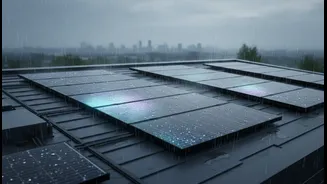
is often less than ideal. On a heavily overcast day, a standard panel's output can plummet to just 10-25% of its rated capacity. This is because silicon cells are optimized for a specific, high-intensity spectrum of light that is abundant in direct sun but scarce in diffuse, scattered, or indoor light. This creates a significant bottleneck, limiting solar's effectiveness in regions with frequent cloud cover, during winter months, or in dense urban areas with plenty of shadows.
The Ambient Power Revolution
The push for better low-light performance isn't just about making large solar farms more consistent. It's about powering a completely new class of devices. The world is now filled with low-power electronics: the Internet of Things (IoT) sensors in our offices, smart home gadgets, and wearable health trackers. Currently, these devices rely on batteries, which have a limited lifespan and create environmental waste. The dream is to create self-powered systems that 'harvest' energy from their surroundings. By redesigning solar cells to be hyper-efficient at converting ambient indoor light into electricity, scientists aim to eliminate the need for batteries in many of these small devices, creating a more sustainable and maintenance-free technological ecosystem.
Beyond Silicon: The New Material Champions
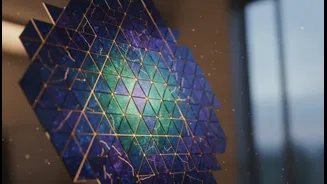
The key to unlocking low-light power lies in moving beyond silicon. Two classes of materials are leading the charge: perovskites and organic photovoltaics (OPVs). Perovskites are a class of crystalline materials that are exceptionally good at absorbing light. Unlike silicon, their properties can be 'tuned' at a molecular level to absorb different wavelengths of light, making them perfect for the specific spectra produced by indoor lamps. Some perovskite cells have achieved incredible efficiencies of over 45% under indoor lighting, far surpassing silicon. OPVs, meanwhile, use carbon-based molecules and polymers which are flexible, can be semi-transparent, and are made with low-cost printing processes. While currently less efficient than perovskites, their versatility makes them ideal for unique applications.
From Lab to Living Room
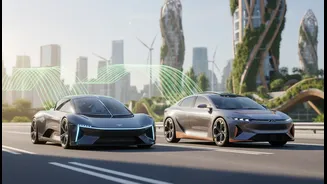
The potential applications for these new technologies are transformative. Imagine windows that double as transparent solar panels, generating power for the building. Think of electronic price tags in a supermarket that update wirelessly, powered only by the store's overhead lights. Wearable fitness trackers could be integrated into clothing, perpetually charged by both indoor and outdoor light. These technologies promise a future where power generation is not confined to large, centralized plants but is integrated invisibly into the very fabric of our environment. For a country like India, with its ambitious smart city and digital infrastructure goals, the ability to power millions of distributed sensors without batteries is a game-changer.
The Hurdles on the Horizon
Despite the immense promise, the path to commercialization has challenges. The biggest hurdle for perovskite cells has been stability; early versions tended to degrade quickly when exposed to moisture and heat. Researchers are making significant progress with new compositions and protective layers to improve their longevity. For organic photovoltaics, the main challenges are improving their overall efficiency and scaling up manufacturing to ensure consistent quality. While these new technologies may not replace silicon for large-scale utility projects anytime soon, they are poised to coexist, filling a critical gap for low-power, integrated, and indoor energy solutions.