





The Hidden Strain of a Sedentary Life
The human body is designed for movement. When you sit for prolonged periods, especially in a slouched or unnatural position, you place sustained stress on your joints. Healthy knees rely on synovial fluid, a natural lubricant that circulates when you move,
nourishing cartilage and reducing friction. Long stretches of inactivity hinder this process, leading to stiffness. More importantly, chronic poor posture creates muscle imbalances. Sitting shortens and tightens the hip flexor and hamstring muscles while weakening the glutes and quadriceps, which are crucial for knee stability. This imbalance alters your body's alignment, putting abnormal pressure on the kneecap and accelerating wear and tear on cartilage.
Posture Check: The Knees Feel What the Hips Do
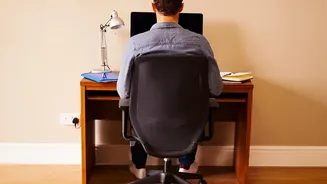
Poor posture is a key culprit in joint strain. Slouching in your chair causes your pelvis to tilt backward, which in turn pulls on the hamstrings and changes the alignment of your thigh bone (femur). This can cause the kneecap, or patella, to track improperly within its groove on the femur, a condition known as patellofemoral pain syndrome, sometimes called 'runner's knee'. This improper tracking leads to irritation and pain behind the kneecap, especially when sitting for long periods, or when going up and down stairs. Similarly, habitually crossing your legs or sitting with your feet tucked underneath you can create uneven pressure, further contributing to joint misalignment and long-term issues like osteoarthritis.
What Your Knee Mobility Is Telling You
Knee mobility, or the joint's ability to move through its full range of motion, is a direct indicator of its health. Limited mobility is an early warning sign that something is amiss. If you feel stiffness when you stand up after sitting, or if you can't fully bend or straighten your knee without discomfort, it's a sign that your joints and surrounding muscles are becoming restricted. This stiffness often happens because the muscles that support the knee have become tight from inactivity, and joint lubrication has decreased. Another tell-tale sign is crepitus—a grinding, clicking, or popping sound when you move the joint—which could indicate that cartilage is wearing down. While occasional noises can be harmless, frequent or painful sounds warrant attention.
A Simple At-Home Mobility Check
You can gently assess your own knee mobility, not for diagnosis, but for awareness. Try a simple 'heel slide': while sitting on the floor with your legs straight out, slowly slide the heel of one foot toward your glutes, bending your knee as far as you comfortably can. Then, slowly straighten it again. Notice any significant difference in the range of motion between your left and right knee, or any feelings of pinching or pain. Another check is a simple bodyweight squat. Without forcing it, see how far you can squat down while keeping your heels on the floor. Difficulty or pain during these simple movements can suggest tightness in the surrounding muscles or early joint restrictions that could benefit from attention.
From Awareness to Action: Protecting Your Joints
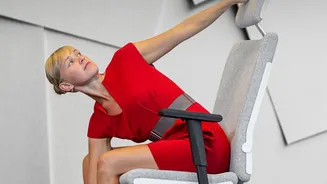
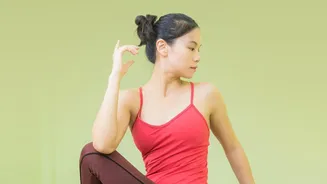
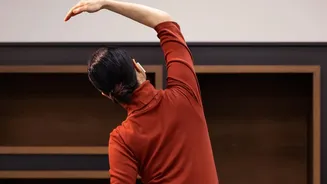
The good news is that you can take proactive steps to counteract these effects. The most important strategy is to break up long periods of sitting. Stand up, stretch, and walk around for a few minutes every hour. Incorporate simple stretches at your desk, like seated hamstring stretches and leg extensions, to improve flexibility and circulation. Strengthening the muscles that support your knees is also critical. Exercises that target the glutes and quadriceps, such as bridges, clamshells, and squats, can help correct muscle imbalances and provide better stability for the knee joint. Finally, focus on your sitting posture. Sit with your back supported, feet flat on the floor, and knees at roughly a 90-degree angle to reduce unnecessary strain.