





An Increasingly Hazardous Orbit
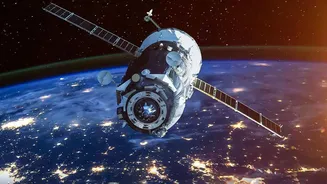
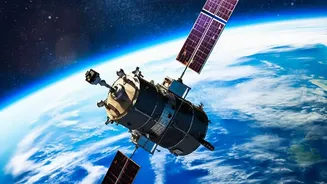
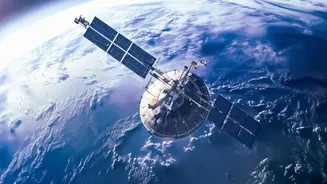
Space is not as empty as it looks. The region around our planet, especially Low Earth Orbit (LEO), is congested with active satellites, defunct spacecraft, spent rocket stages, and millions of fragments from past collisions. Travelling at speeds of nearly
28,000 kmph, even a tiny piece of debris can strike a satellite with devastating force, potentially destroying a multi-crore national asset. For the Indian Space Research Organisation (ISRO), this is not a theoretical problem. The agency is performing an ever-increasing number of Collision Avoidance Manoeuvres (CAMs) to protect its satellites. In recent years, ISRO has conducted dozens of these emergency manoeuvres, with government data showing a rising cadence that reflects the alarming congestion overhead. Twenty of India's 22 active LEO satellites are now considered to be at a heightened risk of collision, making proactive protection more critical than ever.
The Current Defence: IS4OM and NETRA
To guard its assets, ISRO established the ISRO System for Safe and Sustainable Space Operations Management (IS4OM), a dedicated control centre in Bengaluru. This facility, along with Project NETRA (Network for Space Object Tracking and Analysis), acts as India’s eye in the sky, monitoring potential threats. When tracking data predicts a dangerously close approach, ISRO engineers command the threatened satellite to fire its onboard thrusters, nudging it into a safer orbit. While effective, this process has limitations. Each manoeuvre consumes precious fuel, directly shortening a satellite's operational lifespan and reducing the return on a massive investment. Furthermore, the process relies on ground control, which can be slow when split-second decisions are needed. This is especially true for older satellites in India's fleet, many of which have limited fuel reserves.
The Next Frontier: Autonomous AI-Powered Safety
The future of space safety lies in autonomy. Instead of waiting for a command from Earth, the next generation of satellites will be able to detect a threat and move out of the way on their own. This is where Artificial Intelligence comes in. AI-powered systems can analyse immense volumes of data from tracking networks far faster and more accurately than human operators, predicting potential collisions with greater speed. An autonomous system would automate the entire process, from threat detection to executing the avoidance manoeuvre. This capability is crucial for resolving dangers in real-time, especially when a satellite is in a communications blind spot. The goal is to create an intelligent, self-preserving shield for India's assets in orbit.
Advanced Thrusters: The Engine of Evasion
An autonomous AI is the brain, but advanced thrusters are the muscle. Traditional chemical thrusters are effective but inefficient. The future belongs to electric propulsion systems like Hall-effect thrusters. These systems use electric and magnetic fields to accelerate ionized propellant, generating thrust far more efficiently. This means a satellite can perform many more collision avoidance manoeuvres with the same amount of fuel, dramatically extending its mission life. Indian private-sector companies, like Bengaluru-based Bellatrix Aerospace, are at the forefront of developing these sophisticated thruster systems. Their flight-proven technologies are designed specifically for applications like collision avoidance and are being positioned to partner with global satellite operators, marking a significant step in building a domestic supply chain for this critical technology.
Protecting India's Eyes in the Sky
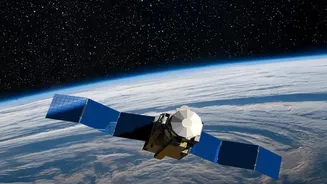
The focus on this technology is particularly vital for India's fleet of Earth-observation satellites. This constellation, including series like Cartosat, RISAT, and Oceansat, provides crucial data for everything from agricultural planning and weather forecasting to disaster management and national security. They are the unsung heroes behind monsoon predictions, urban planning, and resource monitoring. Losing even one of these satellites to space debris would mean a significant loss of capability and data continuity. By investing in autonomous safety systems, ISRO is not just protecting hardware; it is ensuring the uninterrupted flow of information that is vital to the nation's economy and security, moving from a reactive to a proactive posture in safeguarding these critical eyes in the sky.