




Beyond Just Image Generation
When people hear 'AI and creative,' they often think of image generators like Midjourney or DALL-E creating fantastical art from a text prompt. While these tools are impressive, the true revolution is far broader. The AI App Era for creative teams encompasses
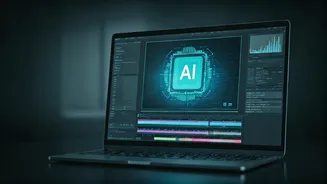
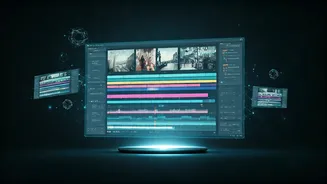
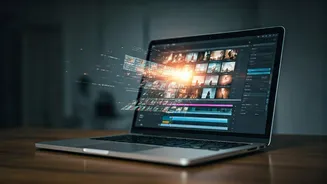
a suite of tools that integrate into every stage of the workflow. We're talking about AI that can draft a creative brief from rough meeting notes, generate brand-consistent copy for a social media campaign, edit video by simply editing a text transcript, and even suggest optimal layouts for a new website. This is about augmenting the entire creative process, not just the final visual output.
The New Augmented Workflow
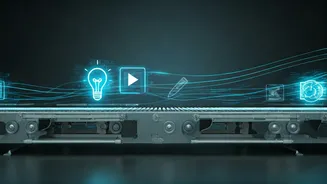
The traditional creative workflow—a linear path from brief to concept, to draft, to revision, to final delivery—is being completely redesigned by AI. Today, AI acts as a collaborator from the very beginning. It can analyze market data to provide insights that inform a campaign's direction, helping to tailor messaging more effectively. During the production phase, AI automates tedious and repetitive tasks that once consumed hours of a creative's day. Tasks like resizing hundreds of ad variants, removing backgrounds from images, or tagging vast asset libraries can now be done in minutes, freeing up human professionals to focus on strategy, storytelling, and high-level decision-making. This doesn't make the process less human; it makes it more focused and efficient.
Rise of the AI-Augmented Creative
Fears of AI replacing creative professionals are giving way to a more nuanced reality: the emergence of the 'AI-augmented' creative. The most valuable professionals are no longer just those with exceptional craft skills, but those who know how to wield these new tools to amplify their talent. The new essential skill set includes prompt engineering, which is the art of communicating with AI to get desired outcomes. It also includes curation—the ability to sift through dozens of AI-generated options to find the one that best serves the brand's strategy. The creative director's role is shifting from simply managing people to orchestrating a hybrid team of humans and AI agents, guiding the overall vision while leveraging technology for speed and scale.
The Tools Defining the Era
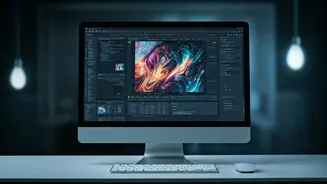
The ecosystem of AI creative apps is expanding rapidly. Adobe's Firefly is integrated directly into its Creative Cloud, making AI features like 'Generative Fill' a native part of tools designers already use. Platforms like Canva have incorporated 'Magic Studio,' allowing entire marketing teams to create on-brand assets without deep design knowledge. For video, tools like Runway and Descript are revolutionizing editing, while AI-powered project management platforms like Notion AI help organize entire campaigns. The key isn't a single 'killer app,' but a stack of interconnected tools that form a new operating system for creative work.
Challenges and the Road Ahead
This new era is not without its challenges. Maintaining brand consistency and originality can be difficult when relying on algorithms that may produce generic or homogenized outputs. There are also significant ethical considerations around copyright, data privacy, and the ownership of AI-generated work. Businesses must invest not only in the tools themselves but also in training their teams to use them thoughtfully and establishing new guidelines for quality control. Over-reliance on AI can stifle the very human intuition and emotional connection that makes creative work powerful. The risk is that efficiency gains come at the cost of true innovation.