







A New Space Race Begins
For decades, India's journey to the stars was piloted almost exclusively by the Indian Space Research Organisation (ISRO). But a monumental shift is underway. Following landmark policy reforms in 2020, the government opened the sector to private enterprise,
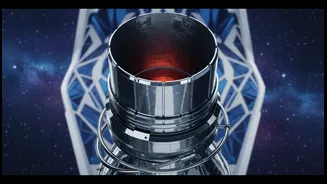
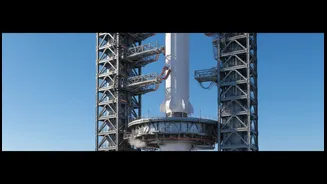
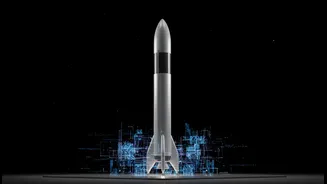
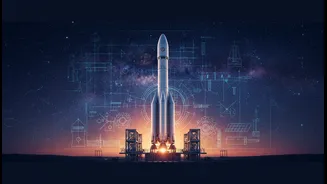
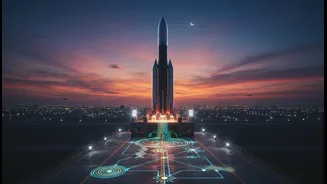
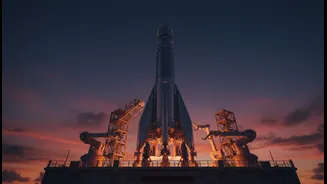
creating the Indian National Space Promotion and Authorization Center (IN-SPACe) to facilitate and regulate this new ecosystem. This has unleashed a wave of innovation, with over 400 startups now populating India's space-tech landscape. At the forefront of this revolution is Hyderabad-based Skyroot Aerospace, founded by former ISRO scientists. Their crowning achievement, the Vikram-1 rocket, is poised to make history as India's first privately developed orbital launch vehicle, with its maiden flight, Mission 'Aagaman', scheduled for July 18, 2026.
The Vikram-1 Challenge
Vikram-1 is not just another rocket; it represents a new philosophy. Named after Dr. Vikram Sarabhai, the father of India's space program, its goal is to serve the burgeoning global market for small satellite launches. Private companies like Skyroot aim to provide what their co-founder compares to a 'cab' service to orbit—offering customized, on-demand launches that are faster and more cost-effective than traditional, large-scale missions. Achieving this requires a fundamental break from legacy processes. It demands rapid design iterations, modular components, and the integration of cutting-edge technologies like 3D printing and advanced composite materials. This mission is the first of three planned developmental flights to validate the rocket's design and performance before Skyroot begins full commercial operations. Success will depend on gathering crucial flight data to refine and scale production quickly.
The Demand for Digital Natives
This new, agile approach is precisely why young engineers are in such high demand. Startups in the space-tech sector operate at a pace that is fundamentally different from established institutions. They need engineers who are digital natives, fluent in modern software tools for computer-aided design (CAD), simulation, and data analysis. Proficiency in programming languages like Python and C++, and experience with AI and machine learning for analyzing test data, are no longer optional extras but core requirements. These skills enable the rapid prototyping and iterative testing that are essential for developing complex systems like Vikram-1 under tight deadlines and budgets. The boundaries between aerospace, electronics, and computer science have blurred, creating a need for interdisciplinary talent that younger graduates are often best equipped to provide.
Building a Startup Culture
Beyond technical skills, the private space revolution is powered by a distinct cultural mindset. Startups like Skyroot are high-risk, high-reward environments that thrive on passion, innovation, and a willingness to challenge convention. This culture resonates strongly with a younger generation of engineers who are often more attracted to mission-driven work and the opportunity to make a significant impact early in their careers. The environment is collaborative and fast-paced, where engineers work on end-to-end development of space systems, a sharp contrast to more siloed roles in larger organizations. Prime Minister Narendra Modi has lauded the role of 'Gen Z' engineers, highlighting their risk-taking ability and innovative energy as crucial drivers of the nation's space boom. This synergy between youthful ambition and startup culture is a powerful engine for growth.
More Than Just Rocket Science
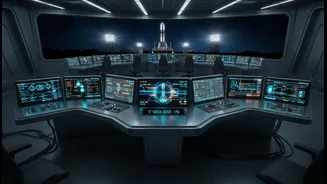
The demand for young talent extends far beyond traditional aerospace engineering. To build and launch a rocket like Vikram-1, and to run a successful space-tech company, requires a diverse team. Skyroot's job openings, for instance, span roles from hardware quality and thermal engineering to CNC programming and lead structural analysis. The broader ecosystem needs electronics and communication engineers for satellite payloads, computer science engineers for mission software and ground control, and data scientists to interpret the vast amounts of information sent back from space. Furthermore, as the industry grows, so does the need for professionals in business development, marketing, and space law, making it an accessible field for talent from various educational backgrounds.