







What A Local API Launch Means
First, let's break down the terms. An API, or Application Programming Interface, is a way for different software programs to talk to each other. When a company like OpenAI offers an API for its AI models, it allows developers to build those AI capabilities
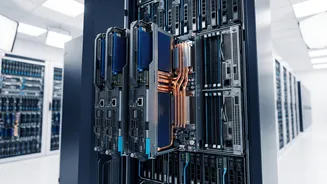
directly into their own applications. Until now, for an Indian app to use this, its data might have had to travel to servers in other countries. A 'local' API launch changes that. It means the processing of data happens on servers located within India. This has two huge benefits: speed and compliance. Requests don't have to travel as far, which reduces delays (latency), making applications more responsive. More importantly, it helps businesses meet India's data localisation requirements, a critical hurdle for sectors like financial services that handle sensitive customer information.
The Power of Text Summarisation
The headline specifically calls out text summarisation, and for good reason. Businesses are drowning in information: long reports, endless email chains, customer feedback, legal documents, and news articles. AI-powered summarisation can digest thousands of words in seconds and provide a concise, coherent summary. Imagine turning a 100-page market analysis into a ten-point bulletin for executives or summarising a day's worth of customer support tickets to spot recurring issues. This isn't just about saving reading time; it's about making quicker, more informed decisions. For legal teams, it can speed up contract review. For marketing teams, it can condense research into actionable insights. It boosts operational efficiency by letting employees focus on high-value tasks instead of manual review.
Beyond Summaries: New Frontiers
While summarisation is a powerful tool, it's just the beginning. The availability of a local API unlocks a wide array of other functions for Indian enterprises. Customer service is set for a major upgrade with AI-driven chatbots and virtual assistants that can understand and respond to queries in multiple Indian languages, providing 24/7 support. In marketing, the technology can generate high-quality content at scale, from social media posts and blog articles to personalized email campaigns tailored to specific customer segments. This frees up creative teams to focus on strategy rather than routine production.
Unlocking Data and Accelerating Innovation
Generative AI excels at analysing vast amounts of unstructured text data. Indian businesses can now use the API to sift through customer reviews, social media comments, and survey responses to identify trends, gauge public sentiment, and gather business intelligence. For product teams, this technology can accelerate design and prototyping, using algorithms to generate design variations based on market trends or user feedback. The local availability of these tools is also a massive boon for India's vibrant startup ecosystem. Developers and small companies now have easier, compliant access to world-class AI, lowering the barrier to entry for building the next wave of innovative products and services for both domestic and global markets.
The Road Ahead for Indian Business
OpenAI's decision to offer local data processing in India—initially for its GPT-6 Luna model—signals a deep commitment to the market. It addresses a key barrier that prevented some companies from fully adopting AI for critical workflows. This move is not just about providing a new service; it's about enabling a fundamental shift in how work gets done. By integrating these AI capabilities, Indian companies can enhance productivity, foster innovation, and create more personalized customer experiences. It allows businesses to move beyond simple automation toward a state of 'autonomous intelligence', where systems can help anticipate challenges and inform real-time decisions, making the entire organization more agile and competitive.