





A Fundamental Shift in Strategy
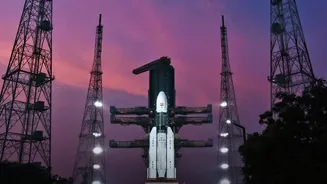
For decades, ISRO did it all—from building rockets and satellites to launching and operating them. But a strategic pivot, formalized by the Indian Space Policy 2023, has redefined its role. Instead of handling every aspect of space activity, ISRO is now
transitioning into a mentor and enabler, focusing its own formidable resources on advanced research, deep-space exploration, and national security missions. This change allows it to nurture a dynamic private sector that can drive commercial innovation and manufacturing. The goal is ambitious: to grow India's share of the global space economy from around 2% to 8% by 2033, expanding the domestic market to an estimated $44 billion.
IN-SPACe: The Gateway for Startups
At the heart of this new ecosystem is the Indian National Space Promotion and Authorisation Centre (IN-SPACe). Established as a single-window agency, it acts as the crucial link between ISRO and non-governmental entities (NGEs), including startups. Before IN-SPACe, a private company had no clear path to participate in space activities. Now, it serves as the primary body to authorize, promote, and regulate the private space sector. From providing regulatory clarity to helping startups access ISRO’s world-class facilities, IN-SPACe's role is to streamline processes and lower the barriers to entry that once kept private players on the sidelines. Recently, it has also been tasked with implementing new price support schemes offering significant financial incentives to private firms.
Unlocking World-Class Infrastructure
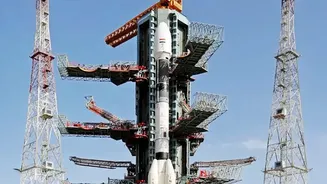
One of the most significant advantages for Indian space startups is access to ISRO's vast and expensive infrastructure. Building launchpads, satellite testing centres, and mission control facilities costs billions and is far beyond the reach of any startup. Through IN-SPACe, private companies can now use these government-owned assets at a fraction of the cost. This includes everything from testing propulsion systems and satellite components to using ISRO's launch complexes for orbital missions. This access not only saves startups immense capital but also accelerates their development timelines, allowing them to move from design to deployment much faster.
NSIL: The Commercial Arm
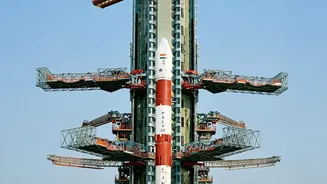
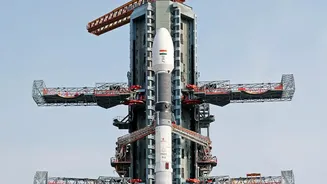
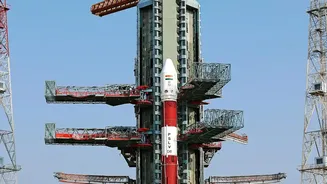
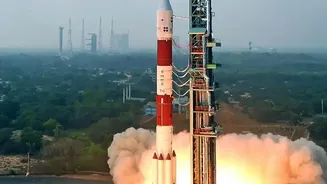
While IN-SPACe is the facilitator, NewSpace India Limited (NSIL) is the primary commercial arm of ISRO. Established in 2019, NSIL's mandate is to commercialize India's space capabilities in a demand-driven model. It works with Indian industries to manufacture proven workhorse rockets like the PSLV and SSLV. In essence, NSIL acts as a bridge between ISRO's technology and the global market. It procures launch services and satellites from the private sector to serve its customers, creating a reliable revenue stream for emerging companies. This structure allows ISRO to hand off routine production and commercial launches, empowering private industry to build scale and expertise.
Technology Transfer and Financial Support
Beyond infrastructure, ISRO is actively transferring its internally developed technologies to the private sector. Startups can license ISRO's patents for satellite buses, propulsion systems, and more, giving them a foundation of proven technology to build upon. This is complemented by a growing financial support system. The government has introduced a liberalized FDI policy for the space sector and established funds like the Technology Adoption Fund to help companies turn early-stage concepts into commercially viable products. These initiatives, coupled with mentorship from ISRO scientists, create a nurturing environment where innovative ideas can flourish.
The Proof Is in the Launch
The success of this ecosystem is no longer theoretical. Companies like Skyroot Aerospace and Agnikul Cosmos are prime examples. Skyroot, which became the first Indian private company to launch a rocket into space, has worked closely with ISRO, using its facilities and expertise. Similarly, numerous other startups like Digantara, GalaxEye, and Dhruva Space are making strides in satellite manufacturing, space situational awareness, and communications, often in partnership with or with support from the national agency. These early successes have attracted significant investment and demonstrated that the public-private partnership model is working, positioning India as a formidable player in the global commercial space race.