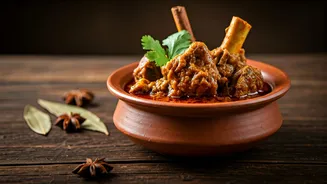









The Perfect Match for a Monsoon Mood
Not all biryanis are created equal, and for the specific, cosy melancholy of a rainy day, one stands out: the Hyderabadi Kachche Gosht ki Biryani. The name itself, which translates to 'raw meat biryani', hints at its magic. Unlike other methods where
cooked meat and rice are simply layered, this version involves slow-cooking marinated raw meat and par-boiled rice together in a sealed pot. This 'dum' process is not just a cooking technique; it's a ritual. It demands patience and time—two things a lazy Sunday offers in abundance. The reward is an incredibly aromatic dish where every grain of rice is infused with flavour and the meat is fall-off-the-bone tender. It's the culinary equivalent of a warm hug.
The Heart of the Flavour: The Marinade
The soul of this biryani lies in its marinade. This is where you build the deep, complex flavours that will perfume your entire home. For about 750g of mutton or chicken, you'll need a generous mix. Start with a cup of thick curd, two tablespoons of ginger-garlic paste, and a tablespoon of raw papaya paste (a fantastic natural tenderiser). Now for the spices: add a teaspoon of turmeric powder, two teaspoons of red chilli powder, and two tablespoons of a quality biryani masala. Don't forget the whole spices: a couple of bay leaves, a stick of cinnamon, a few green cardamoms, and cloves. Add a handful of chopped mint and coriander leaves, the juice of half a lemon, and some crispy fried onions (birista). Mix it all thoroughly with the meat and let it marinate for at least four hours, or preferably, overnight in the fridge. This long marination is non-negotiable; it’s what ensures the meat is succulent and deeply flavourful.
Getting the Rice Just Right
The second hero of any biryani is the rice. You must use long-grain basmati rice for the best results. Wash about two cups of rice gently until the water runs clear, then soak it for at least 30 minutes. This helps the grains elongate without breaking. Bring a large pot of water to a rolling boil. Salt it generously—it should taste like seawater. Add a few whole spices like a bay leaf and a star anise for extra aroma. Drain the soaked rice and add it to the boiling water. The key here is to cook it only until it's 70% done. The grains should still have a slight bite to them. This usually takes about 5-7 minutes. Once done, immediately drain the rice in a colander and spread it out lightly to stop the cooking process.
The Art of Layering and 'Dum'
Now for the assembly. Take a heavy-bottomed pot (a handi is traditional, but any thick-based pot will do). Spread the marinated meat in an even layer at the bottom. Next, layer the 70% cooked rice evenly over the meat. Sprinkle a generous amount of fried onions, chopped mint, and coriander on top of the rice. To give it that classic rich colour and aroma, dissolve a pinch of saffron in a quarter cup of warm milk and drizzle it over the rice. Finally, pour two to three tablespoons of ghee over everything. This not only adds flavour but also helps keep the rice grains separate. To achieve 'dum' (steam cooking), you need to seal the pot tightly. The traditional way is to use a dough made of whole wheat flour to seal the lid to the pot. A simpler, modern alternative is to cover the pot with a tight layer of aluminium foil before placing the lid on top.
The Final, Fragrant Wait
Place the sealed pot on the stove. Cook on high heat for the first 5-7 minutes to get the steam building inside. Then, reduce the heat to the absolute lowest setting possible. If you have a flat tawa (griddle), place it under the pot to ensure gentle, even heat distribution. Let it cook on this low 'dum' for about 45-50 minutes for mutton, or 30-35 minutes for chicken. During this time, resist every urge to open the lid. The magic is happening inside, as the steam cooks the meat to perfection and infuses the rice with all the aromatic goodness. When the time is up, turn off the heat and let it rest for another 15 minutes before opening. This allows the flavours to settle.