




What is Surya Namaskar?
Surya Namaskar is a dynamic sequence of 12 yoga postures performed in a rhythmic flow, with each movement synchronised with the breath. Translating to 'salutation to the sun', this practice is traditionally performed in the morning to greet the new day
and energise the body. It's considered a complete practice in itself, blending physical exercise (asana), breathing techniques (pranayama), and moving meditation into one seamless routine. In just 15-20 minutes, it activates major muscle groups, improves circulation, and enhances mental focus, making it a highly efficient workout for a modern lifestyle.
Step 1: Pranamasana (Prayer Pose)
Begin by standing at the front of your mat with your feet together, balancing your weight evenly. As you breathe naturally, bring your palms together at your chest in a prayer position. This initial pose helps to ground your energy and establish a sense of calm and centeredness before you begin the flowing movements.
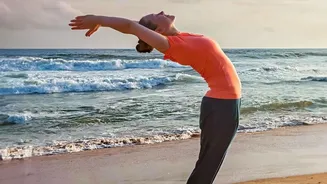
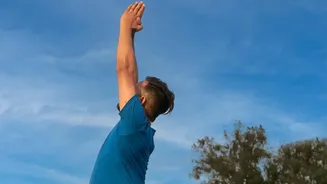
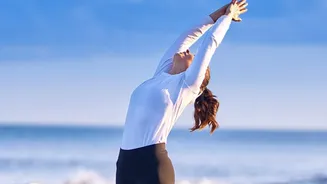
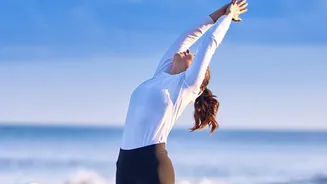
Step 2: Hasta Uttanasana (Raised Arms Pose)
Inhaling deeply, raise both arms above your head, keeping them close to your ears. Gently arch your back, pushing your pelvis slightly forward. This posture stretches the entire front of the body, including the chest and abdominal muscles, while also lengthening the spine and stimulating the nervous system for increased energy.
Step 3: Hastapadasana (Hand to Foot Pose)
As you exhale, bend forward from your hips, keeping your spine straight. Bring your hands down to the floor beside your feet, aiming to touch your forehead to your knees. This intense forward bend stretches the hamstrings and the entire back of the body while massaging the abdominal organs, which can aid digestion.
Step 4: Ashwa Sanchalanasana (Equestrian Pose)
While inhaling, push your right leg back as far as possible, bringing the right knee to the floor and looking up. Your left knee should be bent and positioned between your palms. This lunge pose deeply stretches the groin and hip flexors while strengthening the leg muscles and improving balance.
Step 5: Dandasana (Stick Pose)
As you exhale, step your left leg back to join the right, aligning your body in a straight line like a plank. Your arms should be perpendicular to the floor. This pose is excellent for building core stability and strengthening the arms, shoulders, and back muscles.
Step 6: Ashtanga Namaskara (Eight-Limbed Salute)
Gently bring your knees down to the floor and exhale. Slide your body forward, resting your chest and chin on the floor while keeping your hips slightly raised. Your two hands, two feet, two knees, chest, and chin—eight parts in total—should be touching the ground. This pose develops upper body strength and cultivates mindfulness.
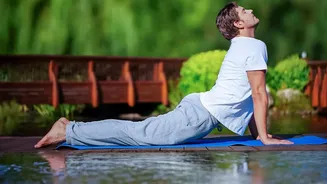
Step 7: Bhujangasana (Cobra Pose)
Inhaling, slide forward and lift your chest up into Cobra Pose, keeping your pelvis on the floor. Arch your back and look upwards. This backbend strengthens the spine, opens up the chest and shoulders, and can help alleviate stress and fatigue.
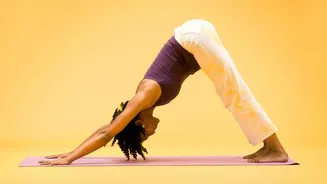
Step 8: Adho Mukha Svanasana (Downward-Facing Dog)
Exhaling, lift your hips and tailbone up, creating an inverted 'V' shape with your body. This posture strengthens the arms and legs, stretches the shoulders and hamstrings, and improves circulation throughout the body.
Step 9: Ashwa Sanchalanasana (Equestrian Pose)
Breathing in, bring your right foot forward between your hands, mirroring Step 4. Your left knee comes down to the floor. This continues to open the hips and builds strength in the legs.
Step 10: Hastapadasana (Hand to Foot Pose)
On an exhale, bring your left foot forward to meet the right and return to the forward fold position, just as in Step 3. This continues to stretch the hamstrings and release tension in the lower back.
Step 11: Hasta Uttanasana (Raised Arms Pose)
Inhaling, roll your spine up, lift your arms overhead, and bend backward gently, returning to the position from Step 2. This movement provides a rejuvenating stretch for the front of the body.
Step 12: Tadasana (Mountain Pose)
Exhale, first straightening your body and then bringing your arms down. Stand in a relaxed state with your palms by your side. This concludes one half-round. To complete a full round, you repeat the entire sequence, this time leading with the left leg in Step 4 and Step 9.
The Holistic Health Benefits
Beyond being a physical workout, the benefits of a regular Surya Namaskar practice are extensive. It acts as an effective cardiovascular exercise, helping with weight management and improving heart health. The sequence of poses stretches and tones nearly every major muscle, enhancing overall flexibility and strength. Furthermore, the synchronized breathing calms the nervous system, reducing stress and anxiety while promoting mental clarity. Studies suggest regular practice can improve muscle strength, body endurance, and even support hormonal balance.