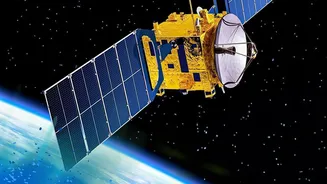

India's Unblinking Eye on the Sun
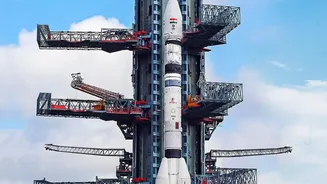
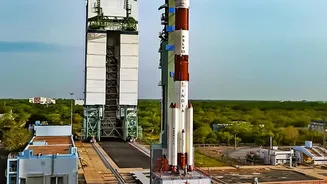
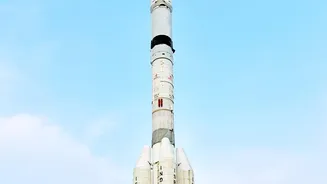
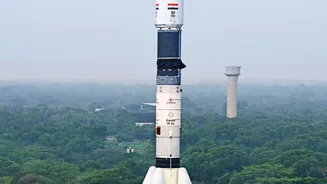
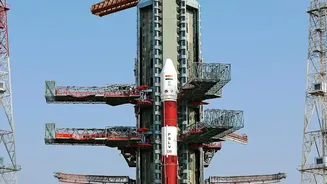
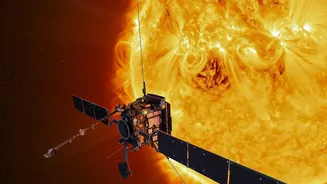
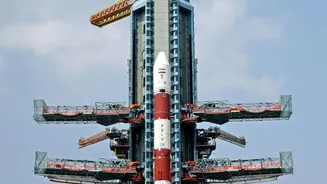
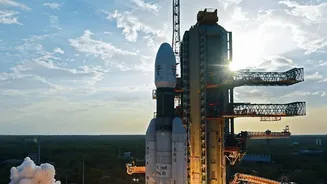
Launched by the Indian Space Research Organisation (ISRO), the Aditya-L1 spacecraft is India’s first dedicated solar observatory. Its destination is no ordinary orbit; it is strategically positioned at Lagrange Point 1 (L1), about 1.5 million kilometres
from Earth. This unique vantage point allows it to stare directly at the Sun without any interruption from eclipses or occultations, giving scientists a continuous stream of data. The mission's primary goals are to study the Sun's outer layers—the photosphere, chromosphere, and the enigmatic corona—and to understand the dynamics of solar wind and space weather. With a suite of seven advanced instruments, Aditya-L1 is designed to unravel mysteries like why the corona is millions of degrees hotter than the Sun's surface.
Understanding the Solar Wind
The Sun constantly emits a stream of charged particles—mostly electrons and protons—that flows outwards through the solar system. This is the solar wind. It travels at incredible speeds, typically around 1.4 million kilometres per hour, but can be much faster during violent solar events. While invisible, this wind carries the Sun's magnetic field with it and interacts with everything in its path, including planets and man-made objects. When this solar wind becomes particularly strong or gusty, often due to events like Coronal Mass Ejections (CMEs), it creates what we call space weather. These solar storms can have significant effects on technology both in space and on Earth.
The Dangers to Space Stations
For space stations like the International Space Station (ISS) and the astronauts aboard, space weather is a clear and present danger. An intense blast of solar particles can pose several risks. Firstly, there is the radiation hazard to the crew. While the ISS is shielded, powerful solar events can increase radiation levels, forcing astronauts to take shelter in more protected parts of the station to minimise their exposure. Secondly, the electronics that run the station are highly vulnerable. High-energy particles can cause short circuits, corrupt data, or permanently damage sensitive components. Finally, solar storms heat and expand Earth’s upper atmosphere, increasing atmospheric drag on low-orbiting stations. This can cause the station to lose altitude faster than expected, requiring fuel to correct its orbit.
Why Velocity Is the Key Metric
To protect against these threats, advance warning is everything. This is where Aditya-L1's specific measurements, particularly of solar wind velocity, become critical. Instruments like the Aditya Solar wind Particle Experiment (ASPEX) are designed to measure the speed, temperature, and density of solar wind particles. The velocity of the incoming solar wind is one of the most important factors in forecasting the severity of a geomagnetic storm. A faster solar wind means the burst of energetic particles will arrive at Earth with less warning time, giving mission controllers less time to react. By providing real-time velocity data from the L1 point, Aditya-L1 acts as an early warning system. This data helps space weather forecasters predict when a solar storm will hit and how intense it will be.
From Data to Defence
The information gathered by Aditya-L1 feeds into global space weather prediction models. When the data indicates an impending high-velocity solar event, space station operators can take defensive measures. Astronauts can be instructed to move to designated 'storm shelters' within the station, which have extra shielding. Sensitive scientific instruments and external systems can be powered down to protect them from electrical surges. Even the orientation of the space station could potentially be adjusted to minimize the exposure of critical components. This proactive approach, made possible by missions like Aditya-L1, transforms a potential crisis into a manageable event, ensuring the safety of the crew and the longevity of the multi-billion dollar orbital laboratory.