


It Starts with a Spot
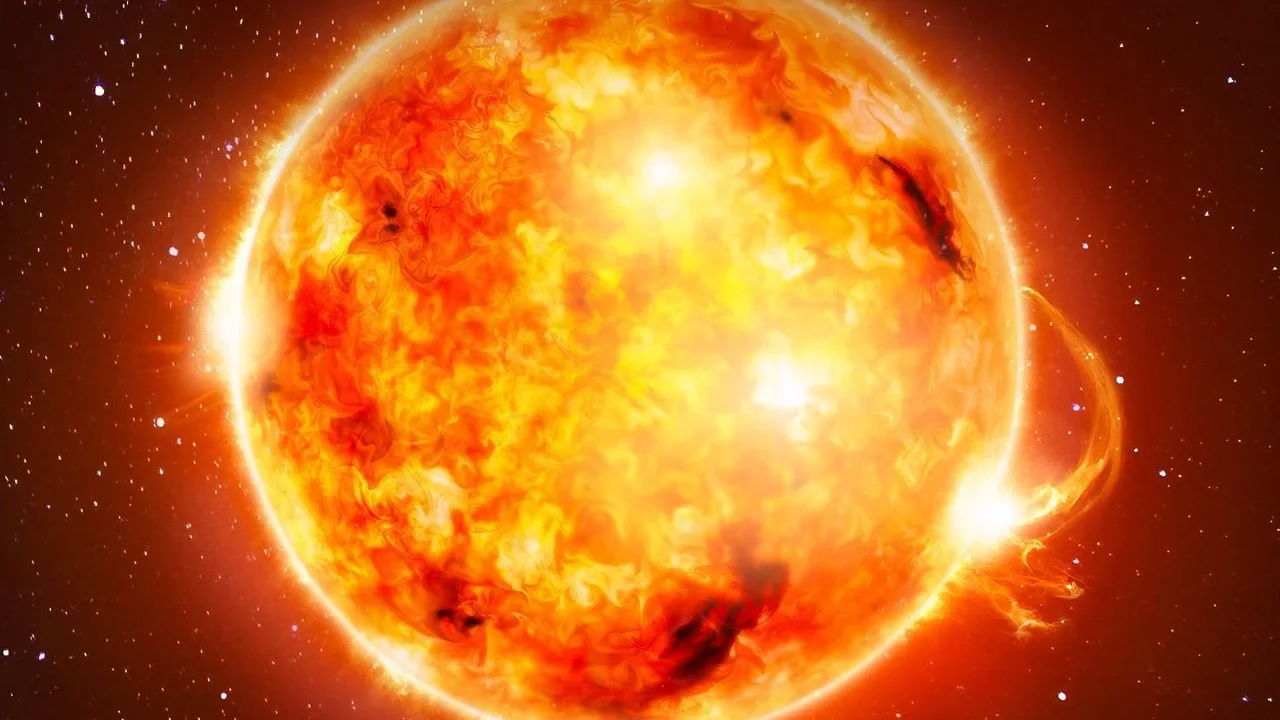
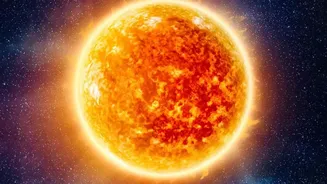
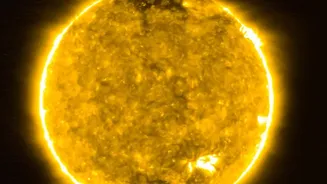
The entire process begins with sunspots. These are temporary dark patches on the Sun's surface that look small from Earth but can be larger than our entire planet. They appear darker because they are cooler than their surroundings, a result of intense
magnetic activity brewing just beneath the surface. Think of them as areas where the Sun's powerful magnetic field, normally contained, pokes through. These magnetic fields are incredibly strong, thousands of times more powerful than Earth's. This intense magnetic energy makes sunspot regions highly unstable and prone to eruptions.
The Sun Erupts
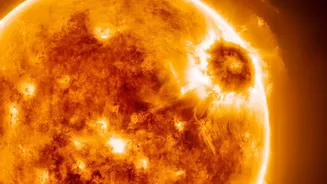
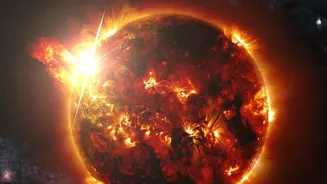
When the tangled magnetic field lines near sunspots suddenly snap and realign, they release a tremendous burst of energy. This event is called a solar flare. Often accompanying a flare is an even more powerful phenomenon: a Coronal Mass Ejection, or CME. A CME is a massive explosion that hurls billions of tonnes of solar plasma—a superheated gas of charged protons and electrons—and magnetic fields out into space. These ejections travel at incredible speeds, ranging from 250 to as fast as 3000 kilometres per second. The fastest CMEs can complete the journey from the Sun to Earth in as little as 15 to 18 hours.
A Collision with Earth's Shield
Earth is not defenceless against this onslaught. Our planet is surrounded by a magnetic field called the magnetosphere, which acts as a protective shield, deflecting most of the constant stream of solar particles known as the solar wind. However, a powerful, fast-moving CME is a different story. When a CME directed at Earth arrives, it slams into and compresses our magnetosphere, transferring immense energy into our planetary system. This violent interaction is what we call a geomagnetic storm, a major disturbance of Earth's magnetic field.
Painting the Sky with Light
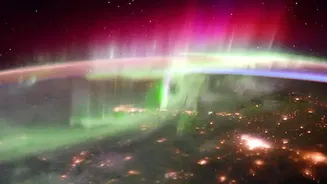
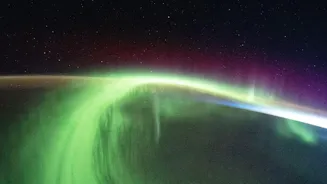
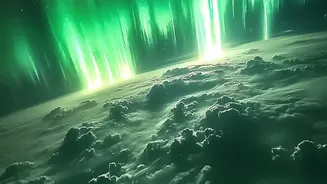
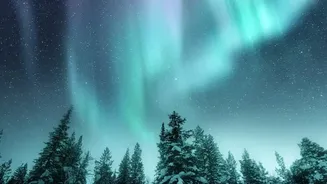
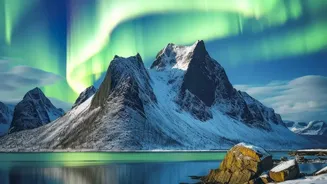
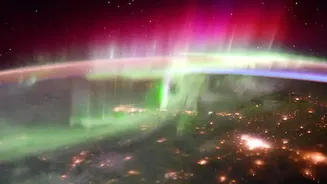
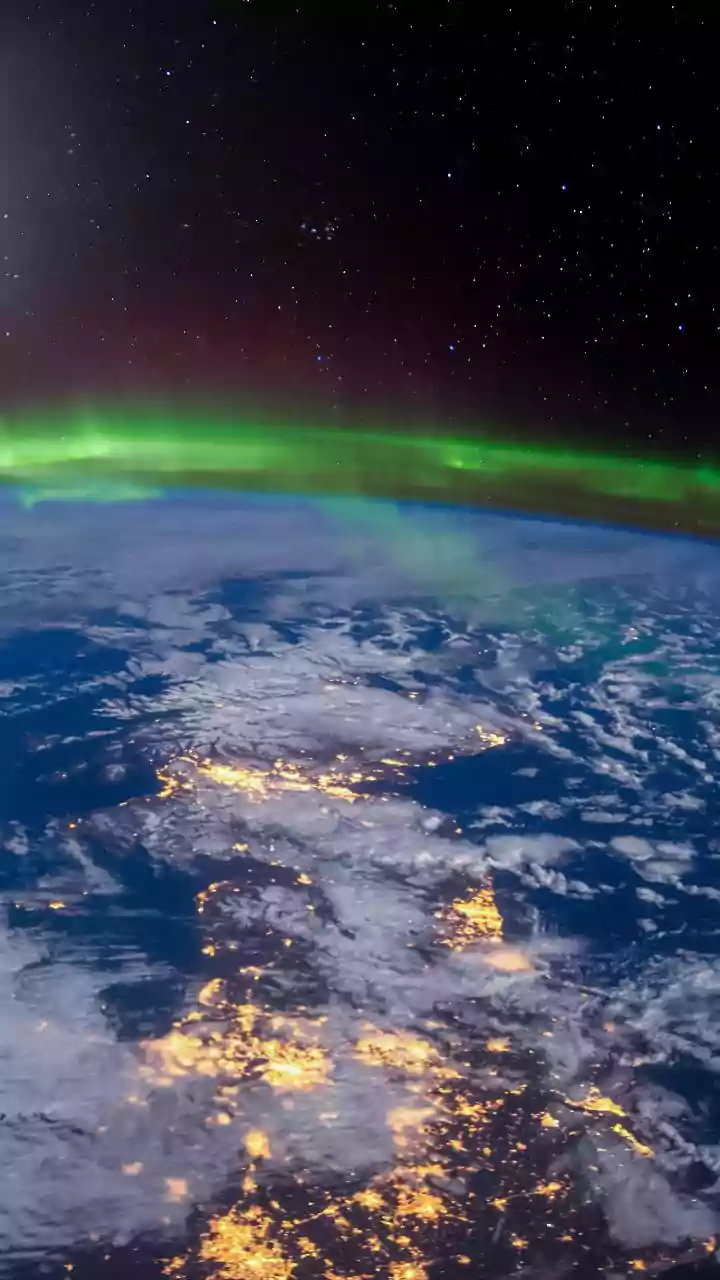
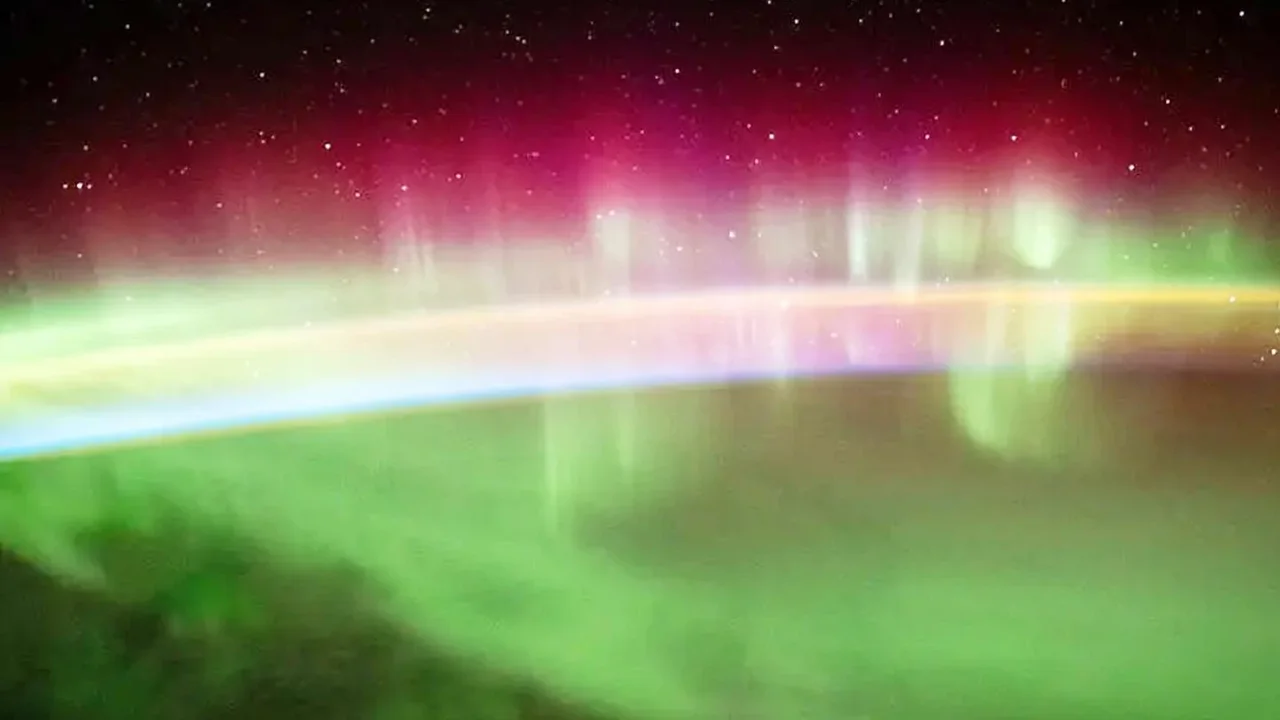
During a geomagnetic storm, some of the charged particles from the CME are funnelled along Earth's magnetic field lines toward the North and South Poles. As these high-energy particles stream into our upper atmosphere, they collide with gas atoms and molecules, primarily oxygen and nitrogen. These collisions excite the atoms, causing them to glow and release light, much like how a neon sign works. The result is the magnificent light show we know as the aurora borealis (Northern Lights) and aurora australis (Southern Lights).
A Spectrum of Colours
The specific colours of the aurora depend on which gas is being hit and at what altitude the collision occurs. The most common colour, a vibrant green, is produced by excited oxygen atoms at altitudes of about 100 to 200 kilometres. At higher altitudes, above 200 kilometres where the atmosphere is thinner, oxygen collisions create a rarer, all-red aurora. Nitrogen is responsible for the blues and purples. Collisions with nitrogen molecules can produce blue light or a pinkish-red fringe at the lower edge of the auroral curtain.
More Than Just a Light Show
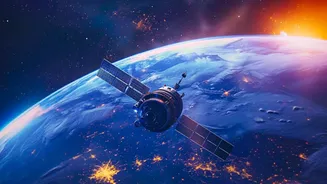
While auroras are the beautiful consequence of geomagnetic storms, these solar events can have serious disruptive effects on our technology-dependent world. The same currents that create the aurora can induce powerful electrical currents on the ground, which have the potential to overload power grids and cause widespread blackouts. These storms can also disrupt satellite operations by damaging electronics and altering their orbits, interfere with GPS signals, and black out high-frequency radio communications used by airlines and emergency services.