








A Festival of Firsts in Lucknow
Later this month, from July 23-25, the Birbal Sahni Institute of Palaeosciences (BSIP) in Lucknow will host PRITHVI 2026, India's and Asia's first-ever film festival dedicated exclusively to palaeosciences and earth sciences. Organized by BSIP, an autonomous
institute under the Department of Science and Technology, the event aims to bridge the gap between scientists, filmmakers, and the public. The festival was officially announced by Uttar Pradesh Governor Anandiben Patel, who unveiled the event's brochure, signaling high-level support for this pioneering initiative. The motto, "Bringing Earth's Stories to Life, Inspiring a Sustainable Future," encapsulates its ambitious goal: to translate complex scientific concepts into compelling visual stories.
More Than Just Jurassic Park
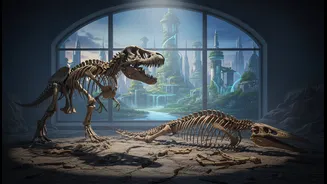
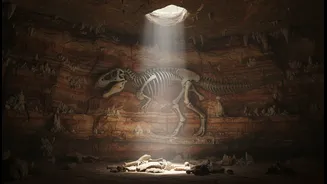
For many, the word "palaeontology" conjures images from Hollywood blockbusters. While entertaining, these films rarely reflect the reality of the science or its relevance to India. This is a critical gap, as the field of palaeontology in India faces significant challenges, including a declining number of students and experts, and a lack of public awareness and institutional support. Veterans in the field have described its future as "bleak," with few university positions and diminishing faculty at key research centers. PRITHVI 2026 directly confronts this issue by using an accessible and popular medium—film—to make the subject engaging. By showcasing documentaries, animations, and even science fiction, the festival hopes to spark curiosity and demonstrate that the story of life on Earth is not just a foreign tale but is etched into the very land beneath our feet.
A New Chapter for Science Communication
The festival is more than a series of screenings; it's a strategic effort to overhaul science communication in the country. For too long, scientific knowledge has often been locked away in academic journals or communicated primarily in English, limiting its reach. PRITHVI 2026 aims to change this by nurturing a new generation of Indian scientist-filmmakers and storytellers. The event will host a National Dialogue on Earth Science Communication, featuring masterclasses and panel discussions with scientists, media experts, and policymakers. This initiative recognizes that for science to thrive and inform public life—from climate policy to heritage preservation—it must be communicated in ways that are relatable, engaging, and accessible to a diverse audience.
Inspiring the Next Generation of Scientists
Perhaps the most significant long-term impact of the festival could be on education and career paths. India has a rich fossil heritage, yet there is a severe shortage of palaeontologists and a lack of facilities like natural history museums to preserve and showcase these treasures. Many students who might be interested in the field are discouraged by the lack of clear career paths or mentorship. By presenting palaeoscience as a dynamic, visual, and story-driven field, PRITHVI 2026 could ignite a passion for the earth sciences among young people. Seeing Indian stories and Indian scientists on screen can make the profession feel more attainable. This kind of public engagement has been shown to be crucial; a recent survey found that a majority of people believe museums and public activities are key to preserving India's geoheritage.
From Screen to Societal Change
Ultimately, the change promised by a festival like this extends beyond the audience in the auditorium. Increased public interest can create a powerful ripple effect. It can lead to greater respect for and protection of fossil sites, which are often threatened by mining and development without legal protection. It can build political will for increased funding for basic research and for the creation of essential infrastructure, like a national museum for natural history. When the public is engaged and understands the value of this scientific heritage, it creates a mandate for preservation and exploration. A successful festival can help shift palaeontology from a neglected discipline to a source of national pride and a vital tool for understanding our planet's past and future.